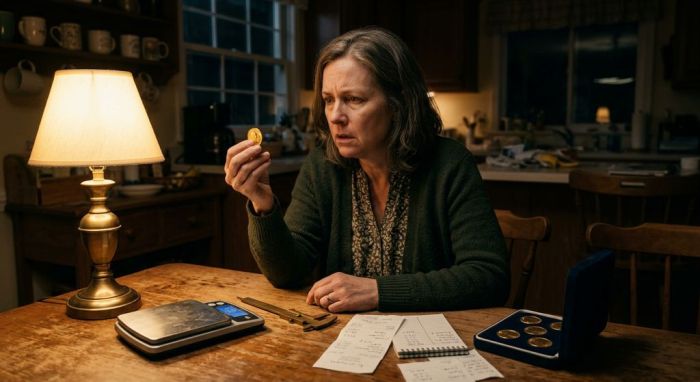
The scale settled at 29.1 grams. I stared at the numbers, then at the caliper still hanging above my father's workbench, then back at the coin resting on the scale like an accusation. A one-ounce American Gold Eagle weighs 33.9 grams. It measures exactly 32.7 millimeters across. The beautiful, gleaming disc in my hand was smaller, lighter, and when I flicked it with my thumbnail, it gave a flat, dead thunk instead of the long, singing ring real gold makes.
I had taught chemistry at Prescott High for eleven years, and I knew exactly what the universe was telling me. My mother had paid $1,900 for this coin. It was gold-plated copper, and it was not the only one in the velvet box. I closed the box and set it down on the kitchen table, trying to breathe. The box had arrived three months earlier, a gift from Dale Drummond, the jovial owner of Drummond Precious Metals on Whiskey Row. He'd sold it to my mother, Carol Bellamy, a seventy-four-year-old widow, as a "family heirloom investment" for her grandchildren. There were four coins in it, each with a certificate of authenticity.
She'd shown them to me with the pride of a woman who finally felt in control of something, and I'd smiled and said they were beautiful. I hadn't looked closer. That was the part that haunted me, and it still does. My father, Henry Bellamy, had died in March, two days after his seventy-ninth birthday. He'd been a postal carrier for thirty-eight years and a coin collector for forty, and he'd left my mother a small box of Peace dollars and Morgans that he called "the rainy-day fund."
Dale Drummond had come to the funeral reception himself, handshake warm, tie loosened, whispering condolences and a lowball offer for "Henry's little collection" before the casserole dishes were empty. Mom declined, politely, the way she declined everything, and Dale had simply smiled and said he'd be there "if she ever changed her mind."
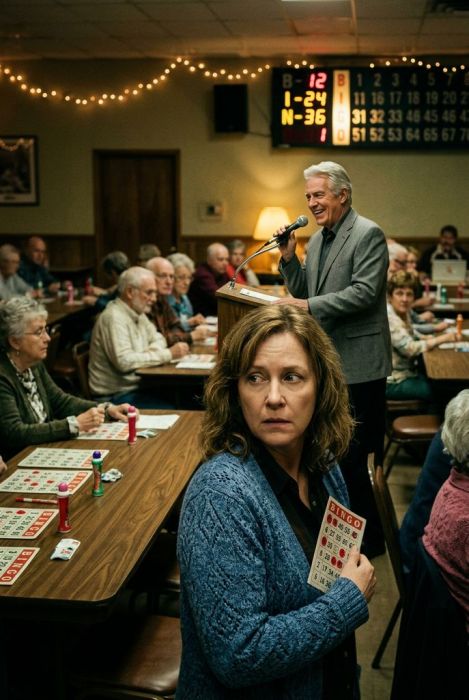
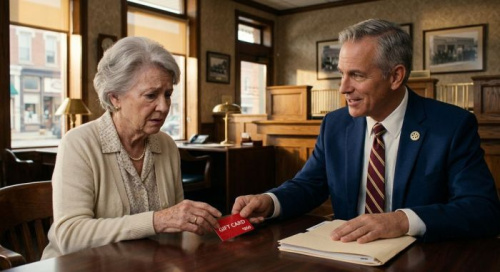
What followed was a campaign so patient it looked like kindness. Dale showed up at the senior center with a check for the new walker fleet. He sponsored Friday bingo. He had a Saturday radio hour on KYZK called "Dale's Gold Rush Hour," where he talked about inflation and bank failures in the cheerful voice of a man inviting you to a barbecue. And twice a week, he visited my mother. He brought her lemon bars from the bakery she loved. He fixed the squeak in her garage door. He sat on the porch swing with her, and she laughed — actually laughed — for the first time since my father's funeral.
"He's the only one who still treats me like a person," she told me one evening, while we shelled peas on that same porch. "Not like a relic, Nora. A person." I was glad for her. That's the terrible, honest part. I was glad, because in the two years since my marriage ended and I'd moved back into my childhood home, I'd watched my mother shrink into her widowhood. And here was this big, booming, sunburned man with the bolo tie, treating her like she mattered. Of course I was glad.
In August, Dale started the retirement talk. "Carol," he'd say, leaning across her kitchen table with a laminated chart — laminated, I remember, because in hindsight that chart was pure theater — "the government is printing money. The dollar is dying. Smart people are moving their savings into real assets. Gold you can hold." He told her the IRS required "allocated storage" in an insured vault for larger purchases, so she signed a certificate and he kept the paperwork "safe" at the shop. He told her the account was private, and that her daughter "hadn't grown up in a world of hard money" — so she shouldn't worry me with the details.
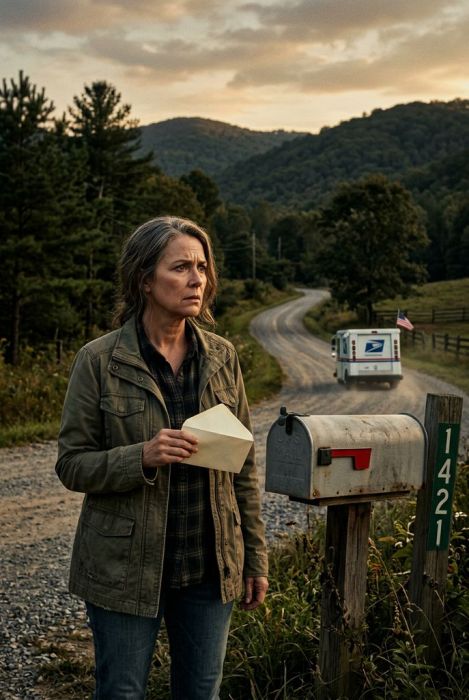
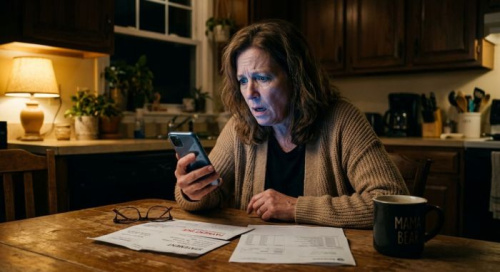
She rolled over $48,000 from the retirement account my father had built over forty years of carrying mail. Forty years of five a.m. shifts, of Christmas overtime, of bad knees and good discipline — and Dale Drummond turned it into twenty-six ounces of gold-plated copper in a velvet box. I found out in October, not because my mother confessed, but because she fell in the garden and I needed her insurance card. The shoebox in her closet held something I'd never seen: the "Certificate of Allocated Storage," stamped with a serial number, signed by Dale in looping blue ink.
I did what any reasonable daughter would do. I called the number on the certificate. A recorded voice said the vault was "a secure, insured, off-site federal-grade facility" — and then the line clicked over to a fax machine. I called the Arizona Department of Financial Institutions, and a bored clerk told me that Drummond Precious Metals was registered as a retail coin shop, not a custodian, and that the entity named on the certificate didn't exist. That was the moment my stomach started doing the cold, slow turn it does when you realize you're not paranoid after all.
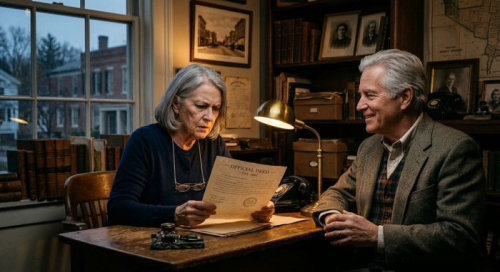
I took the box to Dale's shop on a Tuesday afternoon. The shop smelled like pipe tobacco and floor polish, and the walls were covered with photographs of Dale shaking hands with politicians, Dale at charity galas, Dale presenting a check. Behind the counter, framed in brass, hung a portrait of his "Chief Appraiser, Leonard Griggs — Forty Years of Numismatic Excellence." Dale came out from the back with his arms spread wide like I was family.
"Nora Bellamy! You didn't have to come all the way down." He wrapped the conversation in charm before I could get a word out. "Your momma said you might have questions about the storage. You know, I keep everything above board." He called an appraiser's office — a man's voice on speakerphone who confirmed, warmly, that Carol Bellamy's holdings were "in excellent order." Dale smiled at me with all his teeth. "See? Protected, insured, and growing. That's the Drummond promise."
I didn't believe him. But I also didn't have proof he was lying — only a lighter coin, a wrong-sized disc, and a gut full of dread. So I did what my father would have done. I went slow. I went methodical. I went to the library and pulled five years of local newspapers, and I made a list of every senior who'd appeared in a "Dale Drummond presents" photograph. Then I started asking questions at the senior center — gently, carefully, the way you ask questions about a beloved neighbor.
The gossip came back to my mother within a week. Dale's sister-in-law ran the front desk, and she told anyone within earshot that Carol Bellamy's daughter was "stirring up trouble, trying to bankrupt a good man because her momma lost her receipts." At the Wednesday potluck, the table went quiet when I walked in. My mother sat with her hands folded, refusing to look at me. "Please, Nora," she whispered. "You're embarrassing us. He's the only one..."
The story might have ended there — with me quiet, Mom ashamed, and Dale rich — except for Walt Kowalski. Walt was a seventy-one-year-old retired Marine with a flattop and a limp, and he caught me in the parking lot of the senior center as I was leaving with my tail between my legs. "You're the Bellamy girl," he said. It wasn't a question. "You're asking about Drummond."
I opened my mouth to apologize, and Walt pulled a small velvet pouch from his jacket. Inside was a Peace dollar — 1922, worn and beautiful — and next to it, a coin that looked nearly identical, except that it rang dead when he flicked it. "Brought my dad's collection in for a free appraisal back in June," Walt said. "He 'cleaned and certified' them, gave me new flips, charged me ninety bucks. Got home, weighed one. Twenty grams light." He held my gaze. "He swaps real coins for fakes during the appraisal. I've been watching him do it to other people for six months. Nobody believes me, because he's the nicest man in Prescott."
That was the crack. Walt had kept something Dale never expected: the original receipt from the appraisal, with serial numbers, documenting what he'd brought in that day. And Walt had kept the fake. Together, we had a pattern — a coin shop that sold counterfeit bullion and swapped genuine coins, targeting the most trusting people in town. I had receipts, and Walt had a Marine's stubbornness. What we didn't have was anyone in authority who would listen to two civilians over a beloved civic institution.
So I called the United States Secret Service. Not the local police — the federal office in Phoenix, the people who chase counterfeit currency. I expected an automated menu. What I got, to my astonishment, was a human being: Special Agent Marcus Webb, who listened to my entire, slightly hysterical story without interrupting, and then said something that made the hair on my arms stand up. "Mrs. Bellamy," he said — I didn't correct him — "we've been looking at that shop for fourteen months."
The twist of the knife was simple. Fourteen months earlier, a Las Vegas bullion dealer had flagged a shipment of fake American Gold Eagles. The Secret Service traced them to a pattern of purchases connected to Drummond Precious Metals. Agent Webb had a stack of exhibits and no victim willing to talk — because every victim was a senior who trusted Dale more than they trusted the government. Then I'd walked in with a signed storage certificate, a serial number, and a mother who'd kept every receipt.
And the "Chief Appraiser" in the brass frame? Leonard Griggs was real enough — a convicted counterfeiter, serving nine years in federal prison. Dale had bought the rights to his name and credentials from a website that sold "celebrity endorsement" packages. The portrait on the wall wasn't a badge of honor. It was an advertisement for a ghost.
Webb asked me one question: "Can you get him to sell you more gold?" Getting him to sell me gold was easy. Getting him to do it in front of two hundred people was the part that took planning. It happened at the Prescott Chamber of Commerce "Community Builder of the Year" gala, held in the old hotel ballroom downtown — an event Dale had practically bankrolled, and for which he'd been nominated, because the man collected civic awards the way my father collected coins.
The afternoon of the gala, I walked into Drummond Precious Metals carrying $5,000 in cash — cash Agent Webb had provided, every bill photocopied and logged. I wore my best dress and my mother's pearl earrings, and I told Dale that the birthday surprise I'd planned for Mom was "four more ounces." He didn't blink. He weighed four gleaming discs on the counter scale — I watched the numbers, and I watched his thumb nudge the tare — and he slid them into a velvet box with certificates, same as always. "Protected, insured, and growing," he said, ringing the sale, and I thanked him with both hands.
His mistake, the one that would finish him, was the drawer. He put the marked cash in the top drawer of his desk, the same drawer where the certificate book lived. And the whole exchange, every smiling second of it, was recorded by the camera Agent Webb's team had installed that morning above the door — with the landlord's permission, because nothing in that strip mall belonged to Dale except the lies.
That night, the ballroom was a sea of tuxedos and sequins. The mayor gave a speech. The Chamber president gave a speech. And then they called Dale Drummond to the stage to accept his award, and the crowd rose to its feet, and my mother clapped beside me with tears in her eyes, and I squeezed her hand so hard my knuckles went white. Dale took the podium, gleaming like his fake gold. "This award belongs to the seniors of Prescott," he said, voice thick with emotion. "I built this business on trust. Trust is the only currency that matters."
That's when the microphone caught the sound of the ballroom doors opening, and the sound of two men in dark suits walking down the center aisle, and the sound of three hundred people going absolutely silent. "Dale Drummond," Agent Webb said, holding up his badge, "you're under arrest for wire fraud, counterfeiting, and theft by fraudulent practices." Dale laughed — one bright, nervous bark. "This is a mistake. This is a — this is about the coins?"
The microphone was still live. The word "coins" hung in the air like a confession, and I watched it register on his face — the sudden, terrible understanding that he'd just admitted the one thing he should never have said. Two more agents appeared at the stage steps. They read him his rights in front of the mayor, the Chamber, and eleven of his victims, including my mother, who was crying into her handkerchief by the time they cuffed him. Walt Kowalski stood at the back of the ballroom, arms crossed, watching. He nodded at me once — the nod of a man who'd kept his receipts, and his faith, for six long months.
The trial took eight months. The prosecution brought in a genuine numismatist from the American Numismatic Association, who testified that Dale's "one-ounce" Eagles were copper discs plated with a few thousandths of an ounce of gold, struck with counterfeit dies. They brought Walt, who held up the swapped Peace dollar and told the jury about his father's collection. They brought my mother, who walked to the stand in her best blue dress and explained, in a voice that cracked once and then steadied, how she'd signed a certificate for a vault that didn't exist.
Dale Drummond was found guilty on all fourteen counts. He received nine years in federal custody — a sentence the judge described as "remarkably lenient, given the cruelty of stealing a widow's security." The forfeiture recovered his shop, his accounts, and the real inventory he'd been hoarding in a storage unit off Gurley Street — including my father's Peace dollars, which he'd bought from stunned heirs for pennies. The restitution order paid back everyone. My mother's account was restored to the penny, and she made me promise, hand on heart, that we would donate what was left of the fake coins to the high school chemistry class, "so the kids can learn how to spot a lie."
The Chamber took down the award. The senior center revised its policies. KYZK canceled "Gold Rush Hour" and replaced it with a twice-weekly financial literacy show, hosted by a retired banker who says the word "risk" forty times an episode. And my mother joined the Prescott Coin Club — the one my father had belonged to for thirty years, where actual collectors argue about mint marks over terrible coffee. She has a seat at the table now. Sometimes they ask her opinion, and she gives it, and she laughs, and she is a person.
The caliper hangs above the kitchen sink now, where my father always kept it. My mother says she likes the way it looks in the light. I like what it stands for: that the universe doesn't lie, that measurements are honest, and that a woman in her seventies can be wronged and still be standing when the gavel falls. Dale Drummond sold my mother fake gold because he thought the most trusting people in town would never check. He was wrong about one of them. That's what I teach the kids at Prescott High, in between balancing equations: check the weight. Ask for the proof. Keep the receipt — and keep your eyes open. Because the real, honest, enduring currency in this life is not gold. It's the people who notice.