The day Ruth O'Malley told me she'd finally found her Scottish inheritance, I should have been happy for her. Instead, I felt something cold settle in my stomach — the same feeling I got the last time I found a book missing from the library with its due-date card still inside. That quiet certainty that something was very, very wrong.
Ruth had been glowing. She came straight from the senior center, cheeks pink with excitement, clutching a folder that looked far too thin to hold what she said was inside. "Maggie, you won't believe it," she said, setting it on my kitchen table. "Warren found my great-grandmother's estate. There's money, Maggie. Real money, sitting in a bank in Glasgow since 1948."
Warren. Warren Davenport, the man who'd rolled into Jasper Falls three years earlier and taken over the historical society like he'd been born to run it. He was fifty-eight, silver-haired, with a voice like warm honey and a way of making every widow on Cedar Street feel like the most important person in the room. He gave free genealogy workshops at the senior center. He restored the old courthouse records. Everyone adored him.
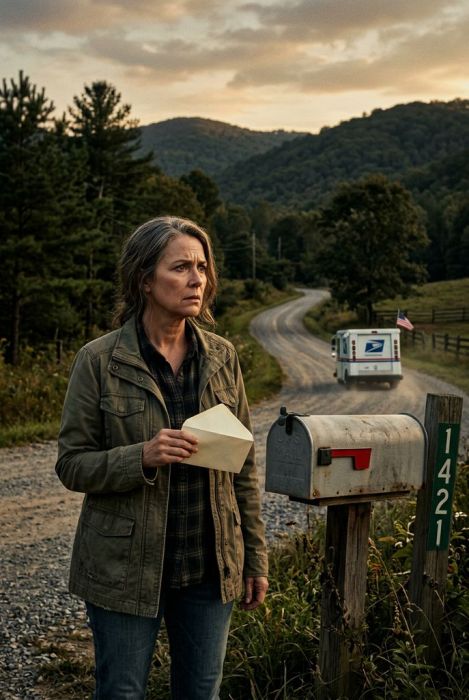
I'd been the town librarian for thirty-one years. I knew what a real document looked like, and I knew what people looked like when they were about to be lied to. Ruth had that look. She'd lost her husband, Frank, two years ago to a stroke that took him in the garden he'd loved. She was lonely and hopeful, desperate to leave something for their grandson Tommy, who had Down syndrome and was the light of her life.
"How much did he ask you to pay, Ruth?" I asked, trying to keep my voice light. Her smile flickered. "Just the processing fees. Two thousand the first time, for the search. Then the solicitor's transfer fee. It's all official, Maggie. He showed me the letters." She opened the folder and handed me a sheet with a letterhead that read McAllister & Sons, Solicitors, Edinburgh. It looked official. It smelled official. But I'd held real solicitor's letters before, from my cousin in Cork, and this paper was thin and faintly speckled — the kind they sold in reams at Sullivan's Office Supply for nine ninety-nine.
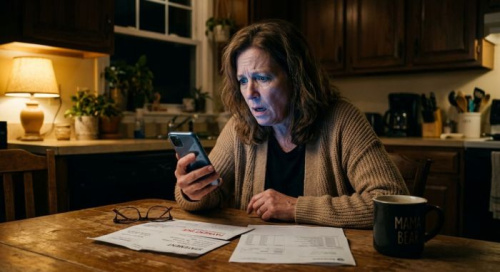
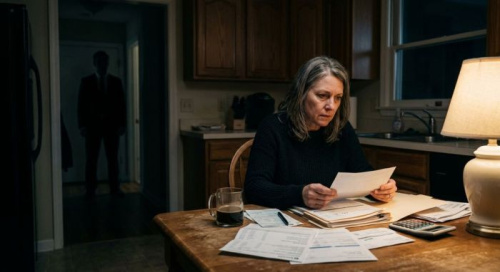
I said nothing then. Ruth was too happy, and I'd learned long ago that you don't take a match to a woman's hope when she's holding it close to her chest. But that night I couldn't sleep. I kept thinking about the letterhead, about the way the seal had a tiny misprint in the crown, about the nine thousand dollars Ruth had already handed over in three months of "fees."
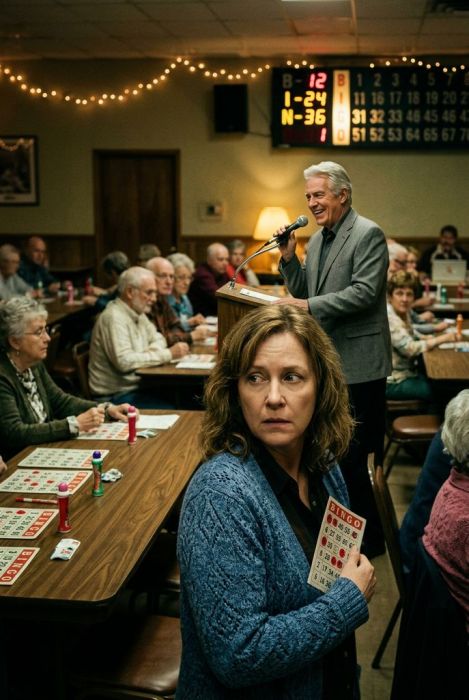
Over the next weeks, I watched Warren Davenport work. He was at the senior center every Tuesday, holding court over coffee and pie, promising lost inheritances to anyone who'd listen. Mrs. Alvarez, whose grandfather was supposedly a Spanish landowner. Mr. Whitaker, whose uncle had left a fortune in a Chicago bank. And always, always, the same gentle phrase: "These things take time, my friend. A little more paperwork, and it will all be yours."
I started quietly. I checked the county records. Warren Davenport had arrived in Jasper Falls with no history anyone could verify — no previous address, no mention in any genealogical directory. The historical society's books were suddenly flush with donations, all from seniors. And the "official" letters Ruth showed me all carried that same faint speckled watermark.
When I finally raised my concerns at the historical society board meeting, I made a mistake. I said the word "scam" out loud. The room went cold. Warren stood up, pressed a hand to his chest, and looked at me with the wounded eyes of a man betrayed. "Margaret, I understand your skepticism. But these good people deserve their hope. If you can't be happy for them, perhaps you should step away from the board." He didn't raise his voice. He didn't have to. By the next week, I'd been uninvited from the senior center coffee hour, and Ruth had stopped returning my calls.
That was the hardest part. Not the whispering at the diner, or the way Mrs. Alvarez crossed the street to avoid me. It was Ruth. My best friend of forty years, the woman who'd held my hand at my own Frank's funeral, wouldn't look at me. Warren had told her I was jealous, that I didn't want her to be happy, that I'd always looked down on her little house on Maple Street. And because he'd given her hope, she believed him.
I might have let it go. I might have let him take Ruth's nine thousand dollars and her dignity and moved on. But then Tommy came to the library, Frank and Ruth's grandson, fifteen years old, with his big brown eyes and his careful way of speaking. "Grandma Ruth is sad," he said. "She sold her sewing machine. She's sad all the time." And I knew, then, that I couldn't walk away.
I called the state attorney general's office and asked for the Elder Fraud Unit. I expected to be brushed off — a sixty-eight-year-old librarian with a hunch and a friend who'd been too trusting. Instead, I got Investigator Dana Reyes, a woman whose voice had the flat, patient calm of someone who'd heard it all before. "Tell me everything, Mrs. Callahan. Word for word."
When I finished, there was a long silence on the line. "Fourteen complaints in three counties," Reyes said at last. "Same script, different towns. He calls himself a genealogist, tells lonely retirees they've inherited money from an ancestor abroad, and bleeds them dry with 'fees.' We've never been able to catch him in the act. The victims always believe him until it's too late, and by then they're too ashamed to testify." She paused. "You said your maiden name is Murphy, and your great-grandmother really was from Glasgow?"
I told her yes. My grandmother had kept the letters, and one of them mentioned an aunt named Bridget Murphy who'd emigrated in 1932 and been named in a will. It wasn't an inheritance — just a name, a thread, nothing more. But it was enough. Reyes's voice changed, sharpened. "Mrs. Callahan, I'm going to ask you to do something. It's entirely voluntary, and you can say no. But you're the first person who's seen through him before he finished with them."
The plan came together over three weeks. I'd book a private consultation with Warren Davenport under the name Margaret Murphy, a widow recently moved from the next county, with a story about a great-grandmother from Glasgow and a letter from a cousin mentioning a family estate. Reyes would authorize the recording — my phone, in a state where that was legal with one party's consent, which I was. And the marked bills, twenty-five hundred dollars in cash from the attorney general's office, would be the first "processing fee."
On the morning of the consultation, I stood in my bathroom and looked at the woman in the mirror. Sixty-eight years old, gray hair I'd stopped dyeing years ago, reading glasses on a chain. I looked exactly like what I was pretending to be: a lonely widow with hope and money in her purse. My hands were shaking as I opened the recording app and set the marked envelope on the seat beside me.
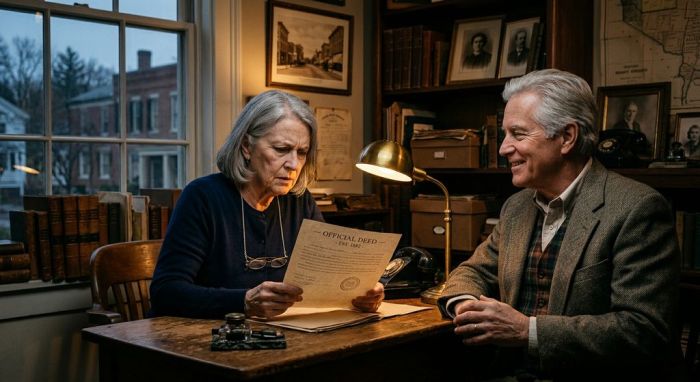
Warren's office was in the back of the historical society, a room he'd decorated with sepia photographs and leather-bound books that had the look of stage props. He stood when I walked in, took my hands in both of his, and smiled with his whole face. "Mrs. Murphy. I can't tell you how delighted I am to meet you." He already had my story — I'd given it to his assistant over the phone, and he'd done his research, feeding it back to me in a way that made me feel like the most fascinating person in the world.
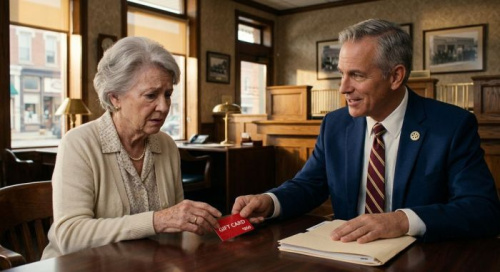
"Your great-grandmother, Bridget Murphy," he said, sliding a photocopied page across the desk. "Emigrated from Glasgow in 1932. Left behind a brother who passed without issue. The estate has been held in trust for ninety years, Mrs. Murphy. And I believe — I truly believe — that you are the rightful heir to approximately two hundred and fourteen thousand dollars." He paused, letting the number hang in the air. "There is, of course, the standard processing. A verification fee, a solicitor's fee, and a transfer bond. After that, the money is yours. It will change your life."
I did everything Reyes told me to do. I nodded. I asked the right questions. I let my eyes fill with tears when I talked about my dead husband and my only son who'd moved to California and never called. And when Warren Davenport slid the fee schedule across the desk — three payments, starting with twenty-five hundred dollars — I opened my purse and took out the marked envelope.
He smiled as he took it. That was the moment, I think, that I'll remember until the day I die. The smile of a man who had done this forty, fifty, a hundred times, and believed, absolutely believed, that he would keep doing it forever. "Mrs. Murphy," he said, "your family is about to become very wealthy. Let me walk you to your car."
He didn't make it to the door. The door to the records room opened instead, and Investigator Reyes walked out, followed by a deputy sheriff I'd never seen before. Warren's smile didn't change at first. He looked at Reyes, looked at me, and I watched him run the calculations — the phone on the table, the envelope in his hand, the woman in the reading glasses who'd just handed him her "dead husband's" story. "Margaret," he said, and his voice finally cracked. "Margaret, you don't understand."
"I understand perfectly," I said. "You took my best friend's nine thousand dollars. You sold her sewing machine out from under her grandson's feet. And you told her I was jealous of her happiness." Reyes played the recording back — the fee schedule, the promises, the exact words he'd used on Ruth, word for word. The deputy read him his rights while he stood there holding the marked envelope like a man who'd just found a snake in his hand.
They found everything in his office. The blank letterhead stock from Sullivan's Office Supply. The printer with the faint speckled watermark still in the tray. The computer files — forty-seven templates, each one a different ancestor, a different estate, a different lonely soul. Fourteen victims in three counties, and Ruth O'Malley's name at the top of the list, with the words "Sewing machine, $140" written in his own handwriting beside it.
The charges were filed the next morning: fourteen counts of wire fraud, four counts of financial exploitation of an elderly person, and a charge for the forged solicitor's letters. The local paper ran the story on the front page, above the fold, with a photograph of the historical society and a caption that read simply: "The Man Who Sold Hope." He was convicted by a jury that took less than a day to deliberate. The judge sentenced him to nine years and ordered every penny of the stolen money returned, starting with Ruth's.
Ruth came to my house the day the restitution check arrived. She stood on my porch with the check in her trembling hand and tears running down her cheeks, and she didn't say a word — just held out her arms. We stood there in the doorway like the two old friends we were, and I cried harder than I had at Frank's funeral, because this was the part the story never tells. Not the arrest, not the sentence. The part where the person you love most in the world comes back to you, and you find each other again.
Tommy got a brand new sewing machine — the best one Sullivan's had — and the historical society held new elections. The same board that had looked away asked me to take over as volunteer coordinator. I said yes, on one condition: the first workshop I ran would be called "How to Spot an Inheritance Scam," and every senior in Jasper Falls would be invited.
Warren Davenport sits in a state correctional facility in Ohio now, and I don't think about him much. I think about Ruth, and the way she laughs again at the diner on Friday mornings. I think about Tommy, and the way he beams when he tells people his grandmother is the smartest woman he knows. And I think about all the lonely people in all the small towns, holding letters with speckled watermarks, hoping. The moral of the story is simple, and I tell it at every workshop: when someone promises you a fortune you didn't know you had, the only thing they're really selling is hope — and hope, my friends, should never come with a fee.