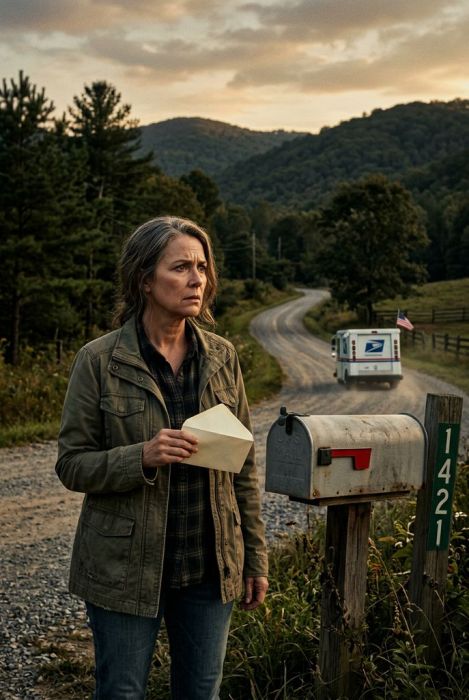
The day my daughter's brakes failed on I-90, I was two hundred miles away, folding laundry in the kitchen of the little house I'd kept together after my husband Roy died.
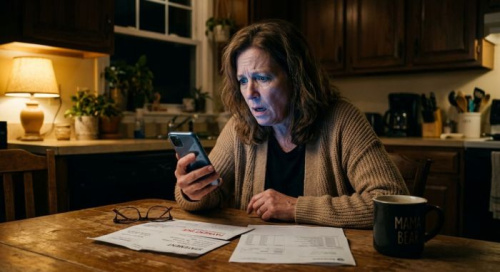
Kara called at 4:52 in the afternoon. I remember the minute because of how quiet her voice was. "Mom," she said. "The brakes aren't working. I'm coming up on the Tyrone exit and the brakes aren't working."
She'd had the car six weeks. That red sedan with the clean gray interior and the "certified pre-owned" decal on the window, bought with money I'd saved for two years putting in extra shifts at the hospital. My daughter had turned nineteen. She had a scholarship and a forty-mile commute, and every morning I watched her pull out of the driveway in that car and felt, for the first time since Roy died, that we were going to be fine.
Dale Whitfield had sold it to us. Everybody in Mercer Falls knew Dale Whitfield. He was the man in the good suit who sponsored the Little League, who gave the county fair its ribbon-cutting every July, whose face smiled down from billboards at the edge of town—"Whitfield Auto World—Where We Treat You Like Family." He shook my hand with both of his when I walked onto his lot that Saturday. He called me "ma'am" and he called Kara "young lady." He told us the red sedan had belonged to a retired schoolteacher who'd babied it, and he showed us a laminated checklist of a hundred and twenty points his certified mechanics had inspected.
"Brakes are brand new," he said, tapping the paper. "You're driving out of here in the safest car on the road."
I believed him. He was Dale Whitfield. Everybody's grandfather in a tie.
On the phone, I could hear the wind and the engine and the terrible silence where the brake pedal should have been. "Kara," I said, "do not pump them. Steer, baby. Steer to the shoulder. Use the emergency brake. Slow."
I could hear her breathing. Then she said, "There's a semi behind me, Mom."
There are words a mother should never have to hear. I will carry that sentence for the rest of my life. But what I did next was call the state patrol, and then I drove with wet hands and a dry mouth, and I didn't stop until I was standing at the guardrail where her car had come to rest sideways in the grass, a foot from the concrete divider, the hood still ticking.
She was alive. She had a bruise across her chest from the seatbelt and a shake in her hands. The trooper said she'd kept the car straight at seventy miles an hour with no brakes and gotten away with scratches. That night, holding her on the couch, I kept thinking about the man with the laminated checklist and the both-handed handshake. And I knew, with the kind of cold certainty that has nothing to do with anger and everything to do with math, that he had lied to us.
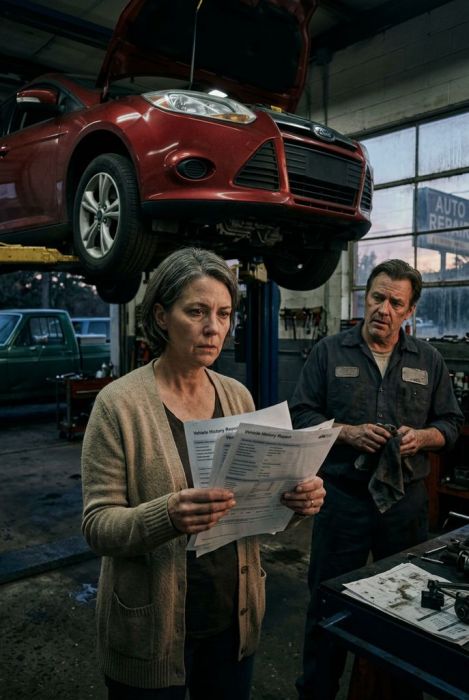
The next morning my brother-in-law Pete came over. Pete ran a two-bay garage on the other side of town, and he had a face that went still when he was about to tell you something you didn't want to hear. He put the red sedan up on his lift and stayed under it a long time. When he came out, he wasn't looking at me. He was looking at the car.
"Mary," he said. "This car was in a wreck. A bad one. Frame's been straightened and hidden with filler. Those brakes weren't new—they were the oldest thing on this car, and somebody cut the lines. And this odometer's got a hundred ninety-two thousand on it, not the ninety-one on that sticker."
I sat down on the oil-stained stool by his desk and I laughed. It wasn't a happy laugh. "He showed us a checklist."
"He showed you a piece of paper," he said.
Over the next two weeks, I learned things about Dale Whitfield that turned my stomach upside down. Pete had a friend at the dealer auction in Columbus who ran the VIN for me. The red sedan had been totaled at a salvage auction in Texas eight months before it appeared on Dale's lot with ninety-one thousand miles on it. The "retired schoolteacher" never existed. The "certification" was a fiction printed on a home computer. And when Pete asked around, quietly, the way small-town mechanics do, he found that I wasn't the only one.
There was a single father named Ray who'd bought a pickup that died on the way home. There was an older couple, the Feldmans, who'd traded their savings for an SUV with a rebuilt title, and it had stranded them on the shoulder of I-75 on the way to their daughter's wedding in Cincinnati. None of them had complained, because when you complain about Dale Whitfield, you find out fast that Dale Whitfield owns the people who hear complaints. The sheriff played golf with him. The judge went to church with him. And Dale had a lawyer, a sharp young man named Corby, who had once sued a customer for defamation after she left an honest review online, and she'd paid him six thousand dollars to go away.
So I knew what I was up against. A beloved man with a long reach and a paper-thin smile, and a town that had decided, many years ago, that Dale Whitfield was one of the good ones.
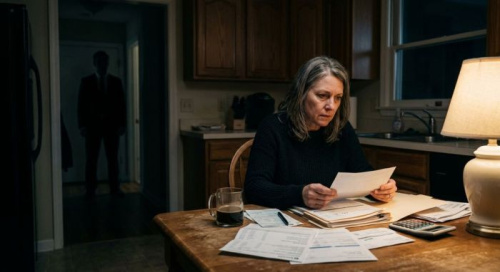
I did the only sensible thing a middle-aged widow with a bruised daughter and a death-trap car can do. I started keeping receipts. I kept the sales contract. I kept the laminated checklist with the fake signature of a "certified master technician" who, I would later learn, was a nineteen-year-old lot porter named Junior. I kept the auction printout. I kept the photographs Pete had taken of the frame filler and the cut brake lines. I put it all in a folder, and I put the folder in the freezer, because it felt like the only place in my house my own fear couldn't find it.
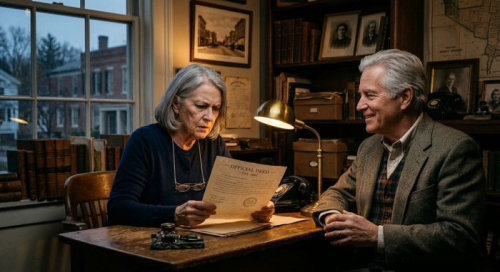
But evidence in a freezer doesn't put a man in handcuffs if the people who read it are on his side. I needed someone who wasn't. That someone turned out to be my neighbor, a retired state trooper named Hank Oster, who had moved to Mercer Falls three years ago and was still, by his own admission, "an outsider who doesn't owe anybody a barbecue." When I brought him the folder—defrosted, at my kitchen table, with Kara asleep down the hall—he read every page twice. Then he took off his glasses and cleaned them, which I learned was how Hank Oster said things he didn't want to say.
"Mary," he said. "You're right about everything. And that's the problem. Because this isn't one bad car. A man who does this once is a cheater. A man who does it for years, with a checklist and a lawyer and a billboard—that's a business model. And a business model leaves a trail."
He started calling old friends. A title clerk in Columbus. A fraud investigator at the state attorney general's office named Ellen Boyd who, Hank said, had been waiting a long time for someone to bring her a Whitfield file. "She's had complaints from seven counties," he told me. "Nobody's ever brought her a starting point." The starting point, it turned out, was the folder in my freezer.
And then Dale made a mistake. He showed up at my house.
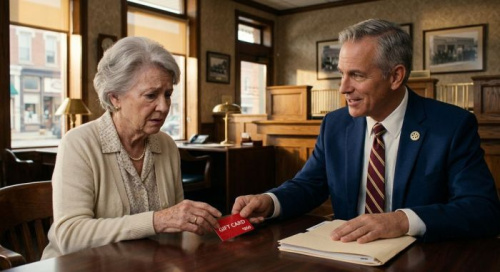
It was a Tuesday evening, and the sun was going down over the row of maples on Mercer Street. He pulled into my driveway in a silver truck with a dealer plate and knocked on my door like a neighbor, holding a gift bag, smiling with those teeth. "Mary," he said when I opened it, and it startled me, because I'd never given him my first name. "I heard about your daughter's scare. I've been losing sleep over it."
I stood in the doorway and let him talk, because Hank had told me that if Dale ever came to me, I should let him talk and say as little as possible. He told me the brakes were an act of God. He told me his own mechanic had looked at the car and found nothing wrong, and maybe my brother-in-law was being "overzealous." He put the gift bag in my hand—a seventy-five-dollar grocery card and a coupon for an oil change. "We're going to make this right," he said. "Family takes care of family."
That was when I realized he hadn't come to apologize. He'd come to find out what I knew. He was probing. He was charming. He was dangerous.
"Thank you, Mr. Whitfield," I said, and I closed the door, and I stood there with my heart hammering, the grocery card in my hand like a spider I was too afraid to drop.
The trap—because Hank, Ellen Boyd, and I were building a trap—had to look like something else entirely. Ellen told me we couldn't arrest our way to a conviction on odometer tampering without catching him in the act or finding his records, and Dale was too careful to keep records. "But he's not too careful to keep money," she said. "And he's not too careful to resist a deal."
Hank's deadliest weapon turned out to be his fishing buddy, a man named Sonny Deaver, who had worked for Dale for eleven years as the night lot attendant. Sonny had keys. Sonny knew where the backup drive lived in the back office. Sonny also knew that Dale had fired him two weeks before I bought the red sedan, for "talking too much to customers." And Sonny had kept something. "I'm a pack rat, Mary," he told me at the café, stirring his coffee with a shaking hand. "When you've watched a man roll back odometers for a decade, you keep the numbers in your head."
Sonny's numbers were the tab that everything else snapped to. Twelve vehicles in the past three years alone, he said, that Dale had bought wrecked, rolled back, and resold as clean to families like mine. Sonny walked into the attorney general's office in Columbus with Hank at his side and came out two hours later with a witness agreement and a date on the calendar.
The date was the first Friday in August. The day of the county fair. The day Dale Whitfield was scheduled to cut the ribbon on the biggest tent on the midway, with the mayor beside him and the local news camera in his face.
I didn't want to go. I'll be honest. There was a tired, practical part of me that wanted to stay home with my folder and my daughter and let the state do its work. But Ellen Boyd said it mattered. "He's going to deny it," she said. "He's going to say it's all a misunderstanding, and half of Mercer Falls is going to believe him, because they've believed him for thirty years. We need you there, Mary. We need the face of the family he sold a death trap, standing where everyone can see her."
So I went. I wore my best dress, the blue one Roy had liked, and I stood at the edge of the tent while the fair band played and the mayor made a speech about what a pillar of the community Dale Whitfield was. I watched Dale straighten his tie and step up to the microphone with that grandfather smile, and I thought about Kara's voice on the phone, steady and afraid, and the semi behind her at seventy miles an hour.
He was two sentences into his speech when Ellen Boyd walked across the grass, badge out, with two troopers behind her and Hank beside me, his hand on my arm.
"Mr. Whitfield," she said, loud enough for the microphone to catch it. "I'm Investigator Boyd with the State Attorney General's Office. You're under arrest for odometer tampering, falsifying vehicle documents, and grand theft by deception. You have the right to remain silent."
I've thought about the next thirty seconds more than I should. The mayor stepping back. The band stopping mid-song. The children in the crowd looking up at their parents, and the parents looking at Dale, and Dale looking at me—not angry, exactly. Confused. As if he genuinely couldn't understand how a woman like me, a widow in a blue dress from a house on Mercer Street, had ended his world with a folder from her freezer.
The trial was in October, and it lasted three weeks. Sonny testified for two days and never once looked at the defense table. The auction records came in on a pallet of paper. Eight of the twelve victims took the stand, including the Feldmans, and when Mrs. Feldman cried describing the walk she and her husband took beside their stalled SUV on the shoulder of I-75, I saw more than one juror wipe an eye. Dale's lawyer did his best. He called Dale a victim of a disgruntled employee. He called the odometer readings a paperwork error. But a jury of eleven Ohioans, plus the backup drive recovered from a storage locker Dale had forgotten he owned, told a different story.
They found him guilty on all eleven counts. The judge gave him twelve years and ordered the dealership seized and liquidated, with every dollar going into a restitution fund for the families he'd cheated. Dale Whitfield's face came down off the billboards before Thanksgiving, and the man who cut the ribbon at the fair next July ran a lot with a different name and an actual certified inspector on staff.
I took my restitution check to the bank and I didn't spend it. I put it with the folder—the folder is still in the freezer, I can't bring myself to move it—and when Kara graduates, I'm going to put it toward the little house she wants, the one with the garage she says she'll never need, because she still drives with her hand near the emergency brake and I've decided that's a perfectly good thing.
The last time I saw Dale Whitfield was at sentencing. He looked smaller than he had on the billboard. He looked like what he was: a man who had spent thirty years treating other people's hope like inventory, and who had finally met a customer who kept the receipts.
Kara asked me once why I didn't just take the grocery card and the oil change and let it go. I thought about it for a long time, because it's a fair question and she deserved a real answer.
"Because honey," I told her, "being his victim once was an accident. Being his victim twice was a choice. And I've made enough choices for one lifetime."
She didn't say anything. But a few days later, I found that seventy-five-dollar grocery card, never used, in the garbage. She'd drawn a smiley face on the back before she threw it away.
Karma is patient. Karma keeps records. And karma, it turns out, has a folder of its own.