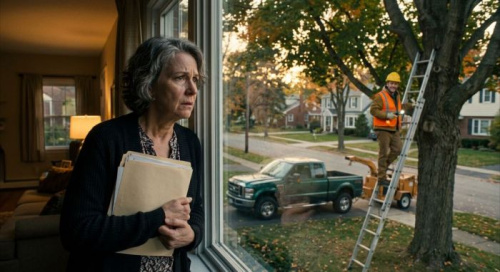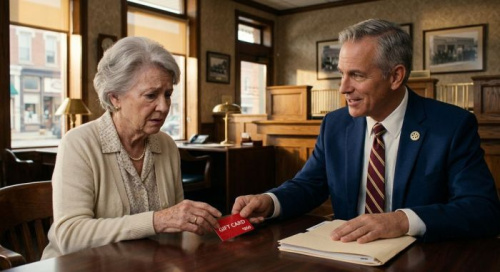
The afternoon my mother's pension disappeared, I was standing in her kitchen in Knoxville thanking Leonard Pike for the seventh time that month. He had just replaced her keyboard, run her updates, and refilled her bird feeder without being asked, and he waved off my gratitude the way he always did—with that easy grin that made every widow on our street feel like she had a son looking out for her. "It's nothing, Miss Dot," he told her. "You just call me. That's what I'm here for." Four hours later, when she sat down to pay the electric bill, her savings account read $312.00. The pension that had landed that morning—$1,874.00, like clockwork for fifteen years—was gone. And for one sick moment I nearly convinced myself my mother was losing her mind, because the last thing I wanted to believe was that the kindest man in Knoxville had taken it.
My mother, Dorothy Lawson, was seventy-eight years old, a retired school secretary with a garden she babied and a congregation she had fed casseroles for forty years. My father died nine years ago, and my job as a nurse in Nashville kept me two hours away, so I managed her bills by phone and visited twice a month. It wasn't enough, and nobody knew that better than I did. So when Len Pike opened his computer shop on Chapman Highway and started "adopting" the neighborhood seniors, I was grateful in a way I hadn't been grateful for anything since Dad passed.
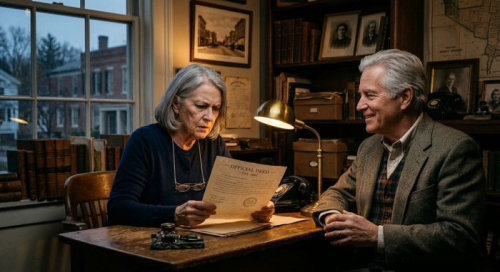
Len was forty-two, handsome in a rumpled way, with a crew cut that made him look like a retired Marine and a gift for explaining technology without making you feel stupid. He fixed my mother's ancient desktop for free, "because it's mostly dust and prayers anyway." He came over when her printer jammed and drove her to her eye appointment the winter her cataracts were bad. He brought her chicken soup when she had the flu and sat on the porch with her on the anniversaries of Dad's death. Pastor Dave once said from the pulpit that Len Pike was the kind of neighbor the Good Book was written about, and the whole church said amen.
Mom adored him. She gave him a key to the house "for emergencies," the way she'd have trusted her own brother. She told him her passwords—"so he can fix the bank thing when it glitches, honey." The bank thing. My stomach still turns, remembering how many times I heard that phrase. She thought she was being practical. She had no idea she was handing her whole life to a man who kept a ledger of it.
The first sign came in February, when a certificate of deposit matured and Mom asked me why the rollover check seemed light. I called the bank. They told me there had been several authorized online withdrawals over the previous year, all from her home computer, all under her banking password. When I asked her about them, she cried and swore she had never made them. The branch manager, a decent man named Mr. Okafor, was kind but blunt. "This happens," he said, "and usually it's a grandchild or a phone scam. Has anyone else touched her computer?" I told him only the nice man who fixed it for free. He wrote it down and said nothing, and I was too embarrassed to push.
That spring, the rumors started. Mom forgot to pick up her prescription. She paid a water bill twice because she didn't remember paying it the first time. Old Mrs. Ellerby told the church circle that Dot Lawson was getting soft in the head, and for a while I believed her. I took Mom to a neurologist in March. He ran every test and told me she was sharp as a tack. "Your mother doesn't have dementia," he said. "She has a daughter who's worried sick. What else is going on?" I didn't have an answer.
Len was the one who defended her. "Miss Dot is fine," he told anyone who'd listen. "She's the sharpest woman on this street." He started a free computer class for seniors at the church on Thursday nights, and Mom was his star pupil. The church took up a collection to buy laptops for the class, and Len handled the ordering. Pastor Dave handed him the check with both hands, like it was a medal.
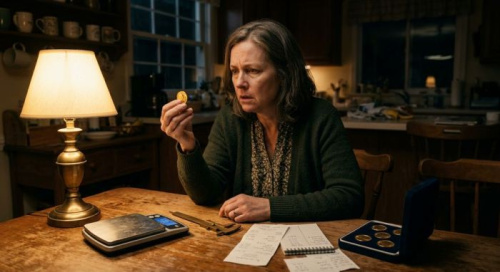
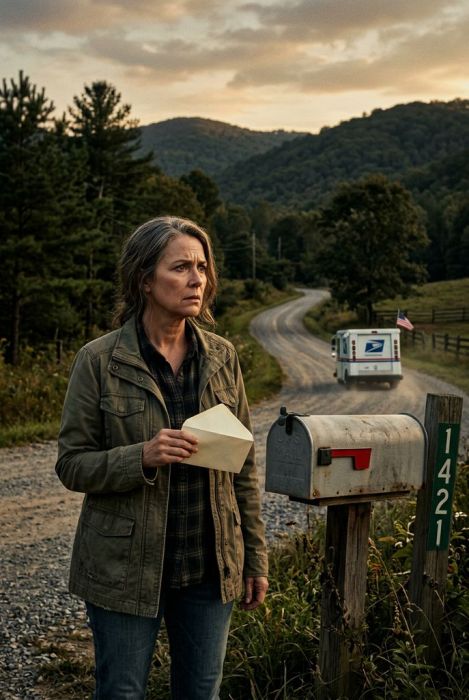
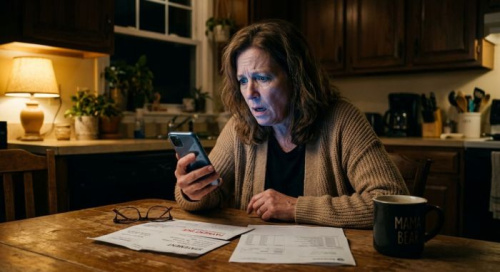
The night everything broke was a Tuesday in late spring. Mom's pension landed at six in the morning. Like always, she planned to pay the electric bill and send me the same two hundred dollars she'd sent every month for years for the grandkids' college fund. By noon the entire pension was gone, along with the grocery money. More than two thousand dollars, wiped clean. When I got there at midnight, she was still sitting at the kitchen table in her bathrobe, holding the bank statement in both hands, repeating the same thing over and over: "I didn't do this, Maggie. I swear to you, I didn't do this."
I called the bank the next morning. The transfers had gone out at 2:14 a.m. to a prepaid card company and been swept again before dawn into accounts I'd never heard of. "Ma'am," the fraud analyst said, "these transactions were made from her computer while she was asleep. That means someone else has her password and her online access." I sat in my rental car in the Piggly Wiggly parking lot, and the world went very quiet. Someone else. Her password. Her computer. The only other person who had ever touched that computer was Len Pike.
But I couldn't say it. Nobody would believe me. Len had taught the class, fixed the printers, brought the soup. He was the good one. I was the absent daughter who lived in Nashville and showed up twice a month. When I gently suggested to Pastor Dave that maybe they should hold off on the class laptops until the money was sorted out, he looked at me like I'd slapped a saint. "Maggie," he said, "don't let worry make you cruel."
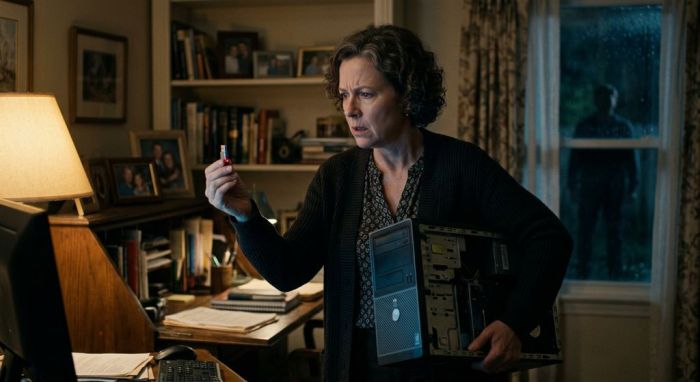
I might have buckled under all of it—the whispers, the doubt, the terrible feeling that maybe everyone was right—if my nephew Marcus hadn't come home from college that summer. Marcus was twenty-four, a computer science student at UT, and he'd always been her favorite grandkid. When Mom's old monitor flickered its last, I asked him to set up her new one. He was in her office for maybe twenty minutes before he walked into the kitchen carrying the computer tower in his arms, his face the color of milk.
"Aunt Maggie," he said, "who the hell works on this computer?" I told him about Len. Marcus set the tower on the counter and pointed at something taped inside the case, a thing no bigger than my thumb, silver and plastic with a USB plug on the end. "That's a hardware keylogger," he said. "Someone opened this machine, plugged this in, and hid it behind the fan. Every keystroke your mother has typed for two years—every password, every bank login, every birthday—went to whoever put it here." He held it up to the light. "And Aunt Maggie, this is a pro model. Somebody in this town has been eating steak off your mother's retirement."
I didn't sleep that night. I sat on Mom's porch with Marcus, drinking terrible coffee, and we went through her router logs on his laptop. There it was—a remote connection opening at 2:14 a.m. on every single payday, from an IP address registered to a small business on Chapman Highway. The same night, every time. I looked at Marcus. "What do we do?" He closed the laptop. "We don't tell a soul. We call a bank, we buy a camera, and we build a trap he can't walk away from."
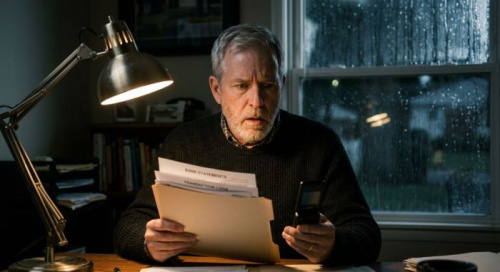
The plan took eleven days, and it was beautiful. My cousin Ray worked at the same regional bank, and through him we met a fraud investigator named Patricia Hale who had seen this exact trick a hundred times. She opened a decoy account in Mom's name—a new retirement CD with twelve thousand dollars in it, funded with marked bills the bank photographed and logged. Then Marcus helped me stage the bait: a neatly typed note on Mom's desk reading "CD renewal—password: Lawson1974," sitting innocently beside a folder labeled BANK PAPERS. We planted it the week of Mom's church retreat, when Len would know the house would be empty.
The cameras were Marcus's idea. A doorbell camera, already there. And a second one, tiny as a button, hidden inside a bookend on Mom's desk, aimed exactly at the monitor and keyboard. We told no one except Detective Anita Cho of the Knoxville cyber unit, who laughed when she heard our plan and then stopped laughing. "This is how we get them," she said. "Greed. You can't arrest charm until you catch the hand." We would not warn Len. We would let him take the bait, and we would film every second of it.
The night of the retreat, Mom stayed at my cousin's house in Farragut, her car parked inside the garage so the street looked empty. Marcus and I watched from a borrowed van across the road, our phones linked to the doorbell feed. At 8:40 p.m., Len Pike's old Ford rolled up the block nice and slow, headlights off. He parked three houses down and walked up the driveway carrying a toolbox, whistling. He used Mom's key. He went straight to her office like a man who had done it a hundred times.
On the bookend camera, we watched him open her desk drawer, find the note with the password, and smile. It was the smile of a man unwrapping his own present. He sat down, logged in, opened the decoy CD, and started a transfer of $9,500 to a prepaid card—right in front of a camera that the Knoxville PD and the Secret Service were watching live. Detective Cho's text came through while he was still typing: "We have enough. Stand by." We watched him pull a fresh keylogger from his toolbox, swap it into the tower, wipe the desk with his sleeve, and leave. He was whistling again as he got in his truck.
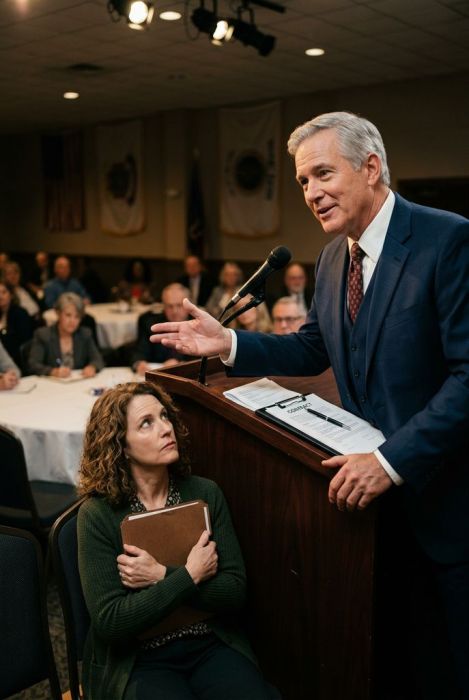
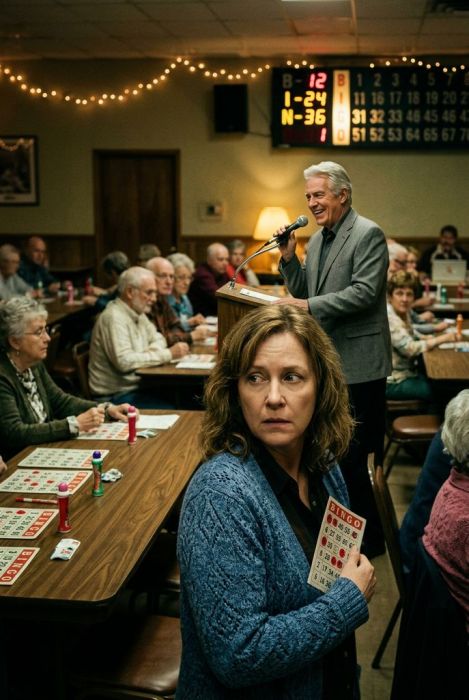
Four days later, on a warm Thursday night, Len Pike walked to the front of the church basement for his computer class, beaming at his little congregation of seniors. He was two days from collecting that $9,500. He had even ordered business cards printed with "Pike's Digital Trust." Pastor Dave was introducing him—"a man who gives and gives and asks for nothing"—when the basement door opened and Detective Cho walked in with Special Agent Paul Hendricks of the Secret Service and a folder that seemed to glow.
Len kept his composure for about nine seconds. "Officers," he said, "is there a problem? I was just about to teach—" "Leonard Pike," Cho said, loud enough for every widow in that room to hear, "you are under arrest for wire fraud, computer tampering, and identity theft regarding Dorothy Lawson and, we believe, at least a dozen other seniors in this county." She read him his rights while he stood there with his mouth opening and closing like a fish, and then she said the thing I'll never forget: "We have you on video, Mr. Pike. Live, from the desk of the woman whose pension you stole. You smiled at the camera. It's a lovely smile."
I was standing at the back of the room. I hadn't planned to speak. But when Len's eyes found mine, and for one second the mask slipped and I saw the cold, bored man underneath, I heard myself say, "The church paid you to buy laptops, Len. Mom paid you in trust. I hope the steak was good." He didn't answer. He was looking at the seniors he'd taught and charmed and robbed, and you could see the exact moment he understood he would never be the good one in this town again. They filed out past him without a word, and old Mrs. Ellerby, the one who'd called Mom soft in the head, took my hand and squeezed it. "Honey," she said, "I'm so sorry." That was the first time I cried.
The investigation took eight months, and it was bigger than we ever imagined. On Len's cloud drive, agents found a file called "Help List"—fourteen names, ages seventy-one to ninety-one, with passwords and bank routines: "Dot—pension 1st Tue, waits until the 4th to pay bills." Three hundred ten thousand dollars, lifted from people who had trusted him with their house keys. The casino receipts explained the greed: forty thousand in losses in eighteen months, pressure from a loan shark in Gatlinburg, and a house on Maple Avenue his neighbors thought he'd bought with an inheritance. "There was no inheritance," Agent Hendricks told me. "There was your mother."
Len took a plea in the spring rather than face fourteen separate trials with fourteen witnesses and fourteen keys he'd been given in trust. The judge called it a theft of trust so thorough it bordered on the theatrical, and sentenced him to six years in federal prison, plus full restitution, seized from his shop, his truck, and the house on Maple. The bank had returned Mom's money weeks earlier—every cent. Mr. Okafor called her personally to apologize and set up a new account on a computer he verified himself.
What happened afterward is the part I think about most. Pastor Dave stood in the pulpit the next Sunday, read a short apology, and handed the computer class to Marcus, who still teaches it every Thursday night, free, in a room that now has a sign reading "Pike's Digital Trust" with the word "Pike's" crossed out in marker. Mom got her first new laptop in a decade and a roll of washi tape to decorate it. She pays her bills with paper and pen now, in a little ledger book, and writes every password in a code only she understands.
The day I drove back to Nashville, she walked me to the car and pressed something into my hand. It was the keylogger, in a little ziplock bag, with a note in her shaky handwriting: "For your evidence drawer, so you never forget. He was nice to me, Maggie. He was so nice. That's the part that hurts." We stood on the driveway for a long time, neither of us speaking. Then she said, "But I got my pension back, and my garden's blooming, and nobody on this street calls me soft in the head anymore. I'd call that a fair trade for a little hurt."
I think about Len sometimes. Not with anger anymore—I've used all of it up. I think about the way he whistled walking up the driveway with her key, and the way he smiled at a camera he didn't know was watching, and I think about what Detective Cho said the night we watched the footage: "Greed is a habit, and habits leave records." He left records everywhere. In a keylogger the size of a thumb. In a note we planted that he couldn't resist. In fourteen bank accounts he thought were invisible.
I don't believe in magic, and I don't believe the universe keeps score. But I do believe in marked bills and button cameras and a twenty-four-year-old kid who knew what a piece of silver plastic inside a computer tower meant. Karma isn't a bolt of lightning. It's a paper trail, a doorbell cam, and a town that finally looked at the kindest man it knew and asked the one question nobody had asked in six years: if he's so good, why does he need your password?