The chainsaw was already screaming when I parked in my mother's driveway.
I had a bag of groceries in one arm and a flat of geraniums in the other, and the oak tree my father planted the summer I was born was coming down in pieces. Rose Delaney stood on the porch with her hands folded like she was at church, watching two men in yellow shirts feed her tree into a wood chipper.
"They're getting it done before the storm, Gracie," she said, beaming. "Isn't that wonderful?"
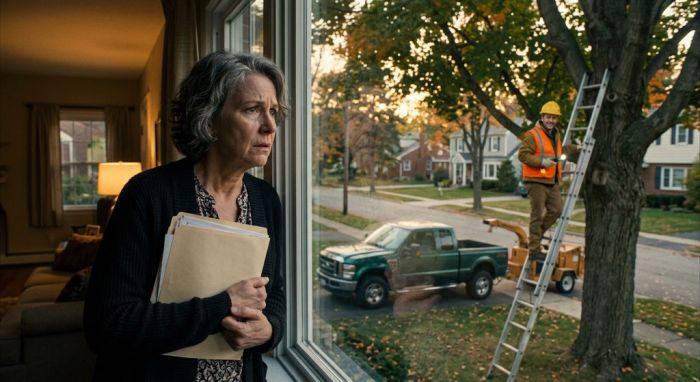
I looked at the raw white stump. Then I looked at the green truck idling in the drive, the words NASH TREE WORKS—CERTIFIED ARBORISTS stenciled across the door. A man in a clean hard hat walked toward me with the kind of warm, unhurried smile that makes strangers hand over their checkbooks.
"You must be Grace," he said, touching the brim. "Your mother told me all about you. I'm sorry we couldn't save the tree. Another storm like last week, and that thing would've been through her roof."
He handed me a folded receipt. The total was $12,400. My mother had paid seven thousand dollars in cash that morning, before I could even get out of bed.
I teach third grade. I know plenty about children, a little about trees, and nothing about fraud. But standing in that driveway, I knew three things for certain. My father's oak had looked healthy at Easter. My mother thought a "widow-maker" was some kind of widow's invention. And Derek Nash had been sitting at her kitchen table with a cup of coffee inside of an hour.
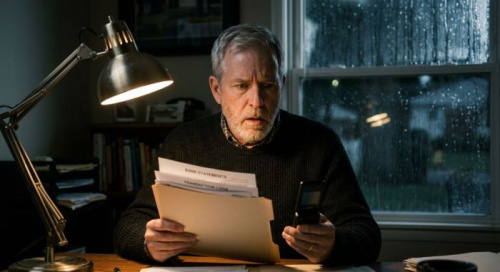
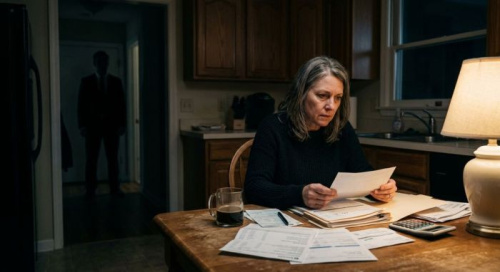
She told me the whole story that night. After the storm dropped a limb on the birdbath, Nash's flyer had appeared on her screen door like magic—FREE STORM RECOVERY INSPECTION. He'd climbed her ladder, come down with a handful of dark, crumbly rot, and shown her a photo on his phone. Fungal growth, he'd said. Critical. A widow-maker. If the next wind took it, it would come through the bedroom where she slept.
"$12,400 to take it down," my mother said, "and he knocked off five hundred because I'm a senior." She patted my hand. "He's a good boy, Gracie. He even asked about my arthritis."
The rot he'd shown her was still on the kitchen counter in a paper towel. That night, I put it in a Ziploc bag like it was evidence. I didn't know yet how right I was.
The next morning I called the only person who might help—Elena Ruiz, a certified arborist from over in Fairview who'd done a storm-safety workshop at my school. She drove out before lunch, walked the stump, studied the stacked limbs, and took pictures with a camera that cost more than my car. Then she knelt down and went quiet for a long time.
"Grace," she said finally, "this tree was healthy. Look at the rings in that stump. No decay, no fungal activity, no girdling roots, nothing. Whoever told your mother this tree was dying either didn't know what he was looking at—or he lied."
I handed her the Ziploc bag and pulled up the photo Derek had shown Mom. Elena held the phone close, then farther away, and her face changed.
"That's not from this tree," she said. "I can't tell you what tree it came from. But it's not your oak." She pulled out her own phone and thumbed through a directory. "And by the way—there's no certified arborist named Derek Nash in Ohio. Not a single one."
I looked him up myself, twice, to be sure. She was right.
Elena wrote me a two-page report that cost $250, and before she left she said something I've never forgotten. "People like him don't do this once, Grace. They travel. They find the neighborhoods where nobody wants to make a fuss."
She was right about that, too. When I called Nash Tree Works the next day and asked, very politely, for my mother's money back, Derek Nash laughed.
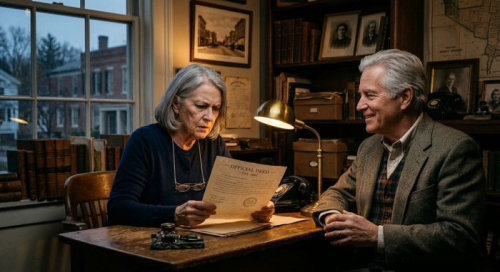
"Ma'am, your mother signed a contract. Judges love signed contracts." His voice got softer, friendlier, which somehow made it worse. "Now, people in this town know me. I put new bleachers at the ballfield. I don't charge seniors a dime extra for small jobs. You don't want to be the one who starts trouble over a tree that's already gone."
I hung up and called the county prosecutor anyway.
Over the next two weeks, I learned how the game worked. I walked the neighborhood with Elena's report in my purse and asked polite questions over fences and at the church potluck. That's how I met Dorothy Kowalski, who told me proudly that Nash Tree Works had saved her maple last spring—$5,800 to cable a branch with a "hairline crack" he'd shown her from the ladder.
"The crack was the size of a pencil line, Dorothy," I said gently. "Did anyone else look at it?"
"My Bob's landscaper said it was fine," she admitted, "but Bob's landscaper didn't climb up there like Derek did."
A week later I found the landscaper. He remembered the maple clearly. "That tree was healthy," he said. "I told her that. Only thing wrong was a little mark on the bark, like somebody'd scored it with a knife. I figured a kid with a pocketknife got to it."
Scored. I called Elena that night, and she laughed a tired laugh. "That's the oldest trick in the book," she said. "A blade mark in the bark, a little rot from a dead branch he keeps in his pocket—instant dying tree."
The dead branch. The rot in the Ziploc bag. It all clicked.
By the time Detective Omar Reyes called me back, I'd collected eleven names. Every single one followed the same script: a storm, a free inspection, a palmful of rot, a photo, a terrifying price, a cash deposit, and a tree that came down so fast nobody could ask a question. Eleven families. Forty-one thousand dollars. All of it from people old enough to remember when a handshake meant something.
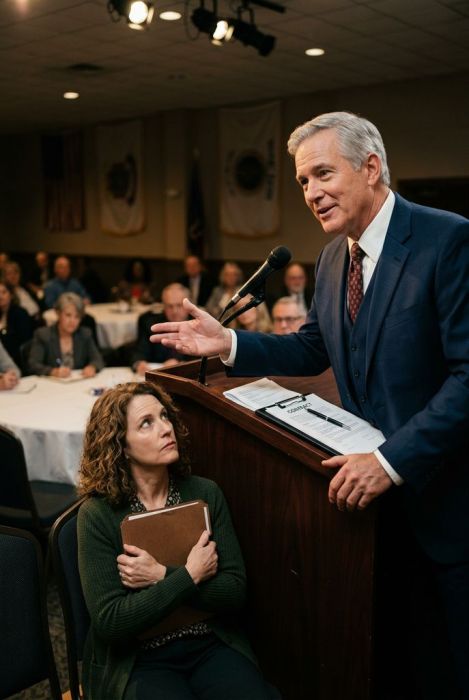
Reyes was a patient man with a tired voice. He'd been watching Nash for two counties. "He's smart, Mrs. Delaney. Smart enough to stay under the felony radar in one town. Two complaints here, a civil settlement there, a name change in between. We need one clean case. A certified expert, real evidence, a victim willing to testify." He paused. "You and your mother willing?"
I told him we were. And then I told him about Elena.
The flyer came three weeks later, slipped under every screen door on Maplewood Drive: FREE STORM RECOVERY INSPECTION. Nash Tree Works. Saturday morning. The Alvarez house at the end of the street had a maple that had dropped a branch in the last storm, and the Alvarez family—new in town, everyone heard—was a retired school principal and his wife. Elderly. Polite. Exactly the kind of people who wouldn't make a fuss.
What Mr. Alvarez was, in fact, was Detective Reyes's partner, a man named Marcus Webb who'd spent twenty years playing small parts in exactly this kind of play.
Saturday morning was cold and clear. My mother and I watched from the Hartley house across the street—real neighbors who'd let Reyes turn their living room into a command post when he explained what Nash's trucks did for a living. Three cameras covered the Alvarez yard. One more sat in a birdhouse Elena had hung the night before.
At 9:12, the green truck rolled up. Derek Nash climbed out in his clean hard hat and his yellow shirt. He shook Mr. Alvarez's hand for a full four seconds while the cameras drank it in, then tilted his head at the maple like a doctor eyeing a patient.
"Sir, let me be straight with you," he said, loud enough for the microphones to catch. "That split up top? That's a widow-maker. One good storm, and that branch is in your bedroom."
He climbed. He came down with a handful of dark rot. He showed Mr. Alvarez the photo on his phone, and I watched my mother grip the windowsill when she heard the words "fungal growth—critical." He quoted $9,800, and Mr. Alvarez, playing his part perfectly, wrote the deposit check with a little sigh.
Derek Nash was folding that check into his pocket when three men came up the walk. Reyes was in the middle, badge already out, his voice calm and flat.
"Derek Nash. I need you to turn around and put your hands behind your back."
For one second, Derek Nash looked genuinely confused. Then he smiled—that warm, unhurried smile—and held up both hands. "Officer, I think there's been a mistake. I'm just here doing a free inspection for a neighbor. Ask anyone in this town. I'm the guy who put up the bleachers."
Reyes nodded. "You are. And you're also the guy who keeps dead branches in his truck." He reached into the bed of the green truck and pulled out a plastic bag, dark and crumbly inside. "Bag of rot, right next to your lunch box. Careful with that—it's evidence."
Then Elena came up the walk with her folder, Mr. Alvarez pulled off his cap and walked over to stand with the officers, and I watched the smile finally die on Derek Nash's face.
I came out of the Hartley house with my mother's hand in mine and Elena's report in the other. I held up the photo Derek had shown Mom—the critical fungal growth—and then I held up his truck's bag of rot.
"This is the same rot you showed my mother," I said. "You keep it in your truck. You're not a certified arborist, Derek. You're not even close."
He looked at me, and for the first time, I saw real fear in his eyes—not of the handcuffs, but of everything he was about to lose.
The arrest made the local news that night, and the state news by the weekend. Fourteen counts across three counties: theft by deception, contractor fraud, exploitation of the elderly, felony tampering with evidence. Between my mother's oak, Dorothy's maple, and the eleven other families we'd found, the prosecutor's office put the total at $86,000.
Turns out Derek Nash hadn't only been cutting down healthy trees. He'd been selling the wood. The yard behind his house was stacked with firewood cut from the trees he'd "saved" people from—at twenty dollars a bundle at a roadside stand off Route 9. The state seized the trucks, the stand, and the wood, and the auction notice ran in the paper under a headline my mother clipped out and put in her Bible.
Reyes testified at the bail hearing, and the judge looked at the list of victims—fourteen names, the youngest sixty-seven—and set bond so high that Nash spent the next year in the county lockup waiting for a trial he never got. He pled guilty to eleven felonies. Five years, plus restitution in full.
Every single family got their money back. Dorothy Kowalski got all $5,800 and cried on my shoulder when the check came. My mother got every cent of her $7,000, plus the $250 for Elena's report, which I still think was the best money I ever spent.
They towed Nash's green truck out of the ballfield lot the same Friday the little league season started, and I won't pretend the whole town didn't show up to watch.
That spring, my mother and I planted a new oak in the backyard, in the same spot, from an acorn I'd scooped out of the gutters the morning they cut the old one down. The sapling came up fine, and every time it catches a breeze I think about what Elena said about people like Derek Nash traveling to find neighborhoods where nobody makes a fuss.
We make a fuss now. That's the difference.
My mother still tells the story at church potlucks, and people still can't quite believe it. She always ends it the same way, patting my hand: "The tree man thought he'd robbed an old widow. He didn't know he was teaching her daughter how to fight."
I look out at that sapling sometimes and think about the only revenge worth having. It isn't a house, or a headline, or even a prison cell. It's watching a little green thing grow straight and strong in the exact place where a liar told you nothing would ever grow again.
The oak my father planted is gone. But Derek Nash's name is on a registry now, his trucks are somebody else's, and a new tree is standing where he said nothing would ever stand again—and it's going to outlive every lie he ever told.