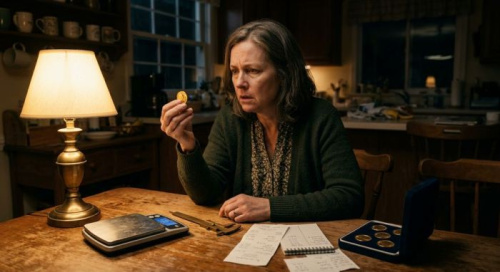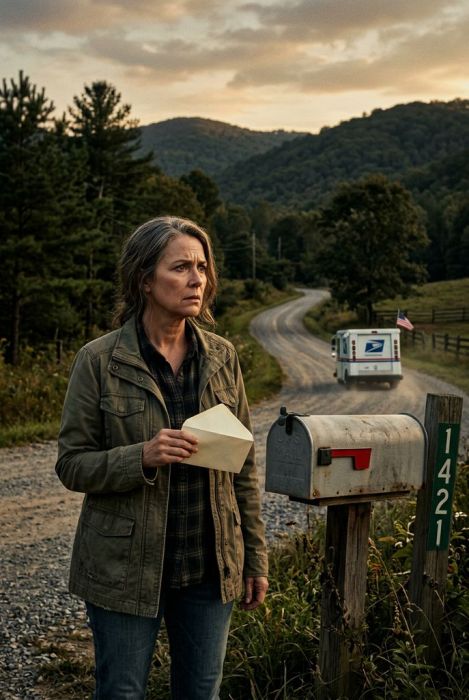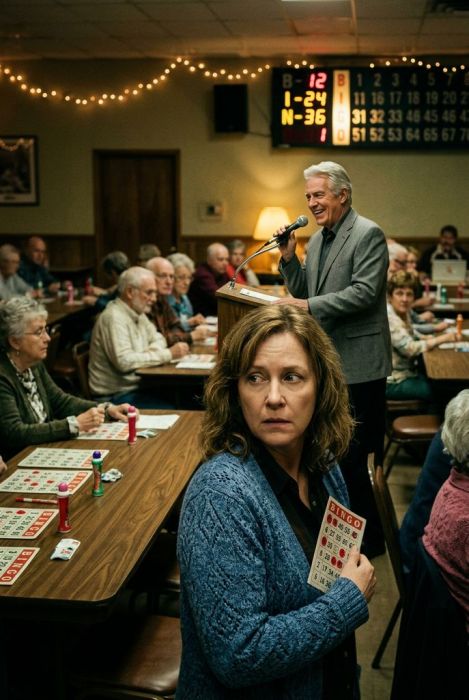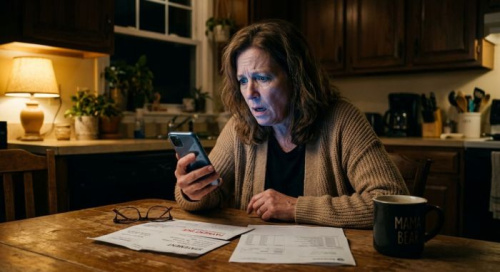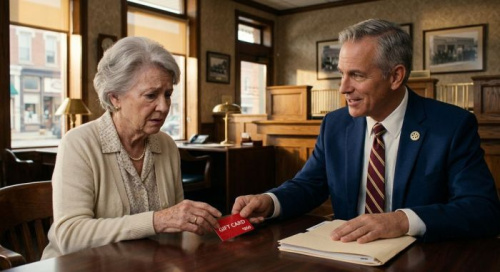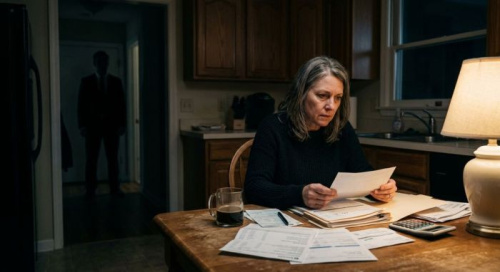
The day I found the charge for $1,847.32 at Brighton Jewelers, I was standing at my kitchen counter in my bathrobe, holding a mug of coffee that went cold in my hand. I had not been to Brighton Jewelers. I had not bought jewelry since my husband died. And yet there it was on my bank app, bright and real, sitting between the electric bill and my Wednesday grocery order.
My name is Ruth Calloway. I taught high school math for thirty-one years, and numbers have always talked to me. Two thousand dollars is not a fortune to some people. To me, it was four months of groceries. It was the emergency fund I had built out of Harold's pension, dime by dime, since he passed eight years ago.
The charge had cleared on a Monday morning. It had emptied my checking account and then some, leaving me forty-three dollars overdrawn. The bank would call that an inconvenience. Math teachers call that a crime scene.
I called the fraud department before my coffee was finished. The woman on the phone was patient with me the way you are patient with an older lady who might be confused. She said they would open a claim, issue a new card, refund the money — standard stuff. I thanked her and hung up, but I did not feel better. I felt watched.
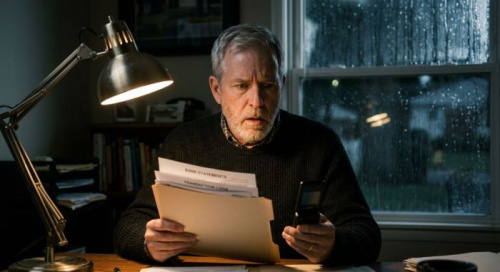
So I did what math teachers do. I made a list. I went back through eight months of statements, every single line, and I found the small one I had missed for fourteen months: $9.99 a month for something called StreamVault Plus. I had never signed up for StreamVault Plus. Then I found the other ones. A $62 charge at a diner forty miles away. A $118 charge at a sporting goods store. Small charges, spaced out, never on the same days as my bills — always landing two to four days after my monthly appointment at Cameo Nails.
Two days after the jewelry charge, I knew the full shape of the mistake I had made, and it made me sick. I had eaten chicken salad sandwiches and cried on the shoulder of the person who had done this to me.
Cameo Nails sits on Main Street in Marlow, Indiana, between the bakery and the old movie theater. For twelve years, every third Tuesday of the month, I sat in chair number two and let Angel Voss take care of my hands. Angel was not her birth name — it was Angela — but nobody in Marlow called her that. She was the kind of woman who remembered birthdays. She kept a little card file of her clients' grandchildren's names. She worked Saturdays without complaining, and she never raised her prices on the ladies who had been with her from the start.
When Harold died, Angel was the first person outside my family to bring me a casserole. She sat in my living room in her work apron and held my hand and told me he was in a better place. I cried into her shoulder. She cried too. That woman knew things about my life that my own sister did not know.
Everyone in town trusted Angel. That was the point. That was the whole tragedy of it.
I did not want to believe it. I spent a week telling myself I was being paranoid, that I was a lonely widow inventing enemies. But I am a math teacher, and math does not care about feelings. So I tested my hypothesis the way I would test a formula. I used my new card only at Cameo Nails. Not at the gas station. Not at the pharmacy. Nowhere else on God's green earth.
Six days after my appointment, somebody used that card at a Target in the next county over. Four hundred and twelve dollars and thirty-seven cents. I sat in my dark kitchen looking at the alert on my phone, and I felt the last warm feeling I had left drain out of me.
I went to the Marlow police station the next morning. Sergeant Marcus Lowe listened to me with the patient, practiced face of a man who had heard a hundred older women describe a hundred wild theories. He wrote things down. He nodded. And then, because I am a math teacher and could not stop myself, I showed him the list. Eight charges. Fourteen months. Every single one timed to my nail appointment. He stopped nodding.
"Ma'am," he said slowly, "have you told this to anyone at the bank?" I said yes. He reached for his phone and said, "There's a woman at the fraud division you need to meet. Her name is Nina Delgado. She's been waiting for a case like this for two years."
Nina was thirty-one, sharp as a tack, and the first person who did not treat me like a confused old lady. She pulled the claim files. Then she pulled more claim files. And then she pulled a printout of fourteen names — all women in their sixties and seventies, all clients of Cameo Nails, all with the same quiet $9.99 charge bleeding out of their accounts every month.
"Look at this, Miss Calloway," she said, sliding the paper across her desk. "Fourteen women. Fourteen subscriptions to StreamVault Plus that none of them ever signed up for. Small charges, small enough to miss, small enough that most of them never even filed a claim." She tapped the last column. "And you know what they all have in common? They all sit in chair number two. They all get their nails done by Angel Voss."
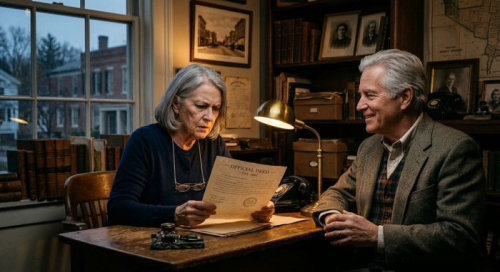
I felt the floor go out from under me. I told Nina about the casserole, about the crying, about the twelve years of holding hands. She listened. When I was done she said the thing I had been too ashamed to say out loud: "The people who steal from you are almost always the people you love. That's not bad luck, Miss Calloway. That's how it works."
We could not prove it yet. A pattern is not a conviction, Nina explained. We needed to catch Angel with the device, and we needed it to happen in a way that twelve defense attorneys could not explain away.
Here is where the plan got beautiful. Regina Bell, who owned Cameo Nails, had installed security cameras years ago after a break-in. The cameras covered the front desk and every station, and she had never once had reason to look at them. Angel did not know those cameras worked. Neither did anyone else.
Nina gave me a special card. It was a real debit card, loaded with a hundred and fifty dollars, and the bank could see the instant it was used anywhere in the country. My instructions were simple. Make an appointment with Angel. Pay with that card. And do not use it anywhere else.
I want you to know it was the hardest Tuesday of my life. I sat in chair number two and let Angel paint my nails a soft pink while I talked about my garden and she talked about a nephew who was doing well in college. She remembered my grandson's name. She asked about his baseball tryouts. When I paid at the front counter, she took my card, swiped it through a small gray reader that sat next to the register, smiled, and handed it back. "Just the rewards program, Miss Ruth. You're about to earn a free polish."
I smiled back at her. I had smiled at that woman through funerals and birthdays and twelve years of holding hands. One more smile was the easiest thing in the world. It was also the hardest.
Thirty-six hours later, the card was used at an electronics store two states away. Two hundred and eighteen dollars' worth of gift cards — the kind of gift cards that never get traced, the kind that criminals buy because they are the closest thing to cash. Nina called me at nine in the morning. She said four words I will never forget: "We've got her, Miss Calloway."
Here is the twist nobody saw coming. The police did not only find Angel. When they pulled the salon camera footage, they watched her swipe my card through that gray reader and then write the sixteen digits into a spiral notebook she kept in her apron pocket — old-fashioned, handwritten, right next to her polish stains. And when they traced where my card had been used, they found a man named Danny Okafor, who ran a phone-buying kiosk at a mall twenty miles away and had been buying cloned cards in bulk for years.
Danny rolled on Angel in four hours. He had receipts, texts, and a ledger of his own. Angel had been skimming cards for six years, ever since the salon added that little gray reader for a rewards program that had never actually existed. She had taken almost two hundred thousand dollars from the women who trusted her.
The arrest happened on a Saturday, at the salon's twelfth anniversary party. Regina had hung a banner and baked a sheet cake, and the shop was full of clients — all of them adoring Angel, all of them pressing close to see her beautiful new car, which she had parked out front and mentioned, casually, twice. Two detectives in plain clothes walked in through the front door as Regina was cutting the cake.
They read the warrant out loud. In the history of that little shop on Main Street, nobody had ever heard the words "identity theft" and "aggregate fraud" spoken at a birthday party before. Angel Voss looked around at the faces of the women who had cried into her shoulder, and for one long, perfect moment, she could not find a single one of them to hide behind.
Regina Bell cried harder than anyone. "She was like a daughter to me," she kept saying, over and over, as the detectives emptied Angel's locker. Inside it, wrapped in a clean towel, they found the gray reader, the spiral notebook, and a small velvet box from Brighton Jewelers. Angel had bought herself a diamond bracelet with my husband's pension.
The trial was quick. Angel had no defense against cameras, a notebook in her own handwriting, and the testimony of a fence who had stopped liking her months before. She pleaded guilty to twenty-two counts of identity theft and financial exploitation of a vulnerable adult. The judge sentenced her to six years in prison and ordered restitution for every cent she had taken. Danny Okafor got three years of his own.
The fourteen women with the streaming charges got their money back. All of them. Nina Delgado made sure of it. The little charges we had all been too ashamed to fight became the exact evidence that put her away.
Sometimes I think about the casserole. I think about sitting in my living room, crying into the shoulder of a woman who was taking my money the whole time, and I want to be angry. But the anger fades. What stays is the lesson, and it is a math lesson, the oldest one there is. Numbers do not lie. People do.
Cameo Nails is still open. Regina replaced the gray reader with a chip terminal and made every client take a receipt, whether they wanted one or not. I still get my nails done every month, but now I sit in chair number four, with a young woman named Priya who does not keep a card file of my grandchildren and does not need one.
Last spring, I took the restitution money — every dollar of it — and donated it to the senior center's new fraud workshop. They named it the Ruth Calloway Financial Literacy Fund. Harold would have laughed at that. He would have laughed, and then he would have bragged about it at the diner.
And when I walk past the jewelry store on Main Street, I do not feel the sting anymore. I feel something better. I feel the quiet satisfaction of a problem solved, and the deep, patient peace of knowing that in the end, the numbers were on my side.