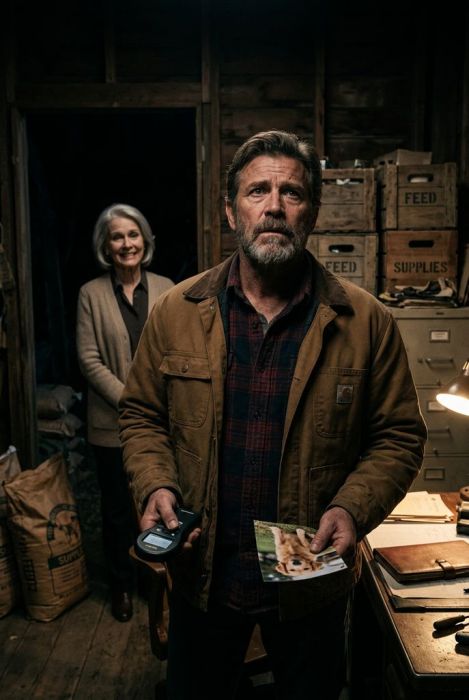
The day Dr. Okafor handed me the scanner, I thought she was just showing off the new equipment. Biscuit sat on the exam table looking up at me with those big brown eyes, her tail beating a soft rhythm against the metal. My wife Diane had been gone fourteen months by then, and Biscuit was the reason I still got out of bed before ten in the morning.
"There's a chip here, Mr. Calloway," the vet said, and I remember thinking, well, of course there is, you people register them when you adopt a dog out. "But it's not the one we put in."
The room went very quiet. On the little screen was a name I'd never seen — Pepper, four years old, golden retriever — along with a phone number and an address in Springfield, Missouri. Three hundred and forty miles from Marlowe, Indiana. Dr. Okafor scrolled, her face unreadable. "This chip was implanted seven years ago by a clinic in Greene County. Your paperwork says Biscuit was a stray found on Route 9 outside town. But somebody loved this dog long before that."
I stared at the number until it blurred. I'd adopted Biscuit through Hearts and Wings Rescue, the shelter run by Ruth Ann Mercer, the most beloved woman in Marlowe. Everybody had a Ruth Ann story. She'd nursed a litter of abandoned pups through a blizzard back in 2009. She'd driven twenty hours to pull dogs from a hoarding case in Tennessee. The mayor called her Saint Ruth, and nobody laughed. And I'd been so grateful, so hollowed out by grief, that I'd signed her adoption papers without reading a single line of fine print.
"Did you call the number?" I asked.
Dr. Okafor looked at me for a long moment. "I did, Mr. Calloway. A woman named Judy Haywood answered." She set the scanner down gently. "She said Pepper went missing from their fenced yard in Springfield eight months ago, during a bad storm. She's been posting flyers and calling shelters ever since." She paused. "She's driving over tomorrow morning."
The floor dropped out from under me. Eight months ago was exactly when Ruth Ann had announced she'd saved a truckload of dogs from a Missouri kill shelter that was about to put them down. Biscuit had come off that truck, terrified and thin, and Ruth Ann had personally carried her into the adoption center like a bride. She'd told me Biscuit was lucky to be alive. The truth, apparently, was that Biscuit had never needed saving. Somebody named Haywood had been looking for her this whole time.
I drove home in a fog and sat on the couch with Biscuit's head in my lap until dark. She knew something was wrong; she kept nudging my hand with her cold nose. I thought about the way Ruth Ann signed every email with "Every animal deserves a second chance," and the way she wore that little gold heart pin to every town council meeting, and the way her eyes had slid away from mine the one time I'd asked where the dogs came from.
"That's shelter business, honey," she'd said, patting my arm. "You just focus on giving that sweet girl a good home."
The next morning, Judy Haywood stepped out of a dusty Subaru with a folder of photographs. She was a quiet woman, Midwestern to the bone, with the shaky hands of somebody who'd spent eight months hoping. She didn't say a word. She just held up a picture of Pepper as a puppy, and my world cracked clean in half. Same white blaze down the chest. Same bent right ear from a chicken-wire incident. Biscuit went absolutely wild, whining and squirming, painting Judy's face with kisses like she'd known her forever.
She had. Biscuit was Pepper. Judy wept into the dog's fur, and I stood there with my hands in my pockets, understanding that the sweetest thing in my life had been stolen and sold to me.
I called Ruth Ann that afternoon. I tried to keep my voice steady, told her about the chip, about the Haywoods, about how the dog came off her transport truck with a family in Missouri already searching for her.
"Ben, honey, you know we pull animals from all over," she said, smooth as warm butter. "Paperwork gets lost. Transport manifests get mixed up. We scan for chips, but sometimes one gets missed. It happens. Dogs are dogs."
"It happened for eight months," I said.
"These things take time to shake out." Her voice never wavered. "You keep that sweet girl, you hear? She's yours. We'll send the Haywoods a copy of her intake sheet and they'll understand it was an honest mistake."
She hung up before I could ask the question burning in my throat, which was this: if it was an honest mistake, why did her voice sound like a door closing?
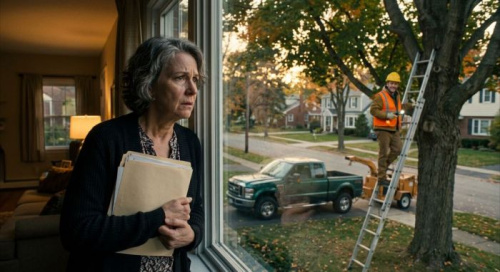
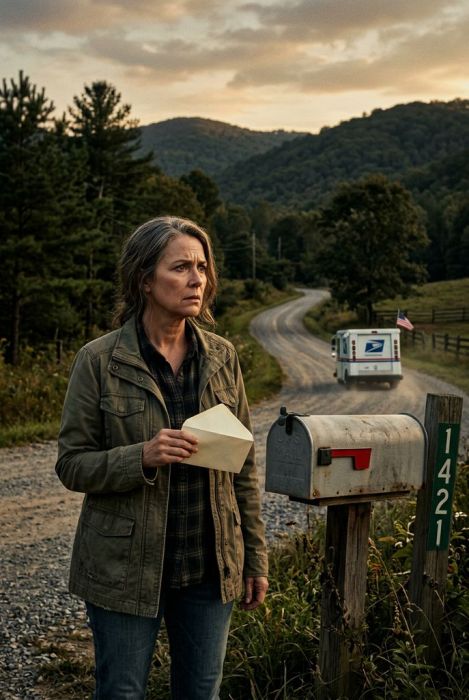
I couldn't let it go. I'm a hardware store owner; I fix things for a living, and a loose thread in my own house was about to drive me crazy. I started talking to other people who'd adopted from Hearts and Wings, quiet, over coffee, in the parking lot after church. That's how I met Tony Vasquez, a retired cop who'd adopted a beagle named Rascal five months earlier.
"Funny you mention chips," Tony said, scratching his jaw. "My vet found one on Rascal. Registered to a breeder in Ohio. I thought it was weird, didn't think twice. You don't question Saint Ruth, right?"
We started a spreadsheet. Tony knew how to keep records, and I knew how to ask questions without looking like I was asking. Margaret Lindqvist's corgi had a chip registered to a family in Joplin who'd lost her two years earlier. Denny Albright's shepherd mix had a chip from a kennel in Kentucky that had shut down in 2019. Eleven dogs out of the twenty-three we checked had microchips that belonged to somebody else's story. Eleven. And Ruth Ann had sworn on a stack of Bibles at the annual gala that every animal in her care came from a confirmed kill list.
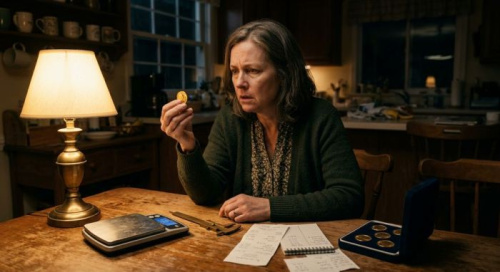
The money was worse. Every year Hearts and Wings threw its big Heart Gala and raised ninety thousand dollars in donations, cash and checks and auction paddles. I'd volunteered at two of them. Ruth Ann always promised that ninety percent went straight to veterinary care. But Dr. Okafor, the only vet within fifty miles who'd ever stepped foot in that shelter, showed me her invoice ledger: fourteen hundred dollars last year, and she'd had to fight for it. There was no vet care budget. There was no kennel upgrade fund. There was only Ruth Ann's smile and the red velvet dress she wore to every gala, year after year.
I asked Dr. Okafor where the intake barn was, the place Ruth Ann said held dogs waiting for foster placement. The vet laughed without humor. "Ben, in eighteen years, I have never seen that building. Nobody has. It's the Bermuda Triangle of Marlowe."
Tony found the property record. One acre off Old Miller Road, a Quonset-style barn with boarded windows, owned by Ruth Ann's brother. We drove out at dusk on a Thursday, and I will tell you plainly that I was not prepared.
The smell hit us from the road. It rolled out of that barn like something alive, sour and heavy, and my stomach turned before my brain caught up. Through a gap in the rotted boards I saw concrete floors, rusted water bowls, cages stacked three high. A dog yelped somewhere inside, high and thin, and then another, and then I stopped counting because Tony's face had gone the color of ash. Thirty years on the force, he told me later, and that barn was the closest he ever came to quitting.
We didn't go in. Tony said one whiff of us inside and we'd compromise everything. But he found the office annex on the side of the building, and the lock was cheap, and the ledger inside was not.
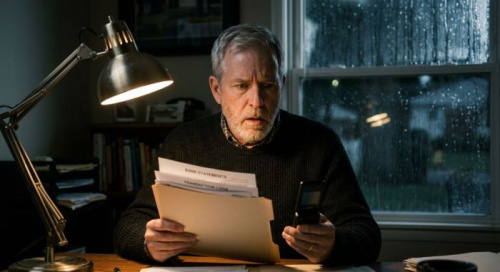
Ruth Ann kept an inventory. Every dog that had ever passed through her hands, listed by a name she'd given them, a date, a location picked up, and a little dollar figure in the margin. And there, in her own looping handwriting, under a date eight months back: "Pepper. Springfield MO, storm pickup. Chip check: skipped. Owner posters circulating; do not respond. Sold to Calloway, $375."
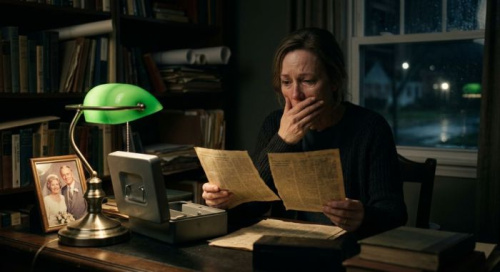
I read it three times, and I still couldn't breathe right. She'd known. She'd known the dog had a family, known the flyers were up, known exactly what she was doing when she put a grieving widower's money in her pocket and called it rescue.
Tony photographed every page. Then he looked at me with those cop eyes and said, "We need the sheriff. And we need to do this right, because if she gets even one day to burn these books, she walks."
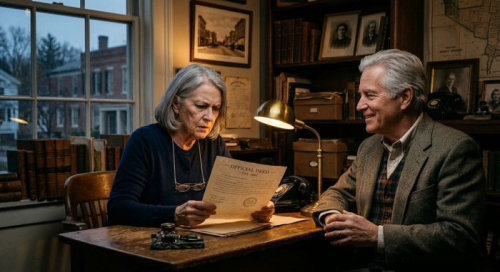
Sheriff Lindell had donated to Hearts and Wings for fifteen years. He'd handed Ruth Ann a check on camera every single Christmas. When I walked into his office, he laughed at first. "Ben, you're grieving, and that woman has done more for this county than—"
Tony slid the ledger across his desk. Lindell read the Pepper page. Then he read the next page, and the one after that, and he stopped laughing very fast. He pushed the ledger away like it had bit him, took off his glasses, and rubbed his eyes.
"There's a reporter been sniffing around this for a year," he said quietly. "Jill Tanaka at the Gazette. Brought me a grant audit that never went anywhere. I told her she was chasing ghosts." He looked at me. "Tomorrow is Ruth Ann's eighteenth anniversary. Adoption Saturday. Big cake, town proclamation, every camera in the county. You want to hand her the ending, that's where she'll be."
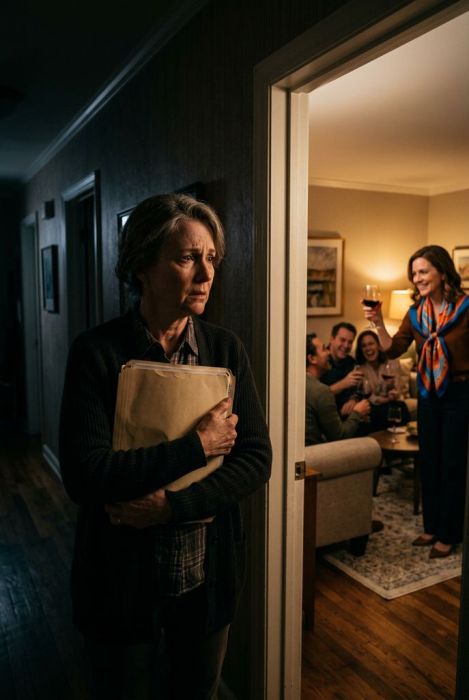
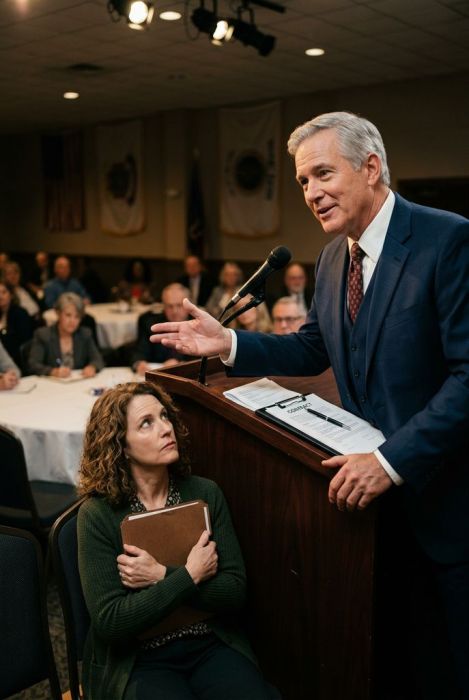
I don't remember much about that morning except the balloons. Blue and white, tied to the fence posts, bobbing in the wind. Families wandered between the pens with coffee cups and children. There was a cake shaped like a giant paw on a folding table, and Ruth Ann Mercer stood on a little riser in a cream-colored suit, arms wide, microphone in hand, looking like the goddess of lost pets.
"The animals who can't speak for themselves," she was saying, her voice ringing over the crowd, "they need us. They need—"
The double doors of the adoption center opened. Sheriff Lindell walked in with two deputies, and behind him came a Missouri state trooper in his campaign hat, and behind him, Jill Tanaka with her photographer. Ruth Ann's smile did not fall so much as freeze, like a picture frame hanging on a wall that just got moved.
"Ruth Ann Mercer," Lindell said, loud enough for every family in that yard to hear. "You're under arrest for theft, fraud, and animal cruelty. You have the right to remain silent."
A little boy asked his mother if the nice lady was in trouble. I heard her answer, clear as a bell under the sudden silence of seventy people: "I think she finally is, honey."
The barn raid ran on the evening news for a week. Handlers in coveralls carried the dogs out one by one, scared and thin but alive, and the cameras caught every single one. Eleven families in three states found their dog that month. Judy Haywood called me from the road, crying hard enough that I could barely understand her. "Thank you," she kept saying. "Thank you for not giving up on her."
Pepper went home to Springfield. It broke a piece of me, giving her back, but that piece was already cracked, and I found out the crack had a name: it was the lie Ruth Ann had sold me along with the dog. The truth, ugly as it was, fixed it.
Ruth Ann pleaded guilty to theft and fraud. The cruelty counts were folded into a deal that cost her six years in prison and four hundred twelve thousand dollars in restitution, and the state revoked her license to touch a single animal in Indiana ever again. Her brother took a plea for his part in the ledger business. The board of Hearts and Wings resigned within the week, and a new nonprofit of real vets and real volunteers reopened the doors under a new name: the Marlowe Animal Alliance.
They had a senior dog, Mabel, a hound mix, twelve years old, blind in one eye, passed over by every family who wanted young and pretty. I took her home the same day I signed the paperwork. She sleeps at the foot of my bed now, right where Biscuit used to, and she snores like a chain saw, and I wouldn't trade a minute of it.
Ruth Ann thought nobody would ever look behind her smile. She built a kingdom on grief and good intentions, and it lasted eighteen years, which is a long time to get away with something. But that's the thing about the truth. It doesn't rush. It waits in microchips and ledgers and the hearts of dogs who never forget who loved them first. And when it finally arrives, it doesn't knock. It brings the sheriff.