The first time I saw Jenna Marsh, she was crying at the back of the grief support group, and I felt sorry for her. That was five years after my daughter died, and I should have known better by then. Grief makes you trust people who have no business being trusted.
Cara died on a rainy Tuesday in November, two miles from home, when a delivery truck ran a red light. She was twenty-nine, an ER nurse with a laugh that filled the whole waiting room. My wife Marie passed eighteen months later. The doctors said it was a broken heart, and I didn't argue. I was a retired fire captain living in Lancaster, Pennsylvania, with a house that was too quiet and a garden I kept neat because Cara had loved it.
I never expected anyone to steal her name. You hear about identity theft on the news, credit cards and tax returns, but you never think about the dead. They're the easiest targets of all, because nobody checks. Nobody misses the mail addressed to a woman who no longer exists. Nobody questions a signature that can't contradict itself.
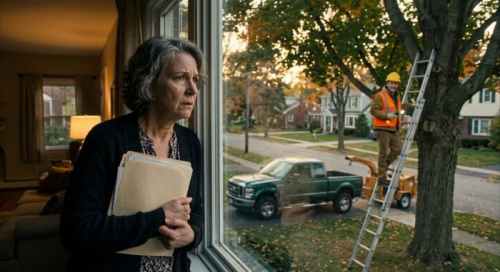
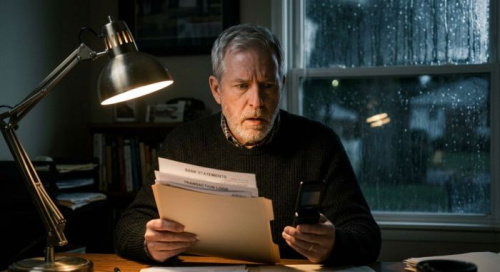
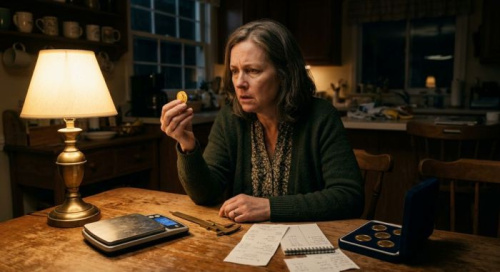
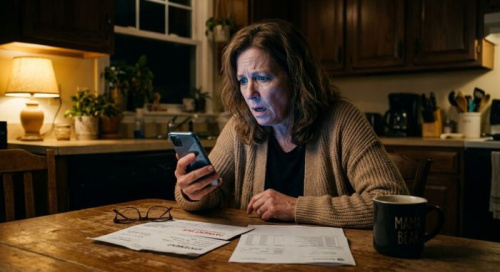
The letters started about four years after the accident. A collection agency wanted forty-two thousand dollars in credit card debt under Cara's name. I stood in my kitchen shaking, sure the government had mixed up files. Then a bank called about a mortgage application, then a second about a personal loan. By the time I drove to the Social Security office with a folder of papers, my hands were shaking so badly I could barely sign the visitor's log.
The agent was a patient woman named Rosa Delgado. She typed, clicked, frowned, and finally slid a printout across the counter. Someone had been living as Cara Delaney for three years. They'd used her social security number, her birthday, her old address. They'd opened store cards, a car loan, a retirement account. They'd even filed a tax return in her name and pocketed the refund. Rosa looked at me with real sympathy and said, "This is sophisticated, Mr. Delaney. Whoever did this knew her."
That sentence stayed with me for weeks. Knew her. Because it was true. Whoever had done this hadn't just found a dead woman's number in a database. They knew her middle name, the hospital where she worked, the high school she'd graduated from. They'd used her childhood nickname, "Callie," on one of the account applications, a name almost nobody called her anymore. Somebody who had loved Cara, or studied her, had taken her life and put it on like a coat.
The police opened a file, but identity theft across state lines is slow, and the trail was cold by then. The credit cards were already maxed out. The car loan was already in default. Whoever had done it had moved on, and the system doesn't chase ghosts very fast. I hired a private investigator with my pension money, a blunt, tired man named Ed Kowalski who smelled of coffee and told me the truth I didn't want to hear. "Dead people's identities are gold, Frank. If they were careful, this could take years. If they were careless, we might catch a break."
We didn't catch a break. Not for a long time. And then, by accident, Jenna Marsh walked into my grief group.
She was younger than the rest of us, early thirties, with soft brown hair and kind eyes. She sat in the back row the first night, twisting a tissue in her hands, and when the facilitator asked if anyone wanted to share, she said her name was Jenna and that she'd lost her sister in a car accident on the same stretch of road where Cara had died. The room made the soft sounds of sympathy that rooms always make. I remember thinking how strange it was, that we'd both lost someone to that same awful stretch of asphalt.
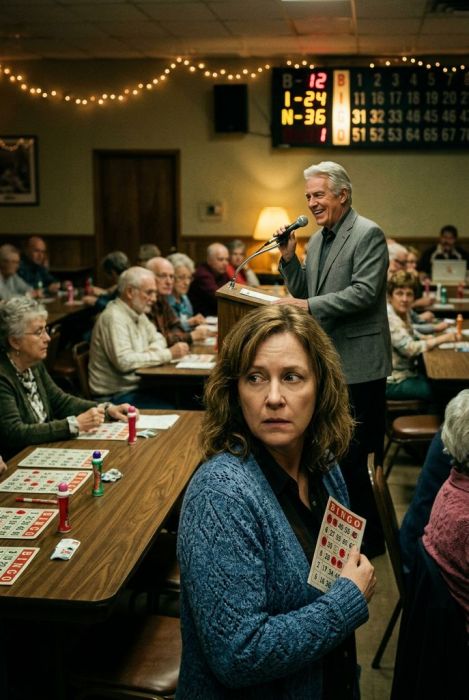
Over the following weeks, Jenna became a fixture. She brought coffee for everyone. She remembered birthdays. She stayed late to help fold chairs. She told us she'd moved to Lancaster to be near her remaining family, that she worked as a nurse's aide at the hospital, that she found comfort with us because we understood loss in a way her friends couldn't. The other members adored her. Old Mrs. Feldman called her an angel. And I'll be honest, I liked her too. She reminded me of Cara in small ways, the way she tilted her head when she listened, the way she laughed with her whole face.
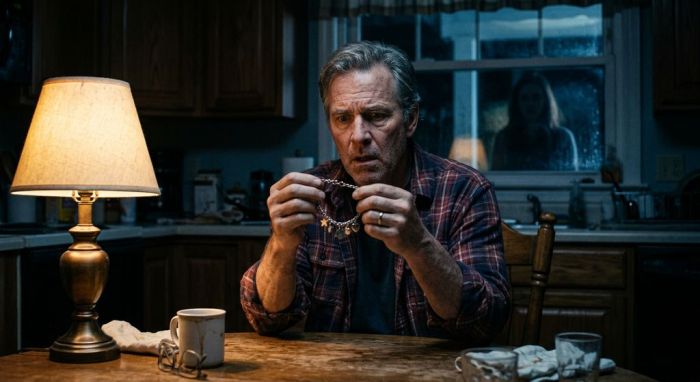
And then, one night, she held out her hand to show me a bracelet she'd found in a thrift store, a little silver charm with a name engraved on it. "Look, Frank," she said. "It's got your daughter's name on it. I thought maybe you'd want it."
It was Cara's bracelet. The one Marie had given her for her twenty-fifth birthday. The one she'd been wearing the night she died, and which the hospital had returned to us in a small envelope with her things. I kept that bracelet in a drawer in my bedroom. I hadn't shown it to anyone. And here it was, warm in Jenna Marsh's palm, offered to me like a gift.
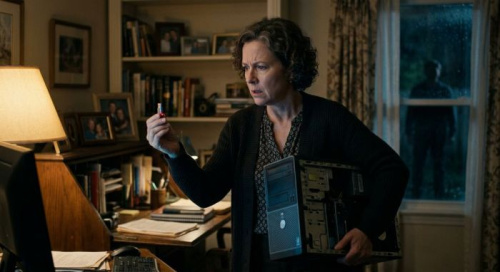
I didn't say anything. I took the bracelet, thanked her, and went home. I sat in the dark for a long time, holding it, and the cold feeling that had been growing in my chest finally broke open into something clear and terrible. Cara's bracelet had been in my drawer that morning. I had checked. It had not been in a thrift store. There was only one way Jenna Marsh could have gotten her hands on it, and that was by coming into my house.
The next morning I called Ed Kowalski. I told him about the bracelet, about Jenna, about the identity theft, and about the fact that she'd told us she worked at the hospital where Cara had worked, on the same floor Cara had worked, five years earlier. Ed went quiet on the phone. Then he said, "Frank, I think you just handed me the break."
What Ed found over the next month turned my stomach inside out. Jenna Marsh had been a nurse's aide at the same hospital where Cara had been an ER nurse. She had been there the year Cara died. She had been the one who cleaned out Cara's locker after the accident, a small kindness the unit had arranged, and she had kept the contents instead of returning them: an old driver's license, a social security card Cara kept in her wallet, a few letters, the hospital ID. Nobody had ever asked about them. Nobody had thought to.
And Jenna hadn't just stolen Cara's documents. She had stolen Cara's story. The "sister" she'd lost in a car accident on that stretch of road was a fiction she'd built around a real tragedy, a costume she wore to be close to the family, to gain trust, to get inside a grieving old man's house. She had been living on Cara's name for years, and when she'd decided the identity was getting too hot, she'd come back to the source to see what else she could take. My grief had been her hunting ground.
The worst part was that she'd been good at it. She'd checked the mail while I was in the shower. She'd borrowed my phone to "call her mother" and copied down the passcode. She'd told me, with tears in her eyes, that she wanted to help me organize Cara's things, that it might bring me peace. I had nearly let her into my dead daughter's room.
We didn't rush. Ed had learned that in this game, patience is the weapon. He found a detective named Amara Ellis who handled financial crimes for the county, and together we built a trap. The bait had to be something Jenna couldn't resist, something that would make her drop the careful mask and reach for the prize with both hands. Cara had a small life insurance policy, twenty thousand dollars, that had never been claimed. I'd left it sitting with the lawyer because I couldn't bear to touch it. Now I let it be known, quietly, at the grief group, that I'd found an old policy in Cara's name and that I was thinking of donating it to the hospital fund, since nobody else could claim it.
Jenna took the bait like a trout hitting a fly. Three nights later she called me, her voice trembling, and told me a story about how she and Cara had been like sisters, how Cara had promised her something once, how she'd found an old letter in her sister's things. "Frank, I know it sounds crazy," she said, "but I think Cara wanted me to have it. The lawyer said you have to be a relative. But maybe you could help me prove I'm family."
I played my part. I played it with a shaking voice and tears in my eyes, and I don't know if I was acting. "I think she would have wanted that, Jenna," I said. "Let's go together. I'll vouch for you."
The day we drove to the lawyer's office, Jenna was radiant. She wore a pale blue dress, the color Cara had loved, and she talked the whole way about the future, about the little house she wanted to buy, about starting fresh. She didn't know that Ed was following us in an unmarked car. She didn't know that Detective Ellis was already in the office, behind a two-way mirror, with a forensic accountant and two officers. She didn't know that the lawyer, a quiet man named Harold Pierce who had known Cara since she was a child, had agreed to help us spring the trap.
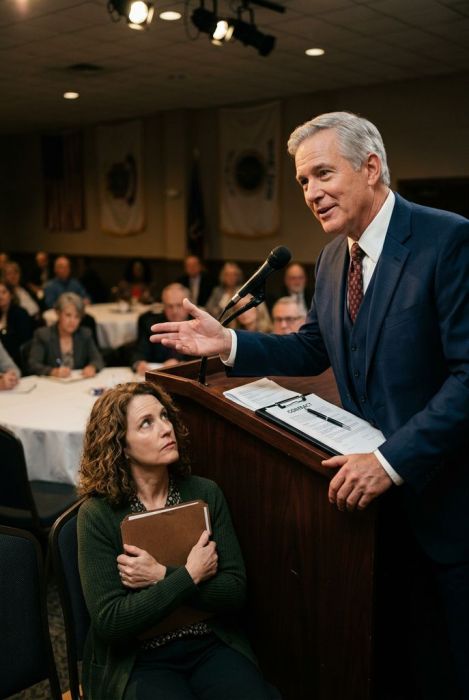
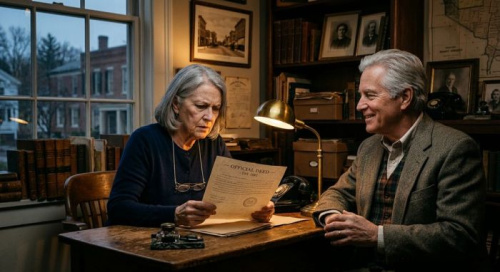
The office was warm and smelled of old paper. Harold greeted us with a grave nod and laid out the forms. "Standard procedure," he said. "We'll need to verify the beneficiary. You said you have documentation, Miss Marsh?"
Jenna produced a folder. Inside was a forged letter, supposedly from Cara, naming her as a friend and beneficiary. It was good work. The handwriting was close, close enough that it would have fooled most people. It wouldn't fool Harold. He had watched Cara grow up. He had the real letters in a file in his drawer.
"One moment," Harold said, and he pressed a button on his desk. The door opened, and Detective Ellis walked in with two uniformed officers. The smile on Jenna's face froze, then slid off like water off glass. She looked from the officers to me, and I watched the understanding move through her, the slow terrible dawning that she had walked into something she could not charm her way out of.
"This is a mistake," she said, and even then her voice was smooth, even then she tried. "Frank, tell them. We're friends. You know me."
I stood up and set the silver bracelet on Harold's desk. "I know who you are, Jenna," I said. "I know you took my daughter's name. I know you took her bracelet out of my drawer. And I know you sat in that grief group and smiled at me for three months while you were robbing her grave."
The arrest was quiet. No handcuff theatrics, no screaming. Jenna Marsh went with the officers with a calm that was almost more frightening than rage, turning once to look at me with an expression I couldn't read. But I watched Detective Ellis seal the folder she'd brought, and I knew what was in it. Fingerprints on the forged letter. The handwriting that would match the applications. And, in her apartment, which they searched that afternoon, the whole library of stolen identities.
It turned out Cara wasn't the only dead woman Jenna Marsh had taken. In a shoebox under her bed, they found documents for nine other people, most of them former patients at the hospital, people who had died alone and unnoticed. She had been doing this for a decade, moving from town to town, wearing other people's names like costumes, always one step ahead. She had simply gotten greedy with me. She had come back to the well one too many times, and the well had recognized her.
The trial took eight months. Jenna Marsh pleaded guilty to identity theft, forgery, and fraud across four states, and the judge gave her nine years in federal prison. The restitution order was enormous, every penny she'd taken from every name she'd stolen. I sat in the front row and watched her led out in handcuffs, and I felt something close my chest that had been open for five years.
The insurance policy, the twenty thousand dollars that had been my bait, I gave to the hospital where Cara had worked, to start a fund in her name for nurses' education. They put a small brass plaque by the ER entrance. It says her name, and it says: "She made every room she entered feel safer." I go by and touch it sometimes when I'm in town.
The grief group still meets on Thursday nights. Mrs. Feldman still calls everyone angel, and the coffee is still terrible, and I still fold chairs at the end. But the chair in the back row where Jenna used to sit is empty, and I like it that way. Ed still calls me every few months to tell me she's still locked up, and I always thank him like it's news.
I kept the silver bracelet. It's in the drawer where it always was, the drawer where I'd found it missing that night I'd realized the truth. Some nights I take it out and hold it, and I think about Cara laughing, and I think about how the people who loved her were the only ones who could have known her well enough to catch the woman who stole her name.
Karma doesn't always wear a uniform. Sometimes it wears a retired fire captain's coat and a folder full of papers and a grief group full of people who finally started paying attention. Cara's name is hers again. It's carved in brass, and it's in my garden, and it belongs to nobody but her.