The band stopped playing at exactly nine o'clock, and that was the moment Ray Keller raised his glass for the toast that was supposed to save his legacy. Two hundred and forty people in their best dresses and clip-on ties turned their faces up toward the little stage he'd built out of pallets and plywood, the same stage he'd used for forty years of company picnics. I stood at the back, by the roll-up door, and I could already see them in the shadows near the parking lot — two men in dark suits who hadn't touched their punch, and a woman in a gray coat checking her watch.
Ray tapped the microphone. "Sixty years," he said. "Sixty years my family has kept this plant running. And I want every single one of you to know — your pensions are safe. Every dollar. I built this company for you people."
A few people clapped. Most of them looked at their shoes. They'd been getting letters for years, the kind with the red funding status CRITICAL stamp, and they'd stopped believing the speeches long ago. But I knew Ray Keller better than almost anyone in that room. I had kept his books for twenty-seven years, and I knew those two men in dark suits hadn't come for the cake.
My name is Maggie Reiner, and I started at Keller Machine Works the summer I turned twenty-five — a file clerk with a fresh divorce and a two-year-old daughter to feed. The plant made valves: water valves, gas valves, the unglamorous honest parts that keep a town running. At its best it employed almost two hundred and forty people from Millbrook, Pennsylvania, and many of those people had fathers and grandfathers who'd worked the same lathes before them.
Ray's grandfather founded the place in 1964 with a single drill press. By the time Ray took over in the eighties, it was the biggest employer in three counties, and Ray loved the part he played in that story. He knew every worker's name. He brought a Christmas turkey to every family on the line, paid for the high school band's new uniforms, and showed up at every funeral with a card and a handshake. People called him the father of Millbrook, and nobody ever laughed.
I became office manager in 1999, which meant I handled payroll, and payroll meant I knew exactly how much money left every single paycheck. I knew every name, every withholding, every contribution to the Keller & Sons Retirement Plan. I knew that plan the way a mother knows her child's heartbeat. That is what made what came next feel like a knife in the back.
It started in 2009, the year the market crashed and the plant almost died. Ray stood on that same pallet stage and told us he would take no salary for a year to keep people employed, and everyone cried. He said the pension contributions would pause until we got our feet under us, and he promised to make every deposit up the moment the numbers turned green.
The numbers never turned green. The plant recovered — by 2012 we were shipping more valves than ever, and Ray bought a new truck every year, and his wife got a kitchen nobody in Millbrook had ever seen outside a magazine. But the contributions never resumed. I watched the trust statements come in, and every quarter the same line appeared: the money we had withheld from our own paychecks, three percent of every wage, transferred not to the retirement trust but to something called Keystone Consulting.
When I asked Ray about it, he laughed and patted my arm, and the next week I found out he had told the whole office I was stressed and seeing numbers that weren't there. He said it with such kindness that a few people actually came by my desk to tell me to take a vacation. I went home that night and cried into my daughter's old baby blanket, because I was forty-seven years old and I knew a thief when I saw one. I just couldn't prove it yet.
The retiree letters started in 2015. Frank Bellamy, who had run the shipping dock for thirty-two years, opened his January statement and found the red stamp: funding status critical, benefits may be reduced. Frank was seventy. He had paid into that plan since 1978. He went to Ray's office, and Ray told him it was the economy, it was Wall Street, it was anyone's fault but his. Frank believed him, because everyone in Millbrook believed Ray Keller. That was the whole tragedy of it.
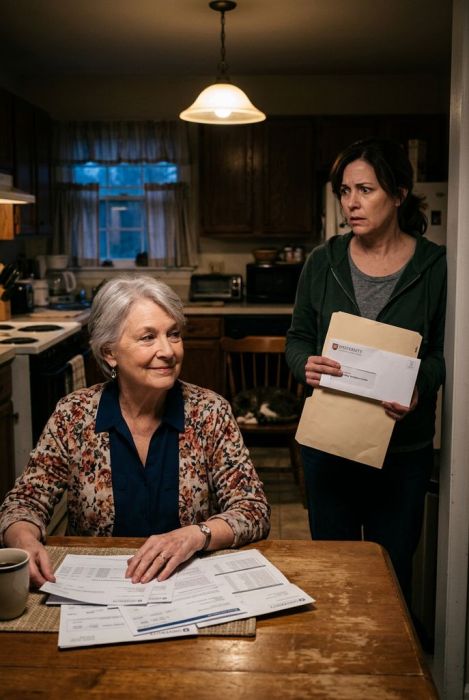
In 2019 Frank finally retired with a reduced benefit and died of a heart attack eleven months later. His widow, June, kept sending me the statements, because I was the only one at the office who always took her calls. I couldn't tell her what I suspected. I didn't have the words.
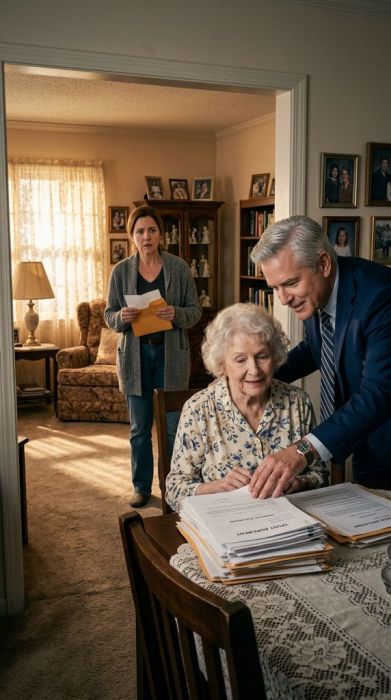
Then, that spring, Jean Kowalski — sixty-five years old, thirty-one years at the plant — came to my desk crying. Ray had offered her a retirement buyout that was secretly less than half of what she was owed, and she was afraid that if she said no, she would get nothing at all. She signed it the next day. I watched her sign away her own pension with Ray Keller standing over her shoulder smiling, and something in me went very quiet and very cold.
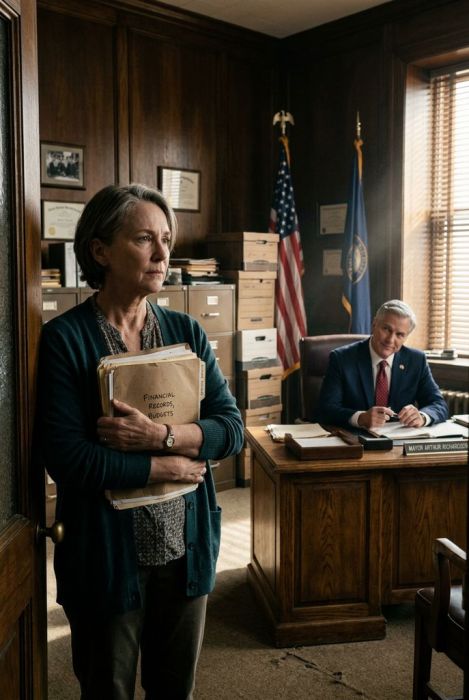
A week later, a contractor's invoice crossed my desk by mistake — thirty-eight thousand dollars for a boathouse renovation on Lake Erie, billed to Keystone Holdings. The same name as the pension transfers. I looked up Keystone Holdings in the county business records that weekend and found it was owned by a corporation in Delaware, which was owned by another corporation, which was owned by one Raymond K. Keller. The lake house was his. The boat was his. The condo in Naples was his too.
I sat in my car in the parking lot of the county courthouse until it got dark. I thought about Frank Bellamy. I thought about Jean's trembling signature. And I thought about the day Ray announced we were restructuring, which is management-speak for selling the plant out from under us, to a very promising group of investors nobody had ever met. The new owners wanted the records room emptied by Friday.
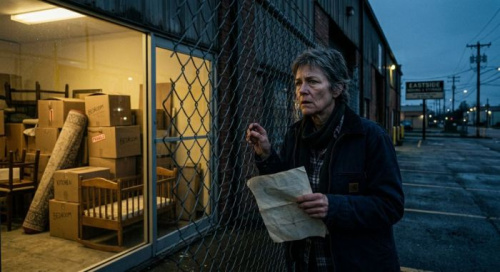
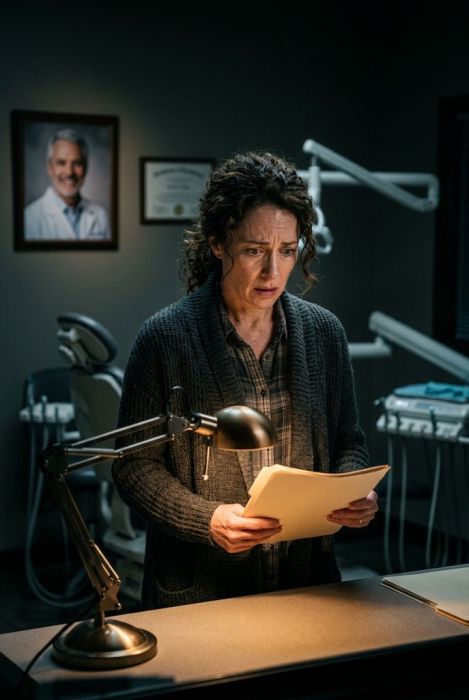
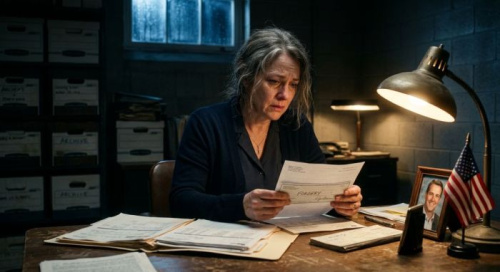
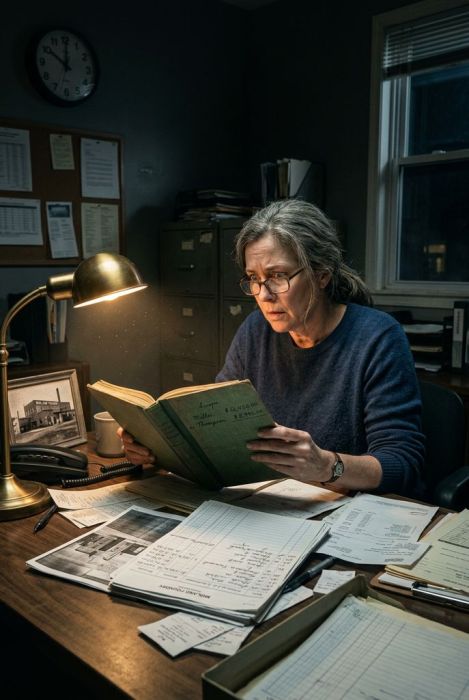
That is how I ended up in the old pension file room on a Tuesday night, boxing up forty years of paper for strangers who had no right to any of it. Ray told me not to waste time reading. I didn't plan to. But a box of 2009 folders tipped over, and when I bent to pick it up, I saw the second ledger.
It was handwritten, the neat ledger script of an old-school bookkeeper, and it had been hidden under a stack of shipping manifests for eleven years. It listed every pension contribution from 2009 to that very month — three percent of every paycheck — and next to each entry, in a column marked disposition, was the same notation: transferred to Keystone per R.K. There were two ledgers for the same year. One said we were paying into the plan. The other said where the money actually went.
I copied everything. Not just the ledger — the trust statements, the invoices for the boathouse, the receipt for a boat stupidly named Pension Plan, the canceled checks to a Delaware shell, the bankruptcy filing for his son Colt's failed brewery, funded per the paperwork by R.K. I worked until three in the morning, and when I locked the records room I pressed the photocopies against my chest and thought: fifteen years. Fifteen years of our lives, hidden in a box I was supposed to throw away.
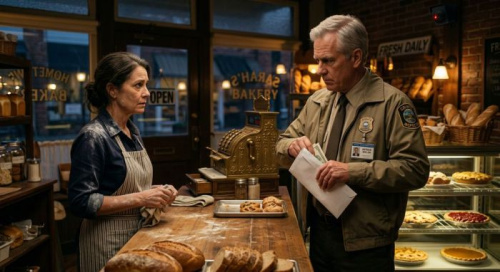
Two nights later, a woman in a gray suit sat down across from me at Patty's Diner and ordered coffee she never drank. Her name was Grace Oliver, and she was a senior investigator with the state attorney general's pension fraud unit. She had been quietly auditing the Keller & Sons Retirement Plan for fourteen months — ever since June Bellamy called them about her husband's bounced pension check, the one the plan promised in writing.
She told me she had the shell company pattern, the Delaware trail, the Florida property. What she didn't have was proof Ray knew. Anyone could have hidden a ledger, she said. They needed an insider with standing, someone who could testify that Raymond Keller directed the transfers, that he lied to the employees, that he ordered the second set of books. She looked at me across the greasy table and said, "Your whole life is in that man's payroll system. Are you willing to sign your name next to it?"
I signed it at the county clerk's office the next morning, under oath, in front of a notary, my hand shaking the whole time. And then I did something that terrified me more: I put on my best dress, drove to the plant, and smiled at Ray Keller like I believed every word he had ever said to me.
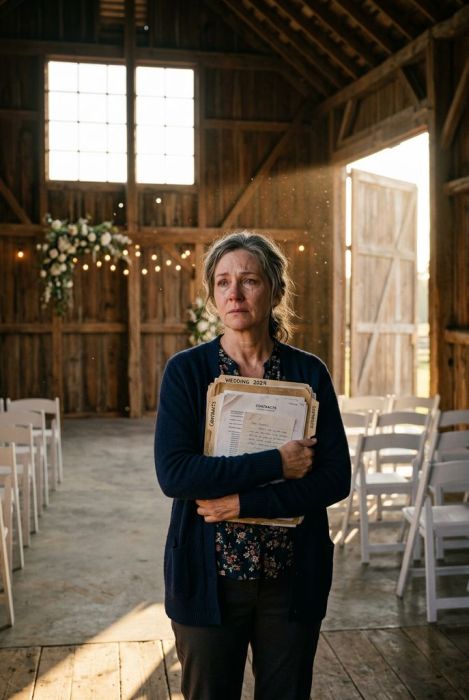
The anniversary gala was Ray's idea — sixty years of Keller Machine Works, a band, a cake shaped like a valve, and a speech he had been rehearsing for weeks. We all knew he planned to announce the sale that night, and we all knew what that meant. The workers came anyway, because what else were they going to do? Millbrook had one employer. It was him.
He spoke for twenty minutes about his grandfather, about the war, about the tough times and the good times. Then he raised his glass. "Your pensions are safe," he said, and the crowd of two hundred and forty people — the same two hundred and forty people whose names were in the ledger I had copied — looked at their shoes.
That is when the band stopped. The two men in dark suits came through the roll-up door, badges out, and behind them walked Grace Oliver in her gray coat. Ray's smile froze on his face. For one long second I think he actually believed they were there to congratulate him. Then the lead agent said his name, read the first charge off a piece of paper — embezzlement from an employee benefit plan — and the room went so quiet you could hear the dust settle on the valves.
They led him out past the framed photo of him handing turkeys to the line workers at Christmas. He looked at me when he passed my chair. I didn't look away this time. I had been forty-seven years old and afraid. Now I was fifty-two, and I was done being afraid.
The trial lasted six weeks and took up most of the front page of the Millbrook Herald. The jury heard about the hidden ledger, the shell companies, the lake house, the boat named Pension Plan, the son's failed brewery, the fifteen years of stolen three percent. They heard Jean Kowalski testify about signing away half her pension, and June Bellamy testify about the bounced check that arrived two weeks after her husband's funeral. Ray Keller took the stand in his best suit and explained it all away with the confidence of a man who had been explaining things away for sixty years. The jury took four hours.
He is serving nine years in federal prison now. The judge ordered forfeiture of the lake house, the boat, the condo, every penny he had hidden. Harold Fenwick, the accountant who signed off on the second set of books, lost his license and took a plea for three years. The federal pension insurer stepped in, and after a long fight, the retirees got most of their benefits back. June Bellamy got the full check her husband earned, on the first of the month, every month. She called me the day the first one arrived and cried so hard she couldn't finish the sentence.
The plant was sold to a company out of Pittsburgh that kept every job, and they put a worker on the board of directors, which made the old-timers laugh and the young guys cheer. I'm still the office manager. New owners, same coffee pot, same valve shop, and the first time the new accountant asked me about the pension plan, I pulled out the folder and walked her through it line by line, because that is what you do for people you love.
Sometimes I walk past the old records room at the end of the day and I think about a forty-seven-year-old woman with a stack of photocopies pressed against her chest, wondering if she was brave enough. I'm fifty-two now. My daughter is married, and my granddaughter thinks the valves are the most beautiful things in the world, and every month, right on time, my own pension statement arrives with a green check mark that says FUNDED.
Ray Keller spent sixty years building a name in Millbrook. It took him one toast to lose it. And on the first day of every month, two hundred and forty of us open our statements and see the truth of it: the father of Millbrook was never really our father at all. But justice — slow, stubborn, patient justice — turned out to be exactly that.