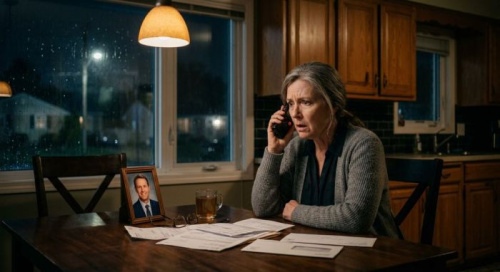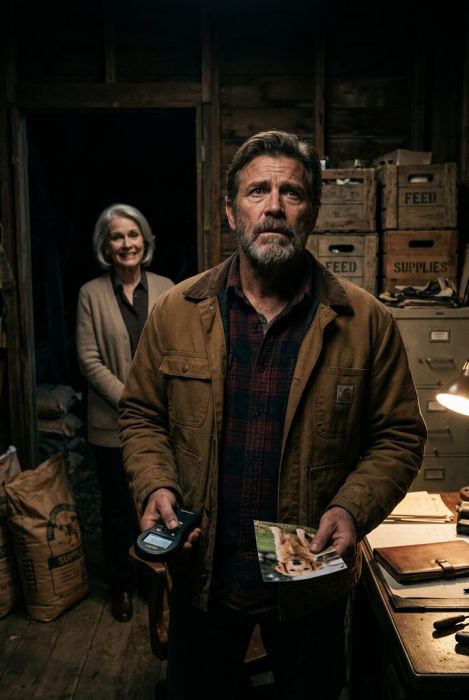
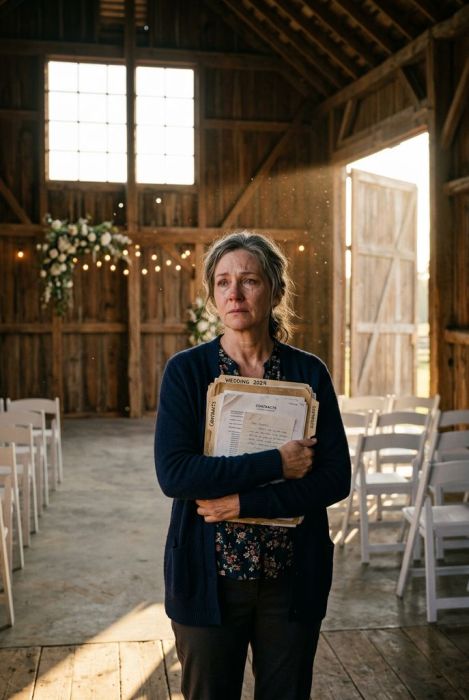
The call came on a Tuesday, at 9:14 in the morning, three days before my daughter's wedding. I remember the minute exactly because I had just poured my second cup of coffee.
"You're calling about Saturday's confirmation?" I said, cheerful, because the woman on the line was Gwen Barrow, who owns the Willow Barn, and I'd known her since Erin was in kindergarten. "Cal handled all of that. He sent me the receipt in February. Eight thousand, lock and key."
"There's no reservation, Diane," Gwen said. "No receipt on my end. No Cal Whitfield in my books at all."
I laughed, because it had to be a joke. Then she said, "Diane, honey, I've never heard of Cal Whitfield in my life."
I sank onto the kitchen floor while Gwen explained that the barn had been booked since May — a different couple, a different wedding, starting four hours before ours. The man we trusted with our daughter's dream had handed us a future that never existed.
Everyone in Miller's Creek, Ohio, adored Calvin Whitfield. He photographed my wedding to Tom thirty-one years ago, then Erin's christening, her graduation, her engagement. He was in every album we owned, standing on the edges of our happiest days like he belonged there.
When Erin got engaged to Jake Holloway, there was never a question who would plan the wedding. Cal had expanded from photography into full-service planning. His card read Whitfield & Co. Events: "Every love story deserves a beautiful beginning."
At his studio on Maple Avenue, under fairy lights and a hundred photographs of radiant brides, he hugged Erin like a favorite niece. Then he spread a binder across the table — caterers, florists, bands, and the venue: the Willow Barn, the converted dairy barn everyone in three counties wanted and almost nobody could book.
"I've got a relationship with Gwen Barrow going back twenty years," he said. "I can get you the tenth of September. But I'll need a deposit to hold it, in cash or certified funds — the bank charges me a fortune on wire fees, and I pass the savings to my brides."
Thirty-four thousand dollars, by the time we were done: eight for the venue, nine for the caterer, six for photography, four for the band, three for the florist, the rest for details. Tom's life insurance sat untouched in my savings for five years. I never thought twice about that check. It was for Erin's dream.
The first crack came in July at the tasting. The restaurant manager looked confused: "We don't have a tasting on the books." Cal arrived late, laughing, and charmed her with a story about moving it to Tuesday and writing Thursday. He paid for dinner himself and made us promise not to tell me, like a fun secret.
In August, the florist called. "We haven't received a deposit yet." When I asked Cal, he explained he consolidated all payments through one account "to protect the couple," and he sent a screenshot showing our thirty-four thousand sitting in a client trust account. It was a lie — a careful, plausible lie that had been running for years.
The week of the wedding, everything felt perfect. The dress hung in Erin's childhood closet. Two hundred invitations had gone out bearing the Willow Barn's golden arch. Then, three days before the ceremony, the whole beautiful house of cards came down with one phone call.
That afternoon, Gwen met me in the gravel lot looking like she hadn't slept. September tenth was marked in red pen in her calendar — the Hendricks wedding, booked since May. "I don't know who you paid," she said softly. "But it wasn't me."
Cal's phone was dead. His studio was dark, fairy lights gone, a FOR LEASE sign in the window. Erin found out that night. She didn't cry. She just sat very still and whispered, "He took it all, didn't he?"
The next two days were a blur of phone calls. The caterer had never been paid. The band had never been contacted. One by one, the pieces of our dream confessed that they had never been real.
I stood in my kitchen among boxes of favors and a cake topper shaped like two golden rings, and I felt the anger rise like a tide — at Cal Whitfield, who had hugged my daughter and taken everything we had with a smile. In that kitchen, I made a decision. I wasn't going to let him win.
Detective Rosa Alvarez listened without interrupting. Then she slid a thick, dog-eared folder across her desk. "You're the seventh person this month," she said. "Twelfth in the county. Want to see what your beloved Cal Whitfield really is?"
The folder held reports stretching back six years. Wedding planners don't usually get investigated for fraud, Rosa said — couples are embarrassed, and the amounts seem small. But Cal had left a trail across Ohio, Indiana, and Kentucky. Dayton. Fort Wayne. Lexington. Same play every time: a beloved photographer who expands into planning, takes cash, books venues never booked, and vanishes when the wedding is days away.
"He's not desperate," Rosa said. "He's a professional. Every time someone gets close, he disappears and starts over with a new name."
That night I wrote a careful post with facts and dates and one request: if Cal Whitfield had touched your family, please tell me. By morning it had been shared four hundred times. By the end of the week, seventeen families had the same story. None of them knew the others existed.
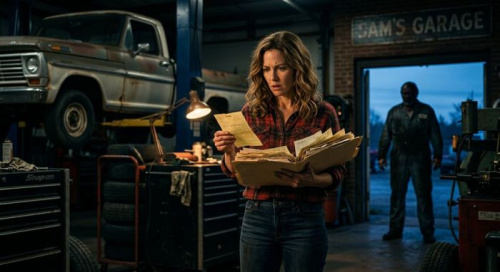
Nadia Reyes called on day four. She had been Cal's bookkeeper for two years until he fired her in March for asking too many questions. She told me about two sets of books, money moved between accounts like water between cups, a go bag with a passport and cash. "I kept copies," she said. "Invoices, deposit slips, the double ledger. I've been waiting for someone to ask the right questions."
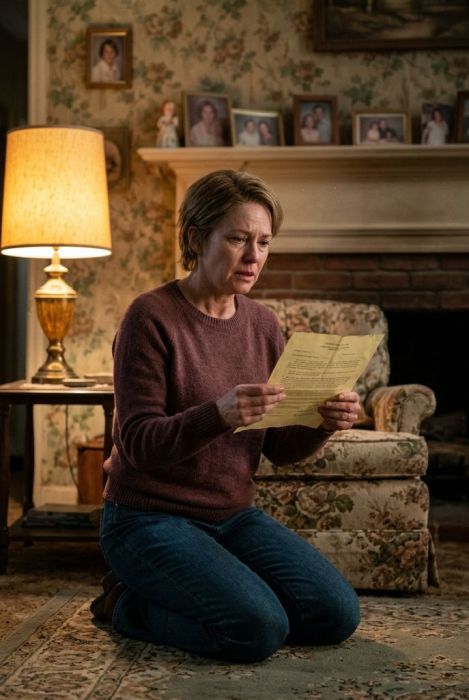
Her copies were a gift from heaven. One document I stared at for a long time: a handwritten note on Whitfield & Co. letterhead. "Venue: NONE. Vendor: NONE. Client: Vanderhoff. Amount: $9,500. Notes: DEPOSIT TAKEN — WEDDING CANCELED BY GROOM. HA." He had gotten so arrogant he wrote HA on his own paperwork.
For three weeks, Rosa and I built a case across two hundred pages: the archive, twenty-three victim statements, bank records from three states. What we didn't have was Cal. He had gone to ground — the first time a town had ever connected him to his own pattern.
But a man like Cal doesn't stop. The money runs out, and the gambler inside him needs a fresh table. Rosa's theory: he would surface somewhere close, somewhere he thought he could slip in and out of unnoticed. So we made ourselves easy to find.
The bait was a wedding at a brand-new venue, the Lakeside Pavilion. Rosa's cousin Carol played a wealthy widow from Cleveland with a daughter getting married in spring. We built her a wedding board and let her mention at a bridal expo that she had forty thousand budgeted and no planner yet.
It took ten days. Then Carol's phone rang, and a honey-smooth voice said, "You don't know me yet, but I'm the man who's going to make your daughter's wedding the most beautiful day of her life." He called himself Collin Webb. Webb & Co. Weddings, cream card, gold lettering. Carol agreed to meet him Saturday to tour the venue and hand over a deposit.
"He wants cash," Carol said. "He says the bank charges fees on wires. Some things never change."
Saturday came, bright and clear. I stood in the shadows of the loading dock and watched Cal get out of a rental car, straighten his tie, smooth his silver hair. Same smile. Same easy stride. For one second, I felt the old pull of the man who photographed my wedding thirty-one years ago.
Then I remembered the folder in my hands — Nadia's records, the victim statements, a subpoena signed the day before. I remembered Erin's face. And I walked out of the shadows to meet him.
He saw me when I was ten feet away, and the smile flickered. "Diane," he said, spreading his arms. "I was hoping I'd get the chance to explain. It's not what you think."
"It never is with you, Cal." I held up the folder. "The Hendrickses got married at the Willow Barn today, by the way. Their photographer told them the date was lucky."
Something ugly flickered behind his eyes. Then he looked past me — at Carol by the door, at two state troopers stepping out of a maintenance shed, at the county prosecutor who had come personally to see the look on his face when the cuffs went on.
"You set me up." "We did," I said. "And there are forty-one people who'd like to thank you."
They read him his rights in front of the bridal arch. He didn't run. He kept saying, "I had a system," as they walked him to the cruiser. He had spent six years believing no one could connect the dots. He forgot that dots find each other.
The trial took eight months, the gallery full every day. Forty-one victims sat like a jury of the living while the evidence went in: the double books, the bank records, the note with the HA. Cal claimed he always meant to pay everyone back — the gambling was a sickness. The jury didn't buy it. Eleven years for wire fraud, grand theft, and identity theft. A lifetime, and also not quite enough.
The restitution hearing was its own justice. His studio, his house, his vintage car, the accounts in his mother's maiden name — all seized, every dollar going to the victims. We got back sixty cents on every dollar. Which sounds like a loss until you understand what it means: sixty cents on every lie, returned by court order, with his name on the paperwork.
Erin and Jake married in October, in our backyard under the maple tree Tom planted when she was born. Two hundred borrowed chairs. A caterer who refused our money. A florist who gave us her best at cost. A photographer, Nadia's nephew, who cried through the ceremony and charged us nothing.
The community paid for it — neighbors, vendors Cal had scammed, families from three states who found each other through that midnight post, all of them showing up with casseroles and folding chairs and love. That is what Cal never understood. He thought he was stealing from individuals. He was handing us each other.
At the reception, Gwen raised a glass. "To the best wedding that never happened," she said, "and to the mother of the bride who made sure it did."
I watched Erin dance with Jake under the string lights, laughing as if the last six months had never happened. Tom's money became the final act of a con man's career — and then, somehow, the beginning of my daughter's real story.
Some people say karma is a slow hand. I know that Cal Whitfield sits in a federal facility in Ohio, writing letters to people who stopped reading them years ago. I know every family he robbed got a day in court. And every first Saturday of October, our backyard fills with two hundred chairs, and someone new hears the story of the wedding planner who took everything — and the mother of the bride who gave it back.
I don't think about him much anymore. But when the string lights come on and the music starts, I smile at the thought that somewhere behind a fence in Ohio, a man who once wrote HA on his own victims has nothing left to plan but his regrets.