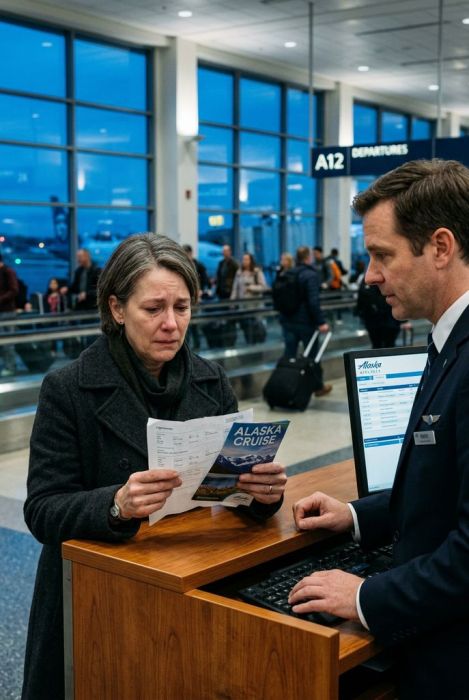
The airline agent at Portland International typed my confirmation number in twice before he looked up at me with the face people make before they say something terrible. "I'm sorry, ma'am. There has never been a reservation under this number. Not on this sailing, not under this passenger name, not anywhere in our system." I was still clutching the Alaska cruise brochure my mother had dog-eared to death. "That's impossible," I heard myself say. "We paid fourteen thousand two hundred dollars for those tickets."
His printer spat out a sheet so clean it could have been born that second: NO RECORD FOUND. He handed it to me gently, from the wrist. "You'll want to contact the agency that sold you the trip." I nearly laughed. The agency was Harbor Light Travel on Main Street in Fairhaven, Oregon, where Greg Collier had booked nearly every family vacation in our town for twenty-two years. Greg, who brought lemon bars to funerals of clients he barely knew. Greg, who sponsored the Little League and taught a free "Travel Smart for Seniors" class every February. Greg, the man my mother trusted with her last dream in the world.
This is the story of how that man took my mother's dying wish and turned it into a stack of losing bets in Reno. And it is the story of how, eleven months later, I stood behind the glass at Portland International and watched him walk toward a gate he would never board.
My mother, Donna Ellison, was a retired high school librarian who spent forty years pressing other people's children to read more and go more. My father, Walter, had been a Navy man stationed in Kodiak, Alaska, and he never stopped talking about it — the glaciers the color of blue ink, the whales surfacing off the bow, the northern lights shaking the sky. He always swore he would take her back one day. He died of a heart attack six years ago, two months before their fortieth anniversary. The Alaska trip became the great unfinished promise of our family.
So when the doctor sat us down in October and told my mother the cancer in her pancreas had spread too far to fight, there was only one thing on her list. She didn't ask for more time or miracles. She looked at me with the same stubborn eyes she'd used on every reluctant eighth grader. "Mara," she said, "I want to see Alaska. I want to stand where your father stood and see the thing he saw."
My mother was not a fool. She read every contract twice and caught a bank double charge in 2009 before anyone else in Fairhaven did. But Greg Collier had spent two decades building exactly the kind of trust that makes smart people set their guard down. When I called Harbor Light Travel, he answered on the first ring and already knew her name. "Donna Ellison. Of course I remember her." He laughed, warm and easy, and promised he would take care of everything himself.
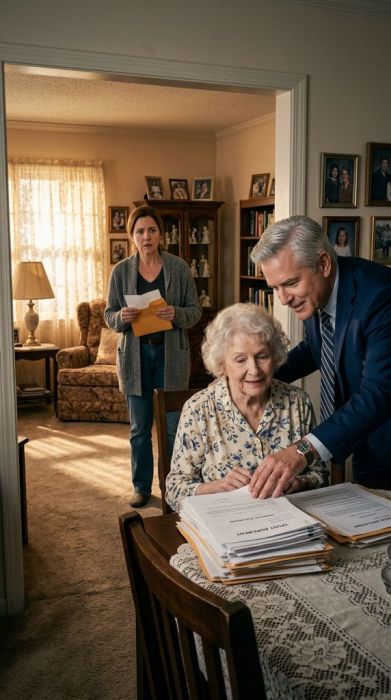
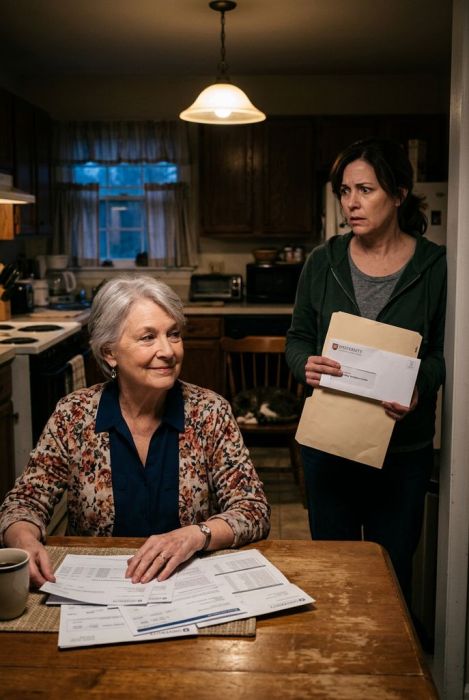
He came to the house on a Tuesday with brochures and a tablet full of photographs of the Northern Star, the ship the line called the last of the true Alaskan cruisers. He sat at our kitchen table for three hours, not selling, just listening, the way the best ones do. He learned that my father had been stationed in Kodiak and wrote it down in a small leather notebook. "Then we do the Inside Passage," he said, "and we sail past the exact shore your dad described." My mother's eyes went bright and wet. "I think Walter would have liked you," she told him.
The total came to fourteen thousand two hundred dollars — everything left in my mother's savings, plus a three-thousand-dollar advance I took against my leave from the hospital billing office. "Book it," she said, and she signed with the same steady hand she'd used on a thousand library cards. The next morning the confirmation arrived, rich with gold lettering and a stateroom number. My mother pinned it to the refrigerator with a magnet shaped like a whale. She read it to my sister's children on FaceTime and started a list of what to pack. For three weeks, she was the happiest I had seen her in years. The cancer was winning, but she had Alaska, and Alaska was going to be the last word.
Then, at Thanksgiving, she couldn't keep her food down. By December, the hospice nurse came twice a day and the doctor used careful words like "weeks, not months." The cruise was set for December 28. I sat on the edge of her bed, holding the confirmation, trying to decide whether to tell her she wouldn't be strong enough. She answered before I asked. "Don't you dare cancel," she said. "You take the trip. You stand where your father stood, and you tell me all about it." I promised her I would.
She died on January 3, at 4:12 in the morning. I grieved, and then I did what I'd promised — I called Harbor Light Travel to move our reservation to the June sailing. Greg's assistant put me on hold. When he came back, his voice was clipped, hurried. "Sure, Mara. I'll see what I can do."
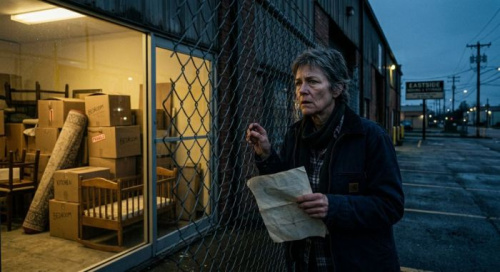
That was the last time I ever spoke to him. For six weeks he didn't return a single call. The shop on Main Street went dark, a "Closed for the Holidays" sign still taped inside the door in March. My daughter drove past it and took a picture. "Mom," she said, "I think he's gone." I called the cruise line myself that afternoon. That's when I learned their system had never heard of Donna Ellison, or the Northern Star, or December 28. That's how I ended up at the airline counter with a sheet of paper that said NO RECORD FOUND.
I want to tell you about the anger, because it was unlike anything I've ever felt. It wasn't the bright, clean pain of losing my mother. This was a hot, grinding fury, the kind that makes you drive past a closed travel agency at 11 p.m. just to look at the dark windows. Greg didn't steal fourteen thousand dollars. He stole a promise my father made in a Navy galley in 1962, and the last three weeks of peace my mother ever had. He stole her ability to die believing the people she loved would finish what she started.
And then I found out I wasn't alone. Ruby and Jim Purchase, two streets over, had given Greg nine thousand dollars for a Danube river cruise. Bill Harker, a widower who had finally worked up the courage to travel again, had paid eleven thousand for an Alaskan package almost identical to ours. By March there were thirty-two families on the list, and by May there were fifty-one. One of the younger victims started a Facebook group called Fairhaven Travelers United. I joined it at 1 a.m. and read until sunrise.
The cruelest part was that Greg wasn't even gone. Somebody found his social media: he was in Cabo San Lucas, bronze and smiling, holding a drink shaped like a volcano, captioned "Retirement looks good on me, doesn't it?" The shop had been a stage. The real Greg Collier was a gambler who had been quietly losing money for years, and every family's vacation fund was fuel for the fire. My mother's money had probably been gone the same week she signed for it.
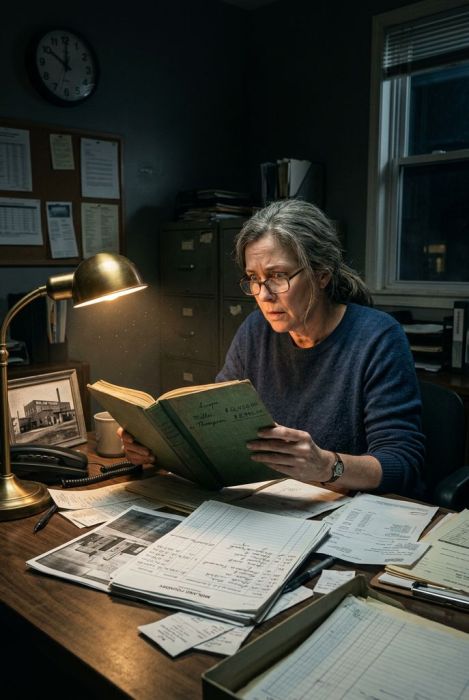
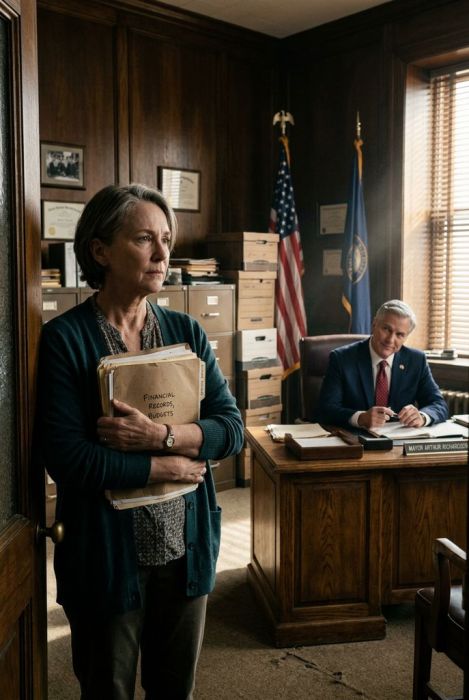
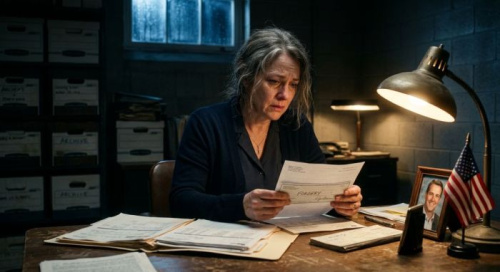
This is the point where I admit something. I didn't find the smoking gun. I'm not the detective. What I did was simpler and more stubborn: I kept everything. Every brochure. Every email. The gold-lettered confirmation with my mother's handwriting along the margins. The bank statement showing the check cashed the same afternoon. I did it the way my mother raised me to do things — thoroughly, quietly, and with the receipts.
The person who actually broke the case was Denise Byers, the twenty-six-year-old assistant Greg fired in June, three days after she asked why the "pending" bookings on his desk didn't match the ones in the computer. She had kept every schedule from every shift, because her grandmother taught her that paper is the only witness that never forgets. When the Facebook group reached forty names, she messaged me. "I have something you need to see," she wrote. "I kept copies. All of them."
Denise had realized what no one else had: Greg would sometimes sell the same sailing to two families and never book either one. She kept a private notebook of every itinerary that never shipped — forty-seven of them in eighteen months. And she had kept one more thing: a voicemail Greg left her by accident one night, meant for a bookmaker in Reno. "Yeah, I'm good for it. I got another three today. The seniors keep coming in, it's like printing money." Even now, I feel cold when I replay that voice.
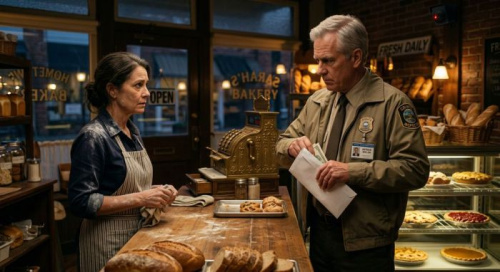
The day Denise and I walked into the Oregon Department of Justice with the notebook, the voicemail, and my mother's folder, the investigator who met us was Ruth Okafor. She listened for twenty minutes without interrupting, then smiled a tired, knowing smile. "We've been waiting for someone like you to walk in. Sit down."
That's when I learned the second part of the truth. Greg hadn't been clever, he'd been lucky. Ruth's unit had a file on him already, opened nine months earlier when the first complaint trickled in. They had a wiretap, bank records going back six years, and deposits traced to gambling accounts in three states. What they didn't have, until we arrived, was the full pattern — the names, the dates, the notebook, the voice saying "like printing money." By the end of that week, a grand jury in Multnomah County indicted Gregory Collier on thirty-four counts of wire fraud and aggravated theft.
But Greg was still in Cabo, and Oregon can't walk onto a beach in Mexico with a warrant. For four months he stayed gone. Then, in late October, Denise saw it first: he posted a selfie of a coffee cup with an airplane wing out the window — "Time to come home and settle some business." Two days later, the state learned he'd booked a flight from Cabo to Portland with a connection to Reno the same afternoon. He wasn't coming home to face anything. He was coming home to grab his money and run.
I was at the hospital billing office when Ruth called. "He's on the plane. He lands at 2:17. We'll be waiting for him at the gate. I thought you might want to be there." I drove to Portland like the highway owed me something, and I stood behind the big window above the concourse with my daughter, watching the arrivals board flick to the flight from Cabo.
Greg was easy to spot — tanned, smiling, carrying one small bag, moving like a man who believed he'd already won. He came through the jet bridge and turned toward the Reno connection, past the same kind of airline counter where his lie had caught up with me. He was ten feet from the security line when two agents stepped out of the flow of passengers, one from each side, and I watched his walk slow and then stop, like a clock that had run out.
"Gregory Collier?" The lead agent's voice carried all the way to the glass where my daughter gripped my arm. "You're under arrest for wire fraud." Greg's face crumpled, quickly and completely, in a public place, with strangers turning to stare. He didn't fight. There were too many cameras and too many years of "like printing money" recorded on a voicemail a fired assistant kept in a shoebox. He got cuffed at the gate for a flight to Reno — the last ticket he ever bought carried him somewhere the winnings couldn't follow.
The trial was less dramatic than I'd imagined, the way real justice usually is. Thirty-four counts became a guilty plea in week two. The judge sentenced him to nine years in federal prison, ordered him to pay back four hundred and ten thousand dollars, and told him, "You sold people their last chances at joy, and now you're going to pay for it." The shop building sold at auction. Denise Byers now runs a free Saturday workshop teaching seniors how to spot a travel scam, and she kind of loves it.
As for me, here's how the story ends. When the restitution arrived, it rebuilt the Alaska fund exactly to the dollar my mother had signed for. The following June, my sister, her two kids, and I boarded a true Alaskan cruiser — a real ship, with real decks and a real gold-lettered confirmation printed in our names.
On the third morning, off Kodiak, we stood at the rail while a pod of whales surfaced a hundred yards off the bow. My sister read my father's old letters out loud — his descriptions of the blue-ink glaciers my mother had cried over in our kitchen. Then I opened the small wooden box I'd carried from Fairhaven and let the wind take a handful of my mother's ashes into the water, at the exact kind of shore Walter Ellison had seen from his ship in 1962. "She got to see it," my sister said. "She just had to wait for us to get there first."
Greg Collier is still in prison, and I don't think about him much anymore. But sometimes I remember the last thing my mother said before she died. She wasn't talking about the cruise. "Honey, people like that always think they're the cleverest person in the room," she told me. "It's the only reason they ever get caught." She was right. He never saw the notebook, or the voicemail, or the file that had been waiting for him for nine months. He never saw us coming at all.