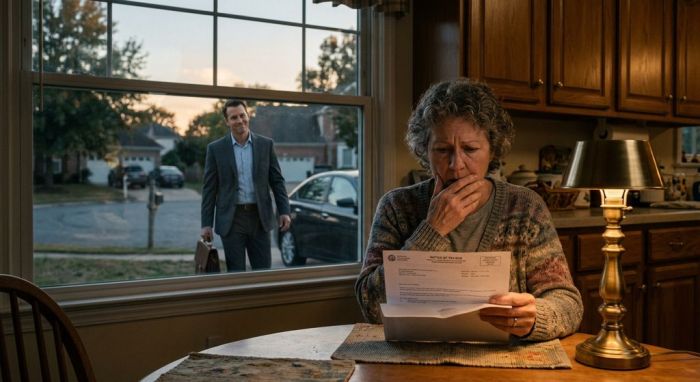
The day the tax notice slid under my door, I thought it was a mistake. A thin, official envelope from the county, my name misspelled and a nine-thousand-dollar lien attached to a property I had never heard of. I was about to file it away when I read the address: 412 Maplewood Court. My own house. Except the owner listed wasn't me, and the parcel was one I had never owned in my life.
That was the beginning of the end for Paul Ashford, but I didn't know it yet. All I knew was that the charming financial adviser next door had been quietly using my name for years, and I had just caught a single thread of the web he'd been weaving around our entire street.
For ten years, Paul had been the golden boy of Maplewood Court, our quiet cul-de-sac of retirement homes and neatly trimmed azaleas in Stonebridge, Ohio. He moved in with a warm smile and a rented moving van, always first to offer help raking leaves, always quick with advice about annuities and index funds. He ran the neighborhood investment club out of his garage office, a coat-and-tie affair where he poured decent coffee and promised steady, boring returns. "Slow and steady wins the race," he'd say, winking, and we all believed him.
I trusted him more than most. After my husband Frank passed, Paul was the one who sat with me on the porch and told me I shouldn't rush into anything. He helped me consolidate Frank's small pension and my own savings into what he called "a calm, conservative portfolio." He showed me glossy statements with my name on them and numbers that went gently up. It felt like having a son looking out for me, even though I never had children of my own.
The neighborhood adored him. When the Whitfields' roof leaked, Paul organized a collection. When Mrs. Delgado couldn't get to the pharmacy, Paul drove her. He coached the little league team at the end of the block in summer and shoveled driveways in winter. He was the first person everyone called in a crisis, and he never once said no. It's hard to describe how much that meant to a street full of widows and retirees who'd otherwise have been alone.
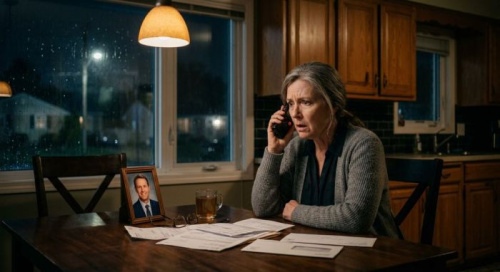
So when the tax notice arrived, I didn't suspect Paul. I suspected a clerical error, a confused computer at the county office. I called the number on the letter, expecting to straighten it out in five minutes. The clerk on the other end was patient but firm. "Ma'am, this lien has been on record for three years. It's attached to a property in your name. I'd check who has been filing on that account if I were you."
Something cold settled in my stomach. I hung up and walked to the window. Across the street, Paul's porch light was on, and I could see him through his kitchen window, laughing at something on his phone, relaxed and untouchable. I told myself it couldn't be him. And then I remembered something I'd almost forgotten.
A few months earlier, I'd lost my checkbook. I turned the house upside down for two weeks before I found it, shoved behind the breadbox where I know for a fact I hadn't put it. I'd laughed it off as old age. But now, standing in my kitchen with a lien letter in my hand, I started to wonder if my mind was the only thing that had been somewhere it shouldn't have been.
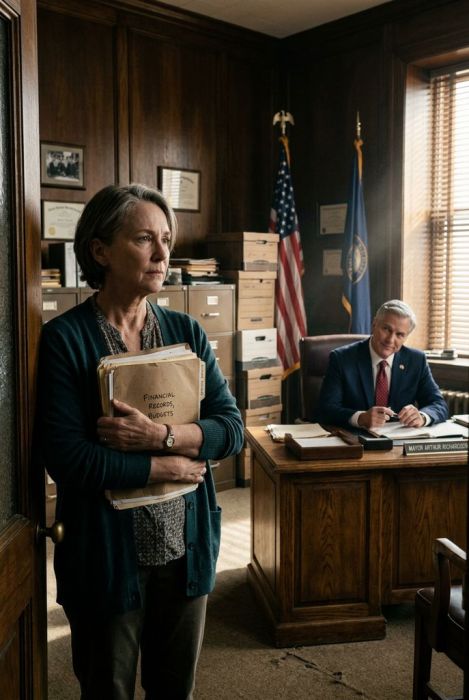
I decided to do a little quiet digging before I made any accusations. I drove to the county recorder's office the next morning and asked to see the deed attached to that mysterious property. The clerk pulled up the file, and there it was — a parcel on the edge of town, a run-down duplex I had never seen, deeded to "Martha J. Calloway," my full legal name, signed with a flourish that wasn't mine.
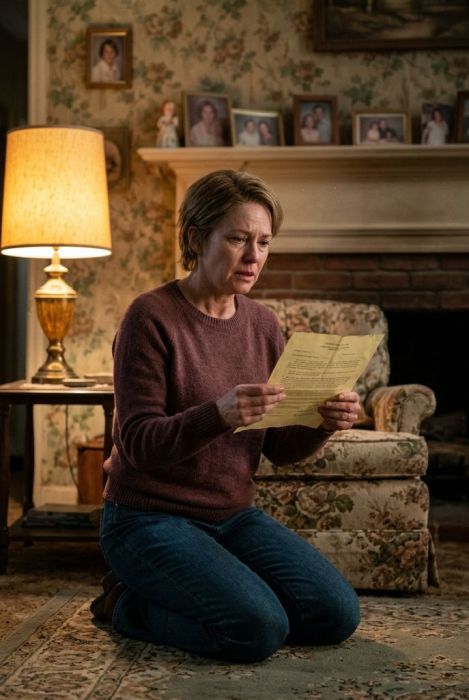
I stood there a long time, staring at the signature. It was a good forgery, I'll give him that, but it wasn't my hand. My Frank always said I had a tell, the way I dotted my i's with a little loop. There was no loop on that document. Paul had never once bothered to learn how I wrote my own name. He'd been so confident he'd never be caught that he hadn't even faked it right.
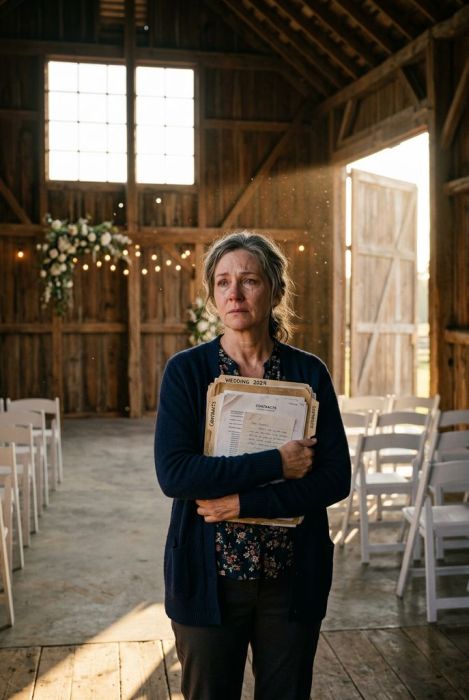
That's when I realized I couldn't do this alone. I wasn't going to confront Paul on my own and watch him charm his way out of it. I needed the kind of person who sees through charm for a living. So I went home, printed copies of everything, and drove to a small law office on Main Street run by a young woman named Dana Whitfield — the daughter of the very Whitfields whose roof Paul had "fixed" two summers ago.
Dana listened to my story with her elbows on the desk and a frown that deepened as I talked. When I finished, she leaned back and said something that made my blood run cold. "Martha, you're not the first person on this street to come to me about Paul Ashford. I've had three conversations about him in the last year. But nobody had a deed. Nobody had paper. Do you still have that checkbook?"
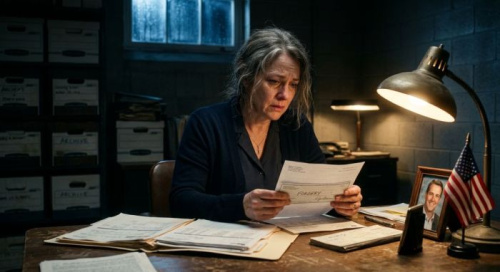
I did. And tucked inside it, in my own handwriting, were the account numbers of every transfer I'd made to Paul's "portfolio" over the years. Dana's eyes went wide. "This is the trail," she said. "Now we need to find out where it all went."
What we found over the next month was worse than either of us imagined. Paul wasn't just running a fake investment club. He had been committing identity theft and fraud against nearly every household on Maplewood Court for a decade. He'd taken out credit cards in the names of retirees who trusted him, opened home equity lines on houses he presented as "collateral," and siphoned the proceeds into a network of shell accounts under his own control. The retirement money my neighbors thought was safe was gone, laundered through a web of invoices to companies that didn't exist.
And Paul, bold as ever, kept getting bolder. When I asked him, casually, whether he'd seen any odd mail for my address, he laughed and patted my shoulder. "Martha, sweetheart, you worry too much. Everything's fine. Your money's safer with me than in a bank — banks get robbed, you know." He winked, and I smiled back, and I hated myself for the years I'd trusted that smile.
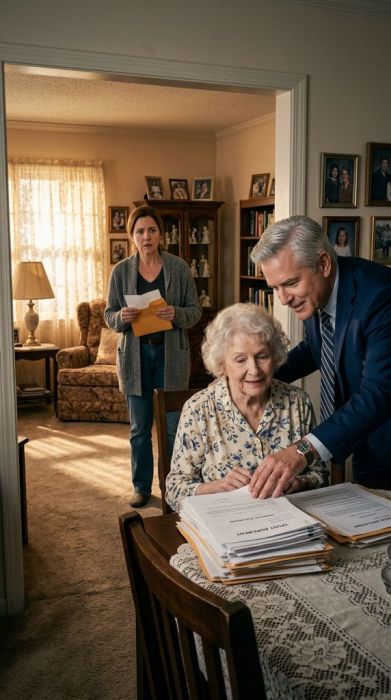
Around that time, I started noticing how Paul always found reasons to be at our doors. He'd drop off a casserole for a "new recipe," volunteer to check our smoke detectors, or stop by with a friendly reminder about a "great opportunity." I realized later he wasn't being neighborly at all. He was auditing us — learning who kept cash at home, who had no family checking in, who would never question a missing statement. Every visit was reconnaissance, and every one of us had handed him the keys to our trust without a second thought.
Dana advised me not to confront him. Instead, we set a trap. She had me tell Paul there was a new client moving onto the street — a wealthy widow named Eleanor with a large retirement account, nervous and looking for someone "discreet." Paul's eyes lit up at the prospect, exactly as we'd hoped. The "widow" was an undercover investigator from the county prosecutor's office, and her entire laptop was a live recording device.
For three weeks, Paul courted Eleanor like a shark. He showed her forged statements, promised twelve percent returns, and offered to "help her consolidate" several accounts she didn't even have to prove he'd been scamming. Every meeting was recorded, every promise documented. On the final day, when he suggested she hand over power of attorney "for safekeeping," the investigator pushed her chair back and said the words that would end him.
"Mr. Ashford, I'm not Eleanor. And I think we have everything we need."
Paul's face went through the most beautiful transformation I have ever witnessed. Confusion, then dawning horror, then a desperate, charming smile that didn't reach his eyes. "Now, let's not be hasty—" he started, but the door opened, and two detectives walked in with a warrant.
The news spread through Maplewood Court like wildfire. The neighbors who had adored Paul gathered on my porch, some weeping, some furious, all of them stunned. The Whitfields were the first to admit they'd lost money. Then the Delgados. Then the Fosters, who had given Paul power of attorney when their father got sick. One by one, we realized the extent of the betrayal. I wasn't alone. None of us were.
It turned out every kindness Paul had ever shown us had been a business transaction in his own ledger. He'd kept meticulous notes, the prosecutor later told us, of exactly what each of us was worth and how much he could drain before we noticed. He'd been so careful, so patient, that he genuinely believed we'd all die with our suspicions buried and his accounts full.
Paul Ashford was arrested on twenty-three counts of fraud, identity theft, and theft from the elderly. At trial, the prosecutor read the list of victims, and I watched Paul's mask finally shatter. He'd thought he was untouchable, that we were all too old, too trusting, too slow. But the evidence was overwhelming — forged deeds, his own recordings, the trail of laundered money. The jury deliberated for less than four hours.
When the verdict came down — guilty on all counts — a sound rose up from the gallery that I'll never forget. It wasn't cheering. It was something softer and deeper, a long, shaking exhale, the release of a decade of swallowed fear. Paul was sentenced to thirty years in federal prison. His house on Maplewood Court sat empty for a season, then sold to a young couple who plant tomatoes in the front yard and wave when I drive by.
The money was never fully recovered, and I won't pretend the last of it didn't hurt. But here's what I learned: we got back more than dollars. We got our street back. We got our trust in each other, rebuilt one card game, one shared casserole, one porch conversation at a time. The widow on the corner who thought she'd die alone now has a standing Friday dinner with three other widows who became her family.
I still have that tax notice, framed now on my wall. Not out of anger, but as a reminder that the universe keeps a record, and that even the most charming lie leaves a paper trail. Paul thought he was smarter than everyone on Maplewood Court. But in the end, he wasn't smarter than a single delinquent tax notice — and the woman who finally read it. Karma doesn't always come with sirens. Sometimes it comes as a thin envelope in the afternoon mail, carrying the truth that sets everyone free.