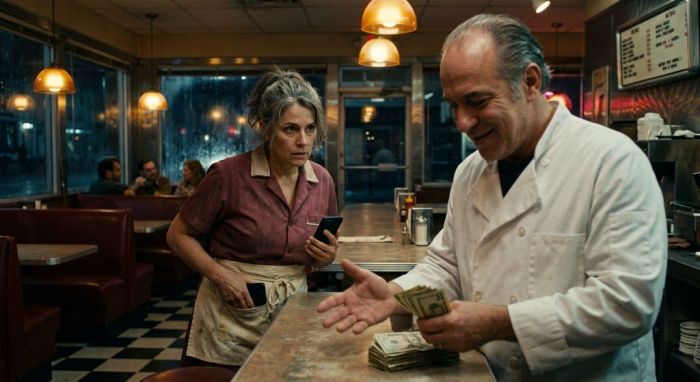
The Baldwin Street Diner was the kind of place people drove across town for. For nearly twelve years, I worked the breakfast shift there, and for eleven of those years, I believed I was part of something special. Mel Hargrove greeted every customer by name. He remembered birthdays, gave free pie to the kid with the braces, and bailed out his dishwasher when his truck broke down. The whole town called him generous. I called him family.
It started with small things I tried not to notice. The credit card receipts never quite matched the number of tables I'd served. The nightly tip jar, which we were told to split evenly, always came up lighter on the weekends when I'd worked the most hours. I'd tell myself I was bad at math, that Mel was keeping the books straight and I was just tired. Then one slow Tuesday, the register didn't close properly, and I saw him slide a folded stack of bills into his own back pocket.
I told myself it was a mistake. He'd correct it in the morning. But the morning came, and the drawer balanced again, and nobody said a word. I let it go because I needed the job, because my daughter's tuition was due, because Mel had been good to me when my husband left. I let it go the way a lot of people let things go—quietly, with my fingers crossed and my eyes on my own shoes.
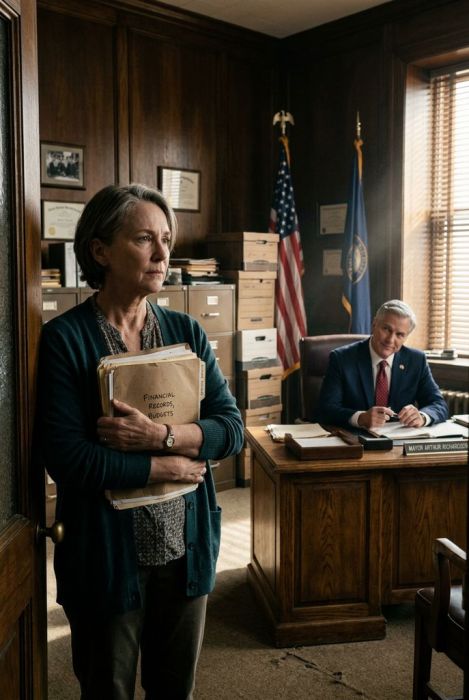
That changed the January morning I found the envelope. Mel had asked me to straighten his cramped little office behind the kitchen while he ran out for supplies. I wasn't looking for trouble. I was looking for an empty box to store old menus when the drawer of his desk slid open farther than it should have, and I saw the binder.
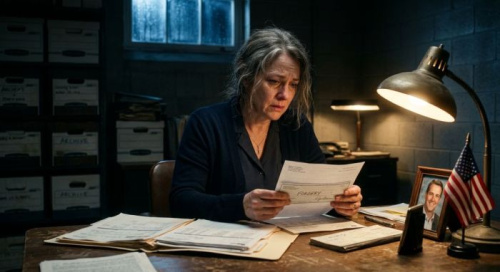
I had no business reading it. I knew that. But when you work sixty hours a week for eleven years and your daughter is counting pennies for her prom dress, curiosity is a dangerous thing. I pulled the binder out, opened the first page, and felt my knees go weak.
It was a ledger, kept in Mel's neat handwriting, stretching back over a decade. Every single shift. Every single tip. Every dime we'd earned and handed to him at the end of the night, listed in black ink, with two columns on the right. One column said "STATED." The other column said "ACTUAL."
The numbers didn't match. They never matched. Over the years, the difference totaled into the tens of thousands of dollars. Money from my apron. Money from Rosa's apron. Money from the four high school kids who'd come and gone, always broke, always quitting, always told they just weren't hustling hard enough.
I stood there in that dusty office with the binder in my hands, and I felt the whole world tilt. Mel Hargrove, the man who brought casseroles to every sick neighbor and paid for the town's Little League uniforms, had been stealing from his own staff for more than a decade.
I should have walked out with the binder. I should have gone straight to the labor board, or a lawyer, or the newspaper. But I was scared, and I was tired, and part of me still couldn't believe the man I'd trusted was the man in those pages. So I did what I'd always done. I put the binder back, closed the drawer, and told myself I'd think about it in the morning.
I never got the chance.
Three weeks later, on a freezing Thursday night, the diner was dead quiet. The last customer had left, and I was counting out the register with Rosa when Mel came out of the office with a strange, tight smile on his face. He stood there for a long moment, arms crossed, watching us.
"Maria," he said, using my first name in that folksy way he always did, "can I see you in my office?"
I thought it was about the schedule. I'd asked twice for a weekend off so I could see my daughter's choir performance. I was already rehearsing my apology when I stepped through the door and saw the ledger lying open on his desk, right where he'd left it, waiting for me.
"Someone's been going through my things," he said, closing the door behind us. "That's a real shame, Maria. After all I've done for you."
I didn't answer. I couldn't. My throat had closed up like a fist.
"You think I don't notice when things get moved?" he continued, circling the desk, his voice soft and patient, the way you talk to a child you're about to punish. "You think I don't know this little diner is the only reason you can afford that rent of yours? You think I don't know what that girl of yours costs you?"
He stopped in front of me, close enough that I could smell the coffee on his breath.
"I'm going to forget I ever saw you back here," he said. "And in exchange, you're going to forget you ever saw this binder. We'll call it even. You keep your job. I keep my reputation. Everybody wins."
Except it wasn't even, and we both knew it. He was telling me, in the gentlest way possible, that my silence had a price. And my silence, for eleven years, had already been far too expensive.
I didn't say yes. But I didn't say no either. I just nodded, walked out of that office, and went home and cried into my pillow, because the man who'd been like a father to me had just confirmed that he'd been robbing me blind the entire time.
Here's the thing about a bully—and make no mistake, that's what Mel Hargrove was. A bully doesn't stop when you back down. A bully just gets bolder. The weekend of my daughter's choir performance, I showed up for my Saturday shift, and the schedule sitting in the back had my name crossed out. Not the weekend. The whole schedule.
"You understand," Mel said, not meeting my eyes, "someone's got to keep the books honest around here."
He fired me that afternoon. Told me my "little snooping problem" made him uncomfortable. Told everyone who would listen that I'd been caught with my hand in the register, that I'd been stealing tips from the other girls and blaming him for it.
And because Mel Hargrove was a beloved man, because he'd bought the uniforms and the casseroles and the free pie, the whole town believed him.
Within a week, I'd been banned from two grocers. The woman who ran the diner's flower supplier called to cancel my standing order. Even my hairdresser shut the door in my face. When my daughter came home crying because her choir teacher had "suggested" she take a break from the spring concert, I knew Mel had reached even there.
I had nothing left. No job, no savings, no reputation. But I still had something he didn't know about, and it was the one thing that had been sitting in my own pocket that Thursday night when he'd closed the office door and told me to forget.
I'd been recording the whole conversation on my phone.
I hadn't planned it. It had just been habit—a reflex from years of walking home alone in the dark, of keeping my hand on my keys, of learning to document my own life because nobody else would. That night in his office, when he'd said "I'm going to forget I ever saw you back here," my thumb had hit the red button without me even deciding to.
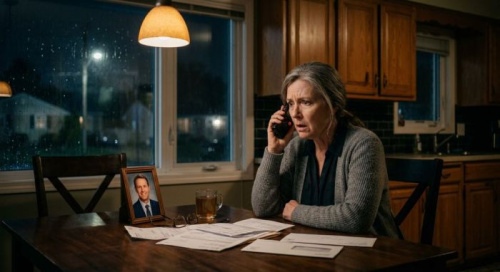
And a few weeks later, sitting alone in my apartment with my daughter crying on the phone and the town's cold shoulder still stinging my back, I finally pressed play.
I'd like to say I was strategic. I'd like to say I had a master plan. The truth is, I listened to his voice on that recording for three hours, and then I called the only person I could think of: a young employment lawyer named Dana Whitfield, who'd done her internship at the diner years ago and whom Mel had let go without a cent for the work she'd done.
Dana listened to the recording in silence. Then she asked me to bring her the ledger.
"I can't," I told her. "It's locked in his office."
"Then we'll get it another way," she said.
She told me to go to the county labor board and file a wage claim. She told me to give them the recording. And she told me, with a spark in her eye I'll never forget, to trust her on what came next.
The labor board moved fast, faster than I'd expected. They sent an auditor to the diner one Tuesday morning, and Mel, all charm and outrage, handed over his books with a flourish, certain they'd find nothing. What he didn't know was that the auditor had been tipped off to the binder in his desk drawer—the one with the "STATED" and "ACTUAL" columns that dated back eleven years.
Mel tried to burn it. He actually did. Witnesses say he grabbed the binder and headed for the kitchen fryers, but the auditor had already photographed the open pages, and the county sheriff was waiting in the parking lot.
I only found out the rest later, when Dana called me, breathless. It turned out Mel Hargrove wasn't just stealing tips. The tips were the tip of it. The full audit found he'd been skimming the health insurance payroll deductions for years—deductions he'd taken from our checks but never paid to the provider, leaving at least two former employees stuck with surprise medical bills. He'd filed false tax returns. He'd taken federal COVID relief money meant for small businesses and used it to buy a boat.
And Rosa, my friend Rosa, who I'd been working beside for nine years, had been the one to hand the auditor the second ledger. She'd found the other book in the basement, years ago, and had been quietly keeping copies of every bank statement since.
The town meeting happened on a rainy Thursday in the old community center, the same building where Mel's Little League team used to collect their trophies. I didn't plan to speak. But when Dana called my name and I stood up, holding the printed transcript of that night in his office, the room went so quiet you could hear the rain on the roof.
I read him his own words. "You're going to forget you ever saw this binder." I told them about the eleven years, the shorted tips, the empty promises, the way he'd made me feel crazy, ungrateful, and then finished the job by taking my name and dragging it through the mud.
I saw the faces change. I saw the grocer who'd banned me lower his eyes. I saw my hairdresser get up and walk out. And I saw Mel Hargrove, the town's golden boy, shrink in his chair as the weight of a decade of lies finally settled on his shoulders.
The sheriff was waiting outside the community center door, handcuffs in hand. It took two officers to get Mel into the cruiser, because he spent the whole walk shouting that I'd framed him, that the girl he'd "treated like a daughter" had destroyed him out of spite. But it was all on tape, and it was all in the ledger, and the county prosecutor had a stack of evidence two inches thick.
In the end, it wasn't a trial that broke him. It was the plea deal. Mel Hargrove pleaded guilty to wage theft, tax fraud, and misappropriation of disaster relief funds. He was ordered to pay back every cent he'd stolen, plus fines that cleaned out his bank accounts, his boat, and finally the diner itself. The Baldwin Street Diner, the beloved institution he'd built on the backs of people like me, was sold at a public auction to pay his debts.
The auction was held on a Saturday in June. I didn't plan to be there, but I went anyway, mostly out of morbid curiosity, the way you watch a fire you're glad you're not in. The bidding was quick, and when the gavel came down, the new owner stood up and turned around.
It was Rosa.
She'd been saving for a decade, she confessed, her eyes shining. She'd known this day might come. She'd wanted to keep the recipes, and the regulars, and the warm yellow light of that old diner alive—but on honest terms this time.
She handed me the keys that afternoon, right there on the cracked sidewalk out front.
It's been two years now. Rosa runs the kitchen, and I handle the counter, and every single one of us—all four waitresses, both dishwashers, even the high school kids—gets an equal share of the tips, counted out and written down in a ledger that sits on the counter where everybody can see it. We renamed the place. We call it Maria's now, after the girl who wasn't scared enough to stay quiet.
Mel Hargrove served eighteen months and got out with nothing. I got out of the parking lot of my own despair and built something better out of the ashes.
My daughter sang at our grand reopening. She got a standing ovation, this time for all the right reasons. And as I stood there in the warm yellow light of the diner I'd helped rebuild, watching Rosa hand out free pie to the very people who'd once closed their doors on me, I understood something I hadn't before.
Karma doesn't always come with a siren and flashing lights. Sometimes it comes quietly, disguised as a phone recording you never meant to make, a friend who'd been keeping copies of the truth, and a town finally brave enough to look at itself in the mirror.
Mel thought he'd silenced me when he fired me and turned everyone against me. What he didn't know was that the moment he closed that office door, he'd already handed me the only weapon I'd ever need: his own words, his own voice, his own guilt, saved on a little phone I'd never stopped carrying.
They say the truth will set you free. That's true. But in my experience, it also sets you a little richer, a little wiser, and a whole lot more careful about who you decide to call family.