The day Dr. Everett Hale announced his retirement, half of Pine Ridge packed into the community center to applaud him. He stood at the podium in his best navy suit, wearing that same warm smile he'd given me the day Tyler was born, the day he stitched my finger at the clinic, the day he'd told me everything was going to be all right. The mayor called him a pillar of this community. Someone had made a video with old photographs and sentimental music, and people were actually crying into their paper napkins.
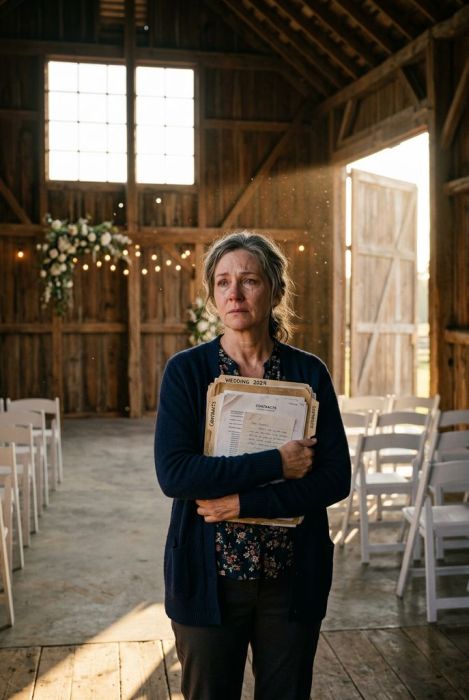
I stood in the back row with a manila envelope that was already damp from my sweating hands. The man on that stage, the man about to retire to a golf community in Florida, had nearly killed my son. And in fifty minutes, the whole town was going to find out.
Tyler wasn't a troublemaker. He was the kid who mowed Mrs. Delgado's lawn for free every summer, who saved his wages to buy his little sister a bike, who made varsity football his sophomore year at Pine Ridge High. He wasn't the biggest kid on the field, but he was the toughest — the one who took a hit, got up slow, shook it off, and ran the next play like nothing happened.
When he tore his shoulder against Harrison High that October, Dr. Hale examined him in Room Three and signed a prescription pad with that confident flourish. Oxycodone, ten milligrams, every six hours as needed. "It'll take the edge off," he said, patting Tyler's shoulder. I remember feeling grateful. That is the part that still keeps me up at night. I was grateful. Dr. Hale had been our family doctor for thirty years, and I trusted him the way you trust gravity.
The edge, as it turned out, was the beginning of the cliff. Tyler took those pills for two weeks, then a month. When I called the clinic to schedule a follow-up, the receptionist put me straight through to Dr. Hale himself. "Shoulder still bothering him?" he asked, all warmth. "Why don't I just call in a refill? No reason to make you drive all the way out here for a two-minute check."
So the refills came. Then the dosage crept up — twenty milligrams, then thirty. Tyler got quiet. He stopped going to practice, stopped going anywhere really. He slept twelve hours a night and still looked exhausted. I told myself it was the injury, the depression that sometimes follows a season-ending hurt. I told myself a lot of things, because the alternative was too terrible to consider.
The night I walked into the emergency room and saw my son on a gurney with Narcan in his arm changed everything. He'd been found in his car in the parking lot of the old movie theater, blue-lipped and barely breathing, a crushed bottle of pills on the passenger seat. A paramedic I'd worked beside for years caught my eye and looked away. That was when I knew I wasn't the only nurse in this town who had noticed a pattern.
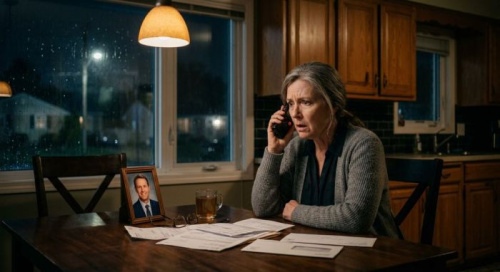
I am an oncology nurse at the county hospital. I have spent twenty-six years watching people fight for their lives. But in those months after Tyler's overdose, I started seeing something else. Chart after chart, patient after patient — young men like my son, middle-aged women, a grandfather who'd had knee surgery — all with the same prescribing doctor at the bottom of the medication list. Dr. Everett Hale. I started keeping my own records. Names, dates, dosages, outcomes. By spring, I had eighteen names. By summer, thirty-one. Three of them were dead.
The hardest part was that nobody wanted to hear it. When I mentioned the pattern to a colleague, she changed the subject. When I brought it up to a sheriff's deputy I'd known since high school, he shook his head and said Dr. Hale had treated his own mother for free during her cancer. "He's a good man, Nancy. You're grieving. I get it." Even my own sister told me to let it go, that accusing our town's most beloved doctor of destroying kids would destroy us instead.
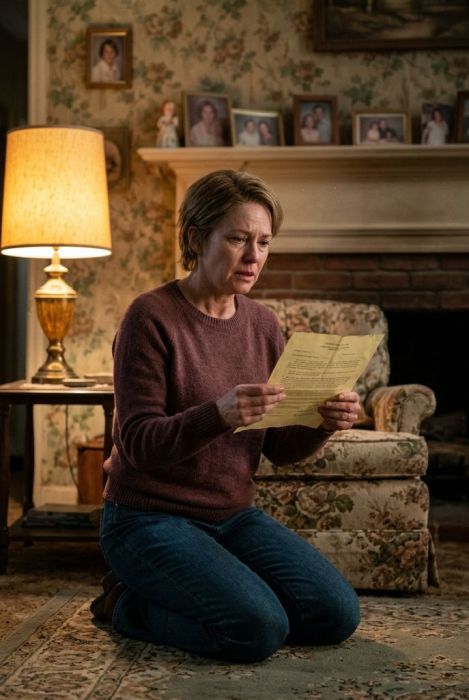
But Tyler was getting worse. He dropped out of the fire academy. He pawned his grandfather's watch. He looked at me with hollow eyes and said, "Mom, you don't understand what it feels like." I understood more than he knew. I understood that someone had handed him the match.
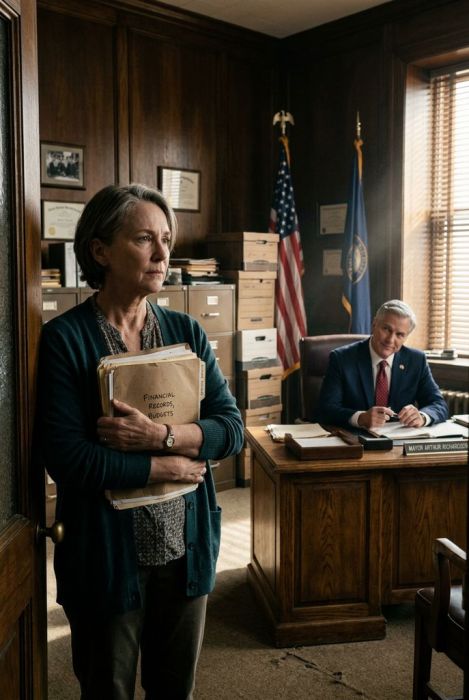
The breakthrough came by accident and by desperation. Tyler spent eleven days in a rehabilitation facility in Columbus after a second overdose, and the intake coordinator asked me for his medication history. I drove to the clinic myself, planning to request the records in person, and found the clinic an hour from closing, the front office dark. Through the glass door of the file room, I saw the office manager, Sandra, pull a pink three-ring binder off the top shelf and slide it into her tote bag before locking up for the night. Something about how quickly she moved told me I had just found the answer to a question I hadn't been brave enough to ask.
I came back the next night after the clinic closed. I'm not proud of breaking in, and I'm not going to pretend I felt bad about it either. The lock on the back door was old, the kind any teenager could defeat with a credit card, and the alarm system had been broken for years — everyone knew it, because the clinic had been burgled twice and Dr. Hale refused to spend money fixing it.
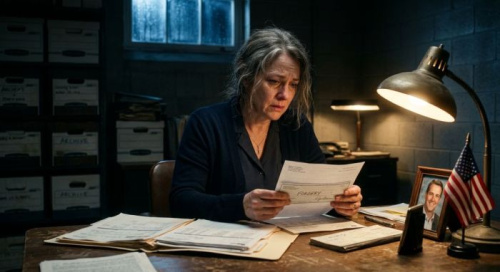
The pink binder was back on the top shelf of the file room, tucked between dusty boxes of discontinued patient files. It wasn't labeled with anything except a faded word in black marker: CASH. Inside were pages and pages of handwriting — names, phone numbers, dates, and prescriptions. Oxycodone eighty milligrams, quantity one hundred twenty. Hydrocodone. Morphine. Cash only. One hundred dollars a visit, no questions asked. I recognized one of the names on the first page. It was the grandfather who'd had knee surgery. He'd died in February.
I photographed every single page with my phone. My hands shook the whole time, and I kept waiting to hear footsteps, kept waiting to get caught. But the file room stayed quiet, and the pages kept coming — more than four hundred entries stretching back six years. Four hundred people. Some of the handwriting was Sandra's. Some was Dr. Hale's. All of it was evidence.
I didn't go to the local police. By then I understood that in a town this size, the hero and the protector could be the same man, and the badge might not be enough to stand against thirty years of good deeds and church potlucks. Instead, I called the DEA task force in Columbus, and three days later I sat in the back booth of a diner off the highway with Special Agent Dana Fielding, who listened to my whole story without interrupting once.
"We've suspected a source of diverted OxyContin in this area for over a year," she said finally, pushing a folder across the table. Inside were reports from three counties — overdoses, emergency visits, deaths — every one of them with prescriptions that traced back to Pine Ridge. "Forty-one cases in five counties, Mrs. Kessler. Every trail leads to the same doctor. We just never had a witness willing to go on the record. Are you willing?"
I signed the paperwork that afternoon. What followed was the strangest, most terrifying few weeks of my life. Agent Fielding set up a sting operation. A young female agent posing as a woman from out of town with a supposed back injury booked a new patient appointment at Hale Family Medicine, paid in cash, and let the recording devices she wore do the rest. Dr. Hale examined her for less than three minutes, told her she probably had a disc problem, and wrote her a script for one hundred twenty pills of a forty-milligram painkiller — with instructions to bring more cash when she came back in two weeks.
I watched the whole thing live from a van down the street, my heart pounding so hard I felt it in my throat. When Dr. Hale handed the undercover agent the paper and said, "See you in two weeks, sweetheart," the room on the screen seemed to go very still. Then Agent Fielding's quiet voice came over the radio: "We have it. Everything we need."
The retirement party was Dr. Hale's own idea. He had sold his practice to a regional health group and planned to move to Naples, Florida, where his daughter lived. The community center was decorated with balloons in Pine Ridge colors, and the caterer had set out the good pulled pork. Sandra handed out commemorative programs with a photo of the doctor on the cover. There were speeches — too many speeches. The high school principal talked about Dr. Hale's generosity with the athletic program. A local minister talked about his faith. The mayor presented him with a proclamation declaring November twelfth "Dr. Everett Hale Day."
I sat in the back row, and I could see the undercover agent in the crowd too, a woman in a blue blouse pretending to be someone's niece, sipping punch and smiling. We locked eyes once, and she gave me the smallest nod.
When Dr. Hale stepped to the microphone to thank the town, he actually choked up. "I've delivered half the babies in this county," he said, and the crowd laughed and clapped. "I've watched this community grow. I've been blessed to be your doctor."
He was still talking when the doors at the back of the community center opened and four agents in windbreakers walked up the center aisle. The crowd's applause faltered, then died entirely. Dr. Hale looked up from his notes, and for the first time in thirty years, I saw the mask slip. For one second, he looked exactly like what he was — a frightened man with a lot to lose.
"Everett Hale," Agent Fielding said, loud enough for the microphone to carry it. "You're under arrest for distribution of a controlled substance."
Sandra dropped the commemorative programs. A woman in the front row screamed. And the man who had been the most loved person in Pine Ridge stood frozen behind the podium while they read him his rights in front of two hundred people who had come to celebrate him. I watched from the back row, and I cried. Not because I was sad — because Tyler was sitting beside me, forty-three days clean, and he was crying too.
The trial was not long. The pink binder alone was an ocean of evidence, but the prosecution also had the undercover recordings, the testimony of thirty-one patients and family members, and Sandra, who had been offered immunity in exchange for the truth. She testified that Dr. Hale had paid her extra to keep the cash log and that the money went into an account he used to fund a condo in Florida. The defense tried to paint the doctor as a compassionate man who'd been naive about his patients' intentions, but the jury was out only four hours.
They convicted him on all eleven counts. The judge sentenced him to nine years in federal prison, revoked his medical license, and ordered him to pay restitution to more than four hundred victims. The news cycle covered it for about a week. The town was quieter for a long time after that. Some people still refused to believe it. But the plaques came down from the clinic wall, and the clinic itself eventually reopened under the health group that had bought it — with real pain management, real follow-up care, and a sign that said no cash-only appointments, ever.
As for Tyler, he has been sober for fourteen months now. He works as a peer recovery coach at the same facility in Columbus that saved his life, and last month he spoke at a high school assembly about the night his mother stood in the back row holding a manila envelope. He told those kids that heroes sometimes wear white coats, and sometimes they don't, and that the worst people are often the ones who make you feel safest.
I think about Dr. Hale sometimes, about how easy it is to trust a warm smile and a lifetime of good deeds. I think about all those parents who trusted him, the way I did. And I think about the pink binder, and how the truth waits in the most ordinary places — on a dusty shelf, behind a door that should have been locked, in the handwriting of a man who thought nobody would ever look.
Agent Fielding calls me every few months, just to check in. Last time, she told me that the task force had used our case to help dismantle two more pill operations across the state. "You did that, Nancy," she said. "You and that binder."
I don't know if I did anything heroic. I was just a mother who finally looked. And in the end, that was enough — because sometimes, justice doesn't arrive with sirens and spotlights. Sometimes it arrives in a dusty file room, in the quiet courage of a woman who decides that her son's life is worth more than a whole town's comfortable lies. Tyler is alive. Dr. Hale is where he belongs. And for the first time in years, Pine Ridge sleeps a little easier at night.