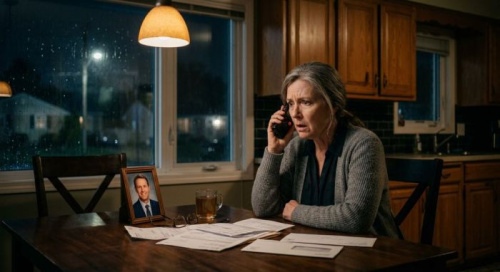
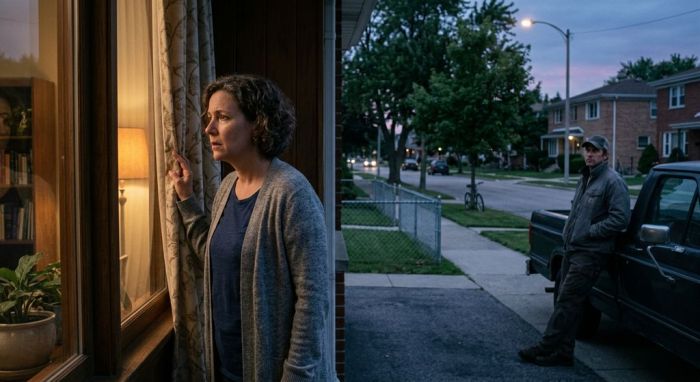
I didn't sleep that night. Not because of the storm shaking the old maple outside my window, but because of what I'd seen through the rain-streaked glass. A truck had sat across the street from my house for three hours, engine off, lights dark. And when the lightning flashed, I saw the silhouette behind the wheel. I knew that silhouette.
Everyone in Maple Hollow loved Dean Ashworth. He was the firefighter who pulled the Whitmore kids from the burning barn. He was the man who led the annual charity barbecue and never missed a church potluck. He had dimples and a soft drawl and a handshake that made old men trust him and young women blush. When I filed a restraining order against him, you would have thought I had burned down the church myself.
The whispers started within a week. "Poor Dean," they'd say at the diner. "She broke his heart and now she's crying wolf." I was the "crazy ex," the "jealous woman," the one who couldn't let go of a sweet man who'd only ever been kind. My own sister told me to get therapy. My neighbor stopped waving. I stopped being Eleanor Hart, the quiet widow who ran the corner bakery. I became the town's cautionary tale.
They didn't know what I knew.
Let me back up, because you need to understand who Dean Ashworth really was. I met him eighteen months after my husband passed. I wasn't looking for anyone. I was just trying to keep my bakery afloat and my heart in one piece. He came in one Tuesday morning, ordered a black coffee and a cinnamon roll, and stayed to talk about the weather. Then he came back the next day. And the next.
He was patient. That's what I told myself. He didn't push. He invited me to the annual firehouse fish fry, and I went because I was lonely and he was warm. He brought me flowers I didn't ask for and remembered the name of my late husband's dog. He seemed too good to be true, and I should have known better.
The change came slow, the way poison works. At first it was just mild comments—she was "too friendly" with the mailman, "too close" to the UPS driver. I laughed it off. Then he started showing up at my bakery every morning, sitting in the same corner, watching me with a smile that didn't reach his eyes. My regulars started to avoid me. He'd told them I was "going through something."
I ended it in March. I told him, as gently as I could, that I needed space. He smiled, nodded, and said he understood. And then the truck appeared across the street from my house that very night.
The first time I called the police, the officer laughed. "Ma'am, he's a firefighter. A war hero. You really think he's stalking you?" The second time, they told me to stop tying up the line. The third time, they suggested I was the problem. By then, Dean had a girlfriend—a sweet young teacher named Rachel—and the whole town thought I was bitter and unhinged.
But here's the thing about Dean Ashworth. He was careful, but he was also arrogant. And arrogance makes people sloppy.
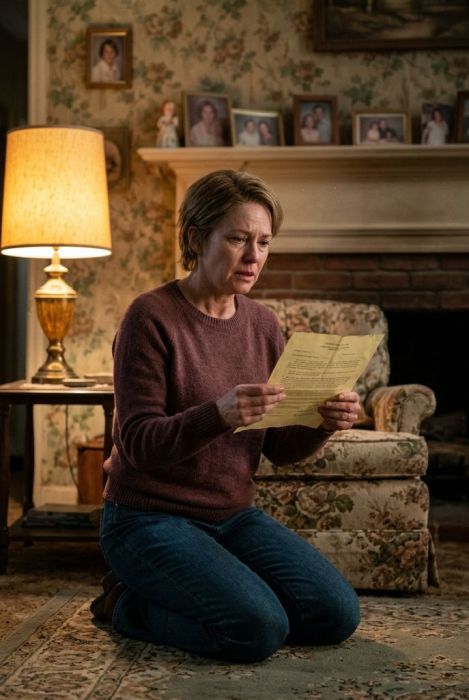
I started documenting everything. I bought a small voice recorder from an electronics shop in the next county, because I knew if I used my phone at the wrong moment, someone would say I'd faked it. I kept a notebook with dates and times. I photographed his truck's tires leaving skid marks by my mailbox. I catalogued every "coincidence" that wasn't one.
The night I realized I wasn't alone in my fear, I found a note tucked under my windshield wiper. It said, in handwriting I would have known anywhere: "You look pretty in the blue dress. Wear it again Friday." I had worn a blue dress exactly once, weeks ago, alone in my house, curtains open by accident. He had been watching me from the treeline.
I went to the sheriff's deputy, a young woman named Deputy Mara Ellis who'd just moved to town. Unlike the others, she didn't laugh. She looked at the note, at my notebook, at the photographs, and her jaw tightened. "This is real," she said quietly. "This is a pattern." She was the first person who believed me.
Deputy Ellis told me to keep gathering evidence but to stay safe. She couldn't do much without more, she said—local politics ran deep, and Dean had friends in every corner of the county. But she gave me one piece of advice that changed everything. "People like him," she said, "they can't help but brag. Give him a chance to talk, and he'll hang himself."
I didn't have to give him a chance. He gave me one himself.
It was the week of the annual firehouse dinner, the town's biggest social event of the year. Dean was the guest of honor—of course he was. The whole town would be there, including Rachel, his new girlfriend, and the mayor, and just about everyone who'd ever told me I was imagining things.
I walked in wearing the blue dress. Not because I wanted to. Because Deputy Ellis and I had a plan, and I needed Dean to feel like he'd won.
He saw me across the room and his smile flickered—just for a second—before he composed himself and glided over. "Eleanor," he said, too warmly. "I'm so glad you came. I was worried you were still mad at me."
"There's nothing to be mad about, Dean," I said, and I let my voice shake a little. "I think I owe you an apology."
His eyes lit up. That was the moment I knew the trap was set. He steered me to a quiet corner near the coatroom where the band's sound didn't reach, where he thought no one could hear us. And in the pocket of my blue dress, my little recorder was running.
"I'm sorry I overreacted," I said, playing the part. "I thought you were watching me. That was silly of me."
"Oh, Eleanor." He lowered his voice, warm and smug. "I wasn't watching you. Not all the time." He leaned closer, and I could smell the cologne he always wore. "You really don't get it, do you? You think a few notes and a truck at night is stalking. You have no idea what I'm capable of."
"What do you mean?" I asked, and my heart was pounding so hard I thought he might hear it.
He laughed, soft and confident. "You broke my heart, sweetheart. You think I'd just let that go? Rachel's a doll, but she's not you, and she never will be. You're the one I want." He smiled that dimpled smile. "And I always get what I want. The Whitmore barn wasn't an accident, you know. I was in there first."
My blood went cold. The Whitmore barn. The fire that nearly killed three children. The fire Dean had been "heroically" credited with saving them from.
"You're lying," I whispered.
"I never lie, Eleanor," he said, and he looked almost proud. "I just let people believe what they want. That fire was the best thing that ever happened to my reputation. Everyone thinks I'm a hero. You think anyone would believe a word you say against that?"
It was all on the recorder. Every word. The confession was perfect, damning, and utterly arrogant. I smiled at him—the first real smile I'd given him in months—and I said, "Thank you, Dean. I think I finally understand."
He looked puzzled, but he didn't understand. Not yet.
The next morning, Deputy Mara Ellis filed a request with the district attorney's office. But it wasn't the recorder that broke the case wide open—it was the barn. Dean's confession made the DA reopen the Whitmore fire as arson. The original report, buried for years, had noted an accelerant pattern that pointed to an inside job. Dean had been first on scene because he'd started it himself, to build himself into a town hero.
They found his lighter fluid canisters in a storage shed he thought no one knew about. They found his fingerprints on a window latch the fire marshal had logged years ago. And they found something worse: receipts, photographs, and a hidden folder in his garage with the names and pictures of at least four other women he'd stalked before me—women who'd moved away, too afraid to talk.
The town of Maple Hollow turned on him faster than a grease fire. The man who'd been a hero on Monday was in handcuffs by Thursday. He was charged with arson, attempted murder, and stalking, with more charges coming as the other women came forward. His girlfriend Rachel wept in the courthouse hallway and told reporters she'd had no idea, that he'd been "different" with her too.
When they read the transcript of his confession in open court, the courtroom went silent. I sat in the front row, in a plain gray blouse—not the blue dress—and I watched the firefighter everyone adored realize, too late, that the "crazy ex" had been the smartest person in the room the whole time.
The trial lasted three weeks. I testified. Deputy Ellis testified. Three other women testified, each braver than the last, and each of their stories matched mine like a fingerprint. The jury was out for less than a day.
Dean Ashworth was convicted of arson, attempted murder, and five counts of stalking. He was sentenced to thirty-two years in prison. The judge looked at him across the bench and said, "People like you are why the word 'hero' is never safe to trust."
The day the verdict was read, I walked back to my bakery, and for the first time in two years, the whole street felt safe. My regulars came back. My sister apologized. The neighbor who'd stopped waving baked me a pie and left it on my doorstep with a note that just said, "I'm sorry."
Rachel started a foundation for stalking survivors in the county. She told me once, tearfully, that she felt guilty she'd doubted me. I told her she had nothing to feel guilty about—Dean fooled everyone, including her.
It has been four years now. I still run the bakery, and I still live in the house with the maple tree, but I keep the curtains a little tighter at night and I lock my doors automatically. Deputy Ellis is Sheriff Ellis now, and we share coffee every other week. She made stalking a priority in this county, and she trained every deputy to take every report seriously.
Dean Ashworth is still in prison. He appeals, and he loses. He writes letters that I never open and that the prison forwards to the DA instead. He thought confessing to me in that quiet corner was him winning. He never realized that winning meant the recorder in my pocket, the notebook in my drawer, and the three other women who finally found the courage to speak because I spoke first.
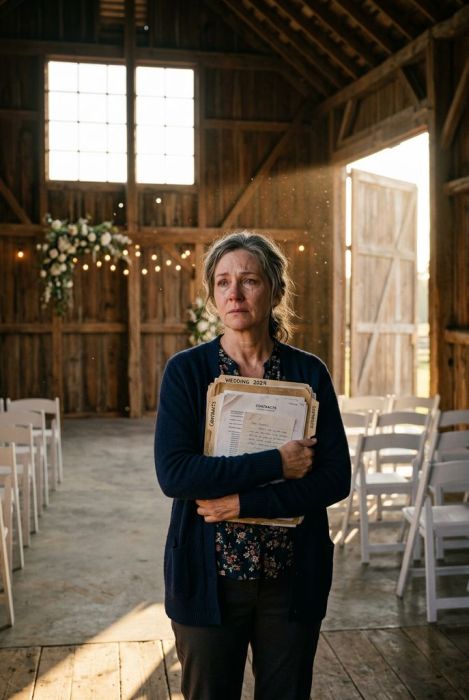
I don't think about him much anymore. But sometimes, when the anniversary of the trial comes around, I go to the Whitmore family's rebuilt barn and I stand in the sunlight, and I feel a peace I didn't think I'd ever know.
The firefighter everyone in town adored ended up in a prison cell, remembered not as a hero but as the monster he always was. And I—the woman half the town called crazy—ended up with my life, my bakery, my peace, and the quiet satisfaction of watching the truth burn brighter than any fire he ever started.
They say karma takes its time. I can tell you, from experience, that when it finally arrives, it's worth every second of the wait.