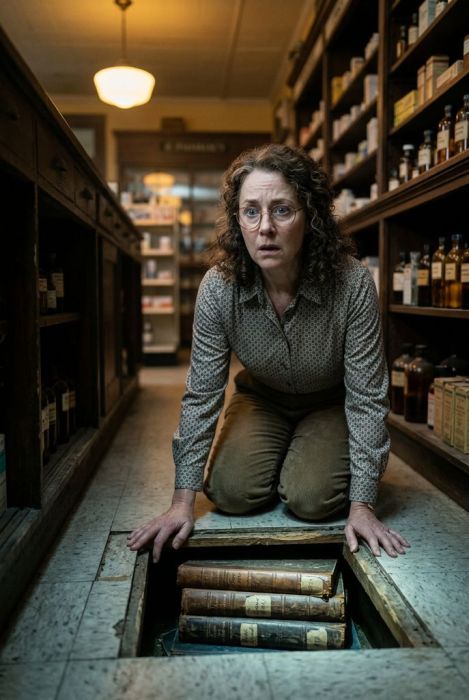
The morning I found the second set of books, the pharmacy still smelled the way it had on the day of my father's funeral — antiseptic and grief. I was on my knees behind the prescription counter, hunting for a lost delivery receipt, when my fingers brushed a loose floorboard. It gave way with a soft groan, and beneath it lay a stack of ledgers that would tear the mask off the most beloved man in Marlow, Ohio.
My name is Carla Benton. For twenty-three years I'd worked as a staff accountant in Cleveland, a thousand miles and a whole lifetime away from the little town where I grew up and where my father had spent every day of his seventy-six years. He was a retired history teacher, a decent man the library named a reading room after. And he was dead now, three weeks gone, killed by what the county coroner politely called a sudden cardiac event.
I didn't believe it. Grief makes you say strange things, so I kept it to myself. But something in my bones told me my father didn't simply die. He'd managed an irregular heartbeat for years with a blood thinner, a precise little medicine called warfarin, and he was careful with it. He logged every dose in a spiral notebook I'd found in his nightstand, each date and pill recorded in his neat teacher's handwriting right up to the night he passed.
And that's when I noticed the mismatch. The last few entries in his log didn't match the pills still sitting in the bottle.
Phil Atwater had run Benton's Pharmacy for thirty years, and in all that time you would have been hard pressed to find anyone in town with a bad word for him. He came to your kid's baseball games, donated antihistamines to the school nurse, and stood outside the pharmacy every Veterans Day passing out free candy to old soldiers. He was a deacon at the First Methodist Church, a man who squeezed your hand at funerals and remembered the name of everyone who walked through his door. When my father's own doctor prescribed the warfarin, it was Phil himself who rang me up at the register one last time, his eyes red with sympathy.
He knew my father was dying. He'd been the one quietly filling that prescription for years.
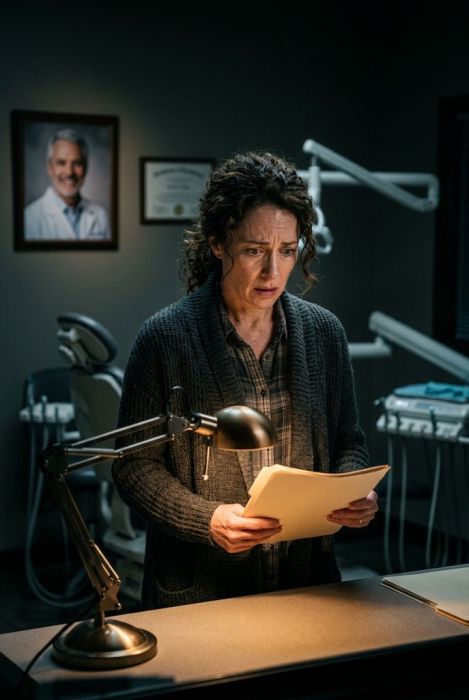
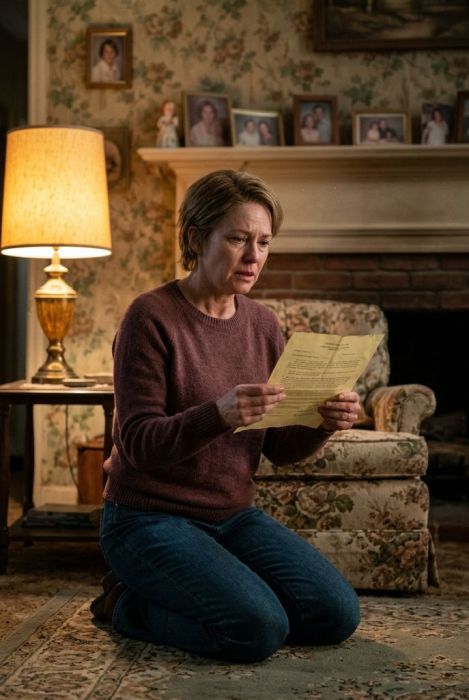
The first strange thing I noticed was the pill bottle in Dad's bathroom trash. I found it the afternoon of the funeral, when I was emptying the house so the estate sale could go through. Most of the pills were gone, but the ones that remained looked wrong — smaller, chalkier, a different shade of white than the medicine I knew Dad took. I told myself I was imagining it, that grief does strange things to the mind.
Then I found the notebook. Dad's log showed he'd taken his dose the night before he died, just as always. But the pill he'd recorded was the shape he'd been swallowing for years — round, with a tiny score line. The handful I fished out of the trash were oval and unmarked. Somebody had switched them.
I sat on the edge of Dad's empty bed and stared at those pills until my eyes blurred. And I knew, the way you know a storm is coming, that Phil Atwater had something to do with it.
I grew up in that pharmacy. As a teenager I'd swept its floors and stocked its shelves during the summers, so I knew every corner of the place — including the loose board behind the prescription counter that had never quite fit right. Phil fired me my senior year over a box of dropped penicillin, though he never really looked me in the eye when he did it. I told myself it was a young man's foolishness, and I went off to Cleveland and became an accountant, and for two decades I did my best to forget Phil Atwater existed.
Now I was back, and the tile behind that counter was cold against my knees, and my fingers had just found the board.
Beneath it lay a second set of books.
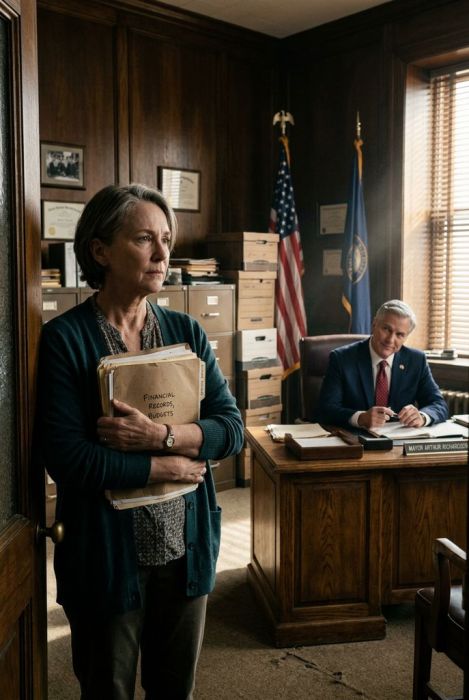
The store's official ledgers — the ones Phil showed the auditors and the state board — painted a picture of a modest, honest little pharmacy. But the ledgers under the floor told a different story. Page after page listed substitutions. Name-brand heart medication swapped for a cheaper generic while the patient was billed for the name brand. A blood thinner here. A seizure medicine there. And in the last few years, rows and rows of warfarin marked with a single chilling word: substitute.
I called my old friend Dana Moreau the next morning. Dana had been a year behind me in high school, and she'd come home to Marlow to take over her mother's bookstore. She was the only person I trusted with something that felt this heavy. When I showed her the ledger and the mismatched pills, Dana went pale and said two words I'll never forget: "The deaths."
I didn't understand. She walked me to the back of her store and pulled a folder from a filing cabinet — death notices clipped from the local paper over the last five years. Retired farmers. Widows. Quiet men and women who'd gone to bed with heart trouble and never woken up. Names I hadn't connected until that moment. Patients of Phil Atwater's pharmacy, all of them on the same blood thinner, all of them dead of sudden cardiac events that the town had silently accepted as the cruel luck of old age.
Dana had suspected for years. Her own aunt had died that way, and Dana had asked Phil about a strange difference in the pills once. He'd laughed her off with a warm, fatherly charm and told her grief was making her imagine things. She'd never trusted him since, but she'd had nothing to prove it.
Now she had the ledger. And I had the pills.
The problem was, Marlow loved Phil Atwater. The town had trusted him for thirty years, and trust is a hard thing to shake. I knew that if I walked into the police station with nothing but a notebook and a box of pills, they'd write me off as a grieving, delusional daughter. So I got clever.
I'd spent my whole career as an accountant learning how to read the story behind the numbers. And Phil Atwater's second set of books told a beautiful, damning story — if only I could prove which patients were which. So I did what any good accountant would do. I started with the pharmacy's inventory. I cross-referenced every "substitute" entry against the names of the patients on those medications, using purchase records and the county's public prescription registry. It was slow, careful, methodical work. I turned my father's empty house into an office. I put Dana's clippings on the wall.
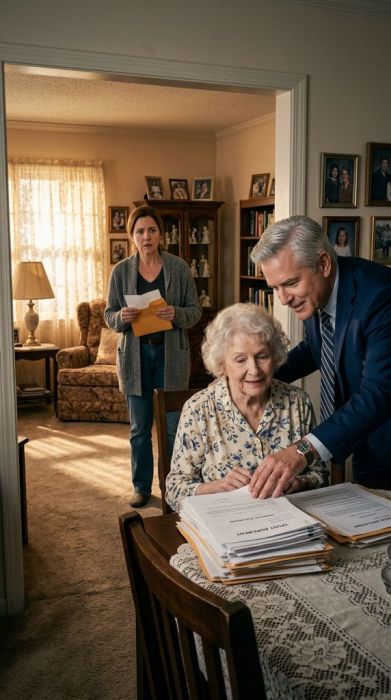
And slowly, a pattern emerged that turned my stomach cold. The substitutions weren't random. They clustered around the oldest, sickest, most vulnerable patients — the ones least likely to notice or fight back. My father was the latest on the list. But he wasn't the first, and he wouldn't have been the last.
I think that's what made me brave. Not anger at what Phil had done to Dad, though God knows that was there. It was the awful realization that Phil Atwater had built a quiet little business out of other people's final days. He'd been skimming money and swapping medicine for years, and every time a patient died, he'd turned on that same bottomless well of charm and buried his crime under a funeral card.
The twist came on a Tuesday night, about a week before I was ready to go to the police.
I'd gone to the pharmacy to return a key I'd borrowed from Dana, who had the spare after her mother's estate closed. But the back door was unlocked, and through the window I saw Phil Atwater hunched over his desk, his reading glasses low on his nose, counting cash into his hands. And I watched, from the dark of the alley, as the most trusted man in Marlow pried up the loose floorboard — and slid a fresh stack of money beneath it.
I didn't run. I knew exactly what I was seeing. I pulled out my phone and I filmed every second of it.
The next morning, I walked into the Marlow Police Department and laid it all out for a young detective named Renee Salazar — the ledger I'd copied, the pills, the death notices, the video on my phone. Renee listened the whole way through without once looking away. When I finished, she took a long breath and said the words that made the whole room feel lighter: "We've been waiting years for someone to say this out loud."
Phil Atwater had been on the state pharmacy board's radar for almost a decade. There had been complaints, whispers, an investigator who'd flagged suspicious patterns only to come up empty every time he tried to prove it. Nobody had the proof. Nobody, until me.
The arrest came on a Saturday morning, when the pharmacy was busiest. I watched from across the street as two officers in suits walked through the front door while the morning rush was at its peak. Phil Atwater stood at the register, smiling at a customer, and the smile froze on his face when he saw the badges. The state board revoked his license that same week.
The trial was the thing that finally cracked Marlow open. The prosecution laid out the ledger and the video and the pills that didn't match, and for the first time the town had to look at the man they adored with clear eyes. Phil's defense tried everything — grief, confusion, a scapegoat employee — but there was too much paper, too many names, too neat a trail. He'd been this clever for too long, and his own greed had written the story of his undoing. The jury deliberated for barely a day before they came back with a verdict that echoed through the courtroom like a slammed door. Guilty.
Phil Atwater was sentenced to fifteen years for fraud and the manslaughter of the patients whose medicine he'd swapped, my father among them. On the steps of the courthouse, a reporter asked me how it felt to bring him down. I told her the truth: I hadn't brought him down. He'd brought himself down, page by page, penny by penny. I just found the books.
The pharmacy on Main Street closed for good that autumn. For a while, the town grieved again, but it was a different kind of grief — the mourning of a trust that had been stolen, not a life. Then, slowly, Marlow healed. Dana's bookstore grew. The library named a second reading room, this one for my father's students, a room I helped fund with a quiet check from my inheritance.
I stayed in Marlow. I couldn't leave Dad's memory hanging over an empty house, and I discovered I liked the rhythm of a small town again. Some mornings I walk past the dark windows of the old pharmacy and I feel nothing at all. Other mornings I stop and remember the exact cold of that tile against my knees, the groan of that floorboard, and the way everything I'd ever loved and lost came down to a single second of proof.
My father taught history. He used to say that the truth doesn't go away just because people stop looking. It waits. It piles up. And one day, when the right person finally pulls up the floorboard, it all comes tumbling out.
The board is gone now, pulled up by the state's investigators and filed away as evidence. But I know what was under it, and so does every patient in Marlow who trusted a kind man with their medicine. Phil Atwater got exactly what his own greed had been buying for thirty years. And somewhere in a cell in Columbus, Ohio, the most beloved pharmacist in town finally has all the time in the world to think about what he really filled those bottles with.