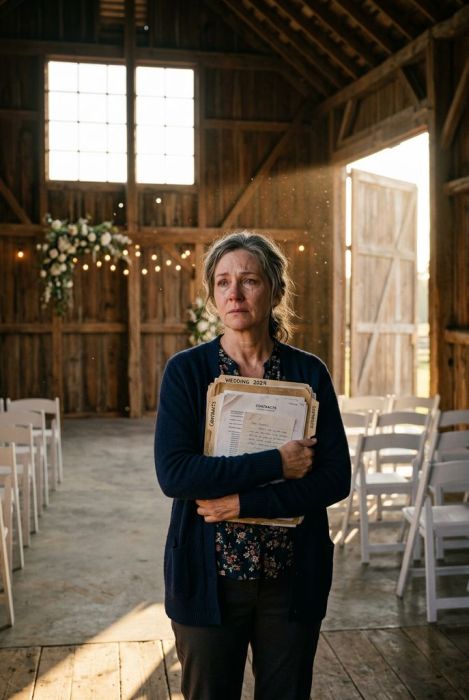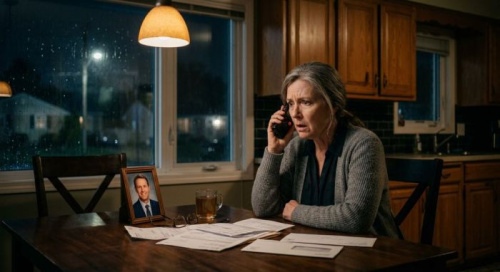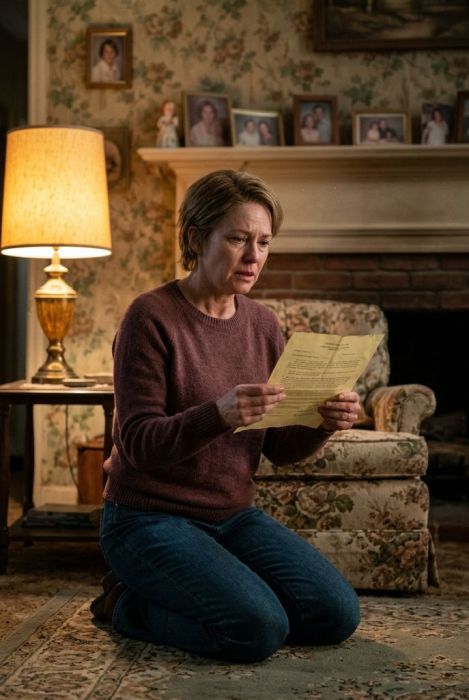
The first time I ever set foot in the city of Crosswater, Georgia, I wasn't there to sightsee. I was there to sit in the back row of a gala ballroom and watch the woman who had been living under my name for nine years get the ending she'd earned.
Her real name wasn't Eleanor Vance. But that's the name on her trophy, her professional license, her mortgage, and her marriage certificate. It's the name she used to borrow three hundred thousand dollars from banks that would never lend a cent to the real Eleanor Vance — a fifty-two-year-old medical records clerk from Columbus, Ohio, who could barely get approved for a credit card at the grocery store.
I know how it sounds. When you hear "identity theft," you picture a stranger in a dark room ordering expensive phones online. You don't picture a beloved small-town businesswoman who sponsors the youth softball team and volunteers at the food bank. That's exactly why she got away with it for so long.
It started the winter my mother was dying. I was working double shifts at St. Catherine's Hospital, signing paperwork I barely read, exhausted in a way that hollowed out my bones. Gloria Roy, a finance assistant in the billing office, was the one warm presence in those cold weeks. She brought me coffee. She sat with me in the break room when I cried. She even offered to help me sort my mother's medical bills, telling me she'd "handle the paperwork."
I trusted her with everything. I handed her my mother's accounts, my tax documents, my Social Security number without a second thought, because she was helping me. That was my mistake. The kindest one I ever made.
Mom died in March. By April, Gloria had vanished from the hospital. She'd cleaned out her desk, resigned by email, and left no forwarding address. I grieved, I grieved again, and eventually I moved on. It never once occurred to me that she'd taken a piece of me with her.
For years, nothing seemed wrong. I kept working at St. Catherine's, taking care of other people's records the way I always had. My apartment was small but mine. My daughter, Cassie, was grown and starting her own life in Indiana. I thought I had found a quiet kind of peace.
Then, five years ago, I tried to buy a small house. It was going to be my reward to myself, the first home I'd ever owned. The bank rejected me. Then another bank rejected me. Then a third. Each one handed me the same polite, apologetic slip of paper saying my credit history was "too damaged" to qualify.
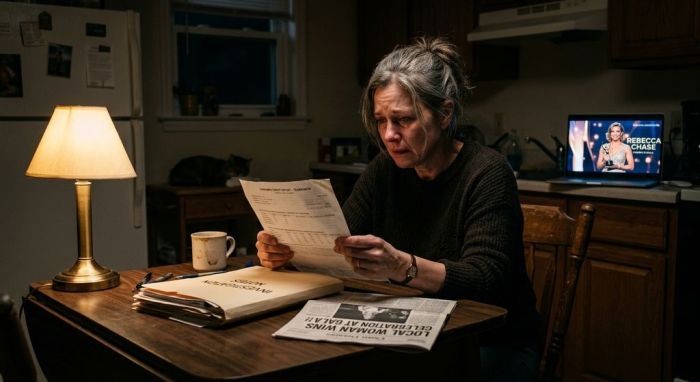
I demanded to see my credit report. What I found didn't make sense. There were accounts I'd never opened, payments I'd never made, a car loan in a state I'd never visited. And crawling through all of it, like ivy over a fence I couldn't tear down, was my name — Eleanor Vance — attached to a string of overdue balances that had quietly wrecked my good name.
I did everything a fraud victim is supposed to do. I filed a police report in Columbus. I filed a complaint with the FTC. I froze my credit. I wrote letters. And then I waited, the way victims always wait, while nothing happened. The local detective was kind but overworked. "Miss Vance," he said, scratching his neck, "we'll do what we can, but this crosses state lines. It's a federal problem, and they're swamped."
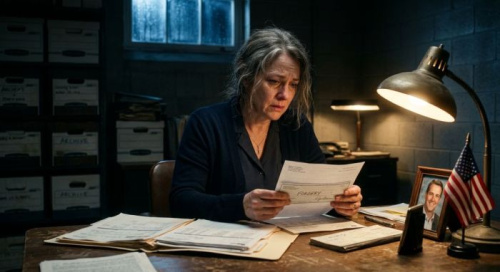
So I did what most people do when nobody will listen. I started digging myself. Weekends that used to be for rest became weekends hunched over a library computer, chasing addresses, matching signatures, and connecting a trail of payments to a town I'd never heard of: Crosswater, Georgia.
That's when I found the photograph.
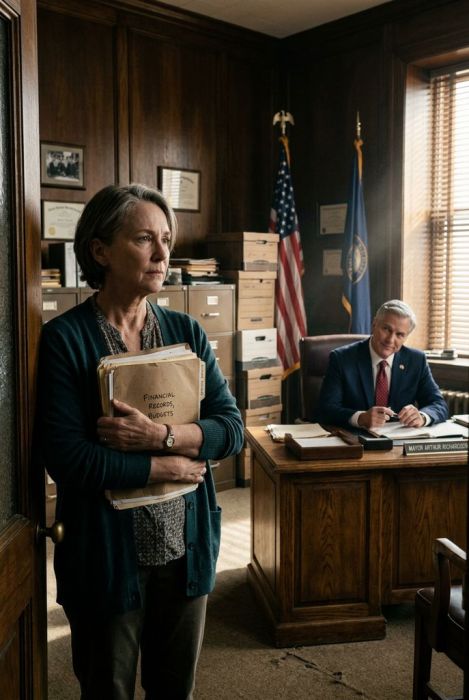
It was in a feel-good feature in a regional business magazine, a story about a self-made single mother who'd turned a failing antique shop into a real estate empire and donated a wing to the local children's hospital. The woman in the photo was smiling, gloved hands holding a trophy, beaming at a small-town audience. And the caption under her name read: Eleanor Vance.
I stared at that photograph for a long time. I stared until my coffee went cold and my daughter called twice wondering if I was all right. Because the woman in the photograph was younger than me, prettier than me, richer than me — and she was wearing my name like a borrowed coat.
Her real name, I would learn, was Gloria Roy. She hadn't just stolen my identity. She had rebuilt her entire life on top of it, and in doing so, she had built the exact life I'd always dreamed of.
I was furious. I was heartbroken. And I was, for the first time in nine years, wide awake.
My daughter Cassie is the one who stopped me from doing something stupid. I'd booked a flight to Georgia, ready to storm into that woman's office and scream in her face. Cassie talked me down over the phone. "Mom," she said, "if you show up and make a scene, she'll know you're coming. You'll give her time to bury the evidence. You have to let someone official handle it."
She was right. And that's when the universe finally threw me a rope.
I'd sent my pile of evidence to the state attorney general's office and the FBI's internet crime complaint center, the way the pamphlets told me to, never really expecting to hear back. But two weeks after Gloria's magazine feature hit the stands, a man named Eric Calloway called me. He introduced himself as a special agent with the U.S. Postal Inspection Service, and his voice was calm in a way that made my heart catch.
"Miss Vance," he said, "we've been watching a pattern of mortgage and title fraud out of Crosswater County for almost two years. We couldn't find the common thread. Then your complaint landed on my desk, and honestly? It was like somebody turned on a light."
Gloria — "Eleanor Vance," to everyone in Crosswater — was a real estate darling. She'd flipped dozens of houses, arranged short sales, purchased distressed properties, and sold them at a tidy profit. What Agent Calloway had noticed, but couldn't prove, was a trail of fraudulent loans taken out in the names of people who didn't even realize they'd been borrowed.
I gave him everything. My credit report. My hand-copied notes. The photograph. The bank letters. And then, because Cassie drove down from Indiana to help, we assembled something even my grief had never let me see before: the timeline.
Every single one of Gloria's big scores — the first flip, the second mortgage, the car she claimed to have paid off, the cozy antique shop she said she'd started from nothing — traced back to a different stolen identity. Mine was just the first. The woman who had been living my name for almost a decade had been doing it to other people the entire time.
For four months, Agent Calloway and I worked in secret. He taught me about forensic accounting and wire transfers. I didn't teach him anything he needed, but it made me feel useful, and more than that, it gave me back the part of myself I'd thought was gone: the belief that the world could still make sense.
The trap came together in the fall. Crosswater held an annual Christmas gala, a black-tie affair where the county chamber of commerce crowned its Businesswoman of the Year. To no one's surprise — because she'd spent hundreds of thousands of dollars of other people's money buying goodwill — Gloria Roy, celebrated as "Eleanor Vance," was announced as that year's winner.
Agent Calloway saw the opportunity immediately. "She's going to be on that stage in front of every important person in the county," he told me. "The mayor. The sheriff. News cameras. She'll accept that trophy and give a speech about her humble beginnings. And that's when you and I are going to hand her the ending she never expected."
He asked me if I wanted to be there. I told him I'd already bought my dress.
The night of the gala, I sat in the back row of the ballroom at the Crosswater Grand Hotel, wearing a navy dress I'd bought on clearance, my hands folded in my lap. Around me, the town's elite toasted the woman who had charmed them all. A woman they thought was a philanthropist, a mentor, a beloved success story. A woman who had built her entire life on a lie so big that it carried a real name and a real address — and I was sitting thirty feet away from it.
The lights dimmed. The band swelled. And Gloria Roy walked up to the podium, radiant in a gown that probably cost more than my car, beaming at the crowd that adored her.
"Good evening, Crosswater," she said, and my stomach turned, because I recognized that voice. I had heard it for years, soothing my grief with coffee and promises. "Thank you so much for this incredible honor. You know, when I started out, I had nothing. I was just a girl with a dream and a whole lot of faith that things would get better..."
She spoke for four full minutes about her triumph over adversity. About the struggling girl who pulled herself up by her bootstraps. About how proud she was to be one of Crosswater's own, a woman who had built something out of nothing.
And then, right as she raised the trophy above her head and the audience began to clap, the main doors of the ballroom swung open.
Agent Calloway walked in first, flanked by two county deputies in full uniform. Behind them came a woman I didn't recognize — a forensic accountant from the FBI field office, I'd later learn — carrying a thick manila folder. The applause died in the room like a cable had been cut.
"Eleanor Vance," Agent Calloway said, his voice carrying across the silent ballroom, "you're going to want to put the trophy down."
Gloria laughed, nervous, looking around for the joke. "I'm sorry, officer — is something wrong?"
"We have a warrant for your arrest on ninety-two counts of identity fraud, mortgage fraud, and grand theft," he said. "And you know better than anyone that your real name isn't Eleanor Vance."
I watched it happen from the back row. I watched the blood drain from her face. I watched the mask of the beloved small-town philanthropist crack, and for one raw second I saw the woman who had sat beside me in that hospital break room, pretending to be my friend while she stole my future.
They led her out through the kitchen, past the shocked faces of the mayor and the sheriff and the people who had just been cheering for her. She didn't look back at me. She didn't know I was there. But I saw her shoulders slump as they took her out, and I felt something in my chest finally loosen after nine long years.
It turned out Gloria Roy had been running the same grift for over a decade, cycling through at least eleven different stolen identities across three states. Mine had been the first, and I'd been the one her victims could never solve — the thread that finally untangled the whole web. The district attorney estimated she'd stolen somewhere north of four million dollars from the people she'd preyed on.
At trial, she pleaded guilty to nearly all of it. The judge called her a "remorseless predator who fed on the trust of the vulnerable," and sentenced her to eleven years in federal prison, with restitution ordered for every single victim. I sat in the front row that day, and a woman in the second row — a retired teacher from Tennessee whose name Gloria had also borrowed — reached over and squeezed my hand.
It took a long time to put my own life back together. The banks eventually cleared my name, though not before making me prove, over and over, that I was the real Eleanor Vance. My credit, once decimated, slowly rebuilt itself a few points at a time, like a garden coming back after a long winter.
Two years later, I bought that little house. It's not much — a two-bedroom cottage with a creaky porch and a rosebush that never quite behaves. But it has my name on the deed. My real name. The one I was born with and the one I nearly lost.
Sometimes I wonder if I should feel sorry for Gloria. She had so much — a fortune, a career, a community that adored her — and she threw it all away for a life that was never hers to begin with. But then I remember the cold coffee in that library, staring at a stranger wearing my name, and I don't feel sorry at all.
Some people spend their whole lives trying to become someone else. I spent nine years fighting to get my own self back. And when the night finally came that the whole town watched her fall, I was sitting right there in the back row — the quiet woman nobody noticed, whose name the star of the show had been wearing like a costume.
Karma doesn't always come quickly. But when it does, it turns up in a ballroom, in front of everyone, with a warrant in its hand.