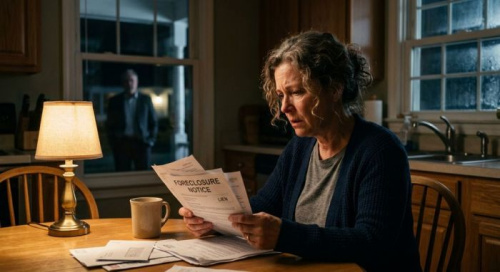
The real estate agent called it a fixer-upper with character. I called it a mistake I was already regretting.
The house at 47 Maple Street had sat empty for eleven months before I bought it. The price was too good to pass up, and at fifty-eight, recently widowed, and determined to start over somewhere quiet, I convinced myself that peeling wallpaper and creaking floorboards were charming rather than ominous.
I moved in on a Tuesday. The neighbors watched from their porches like I was a strange animal that had wandered into their yard. Nobody waved. Nobody came to introduce themselves. The HOA president, a silver-haired man named Harold Finch who introduced himself on Wednesday, was polite but firm. He handed me a thick binder of rules and reminded me that the annual assessment was due in sixty days.
"We like things quiet on Maple Street," he said, with a smile that didn't reach his eyes.
I told him I liked quiet too. He seemed satisfied and left.
The basement was the worst part of the house. Damp, dark, and smelling of soil that had no business being inside a home. I hired a contractor named Ray to help me renovate it into a workshop for the woodworking hobby I'd picked up after my husband passed. Ray was a heavyset man in his sixties who talked more than he worked, but he was honest and he charged fair.
On the third day of demolition, Ray found something.
"Margaret, you better come see this," he called up the stairs.
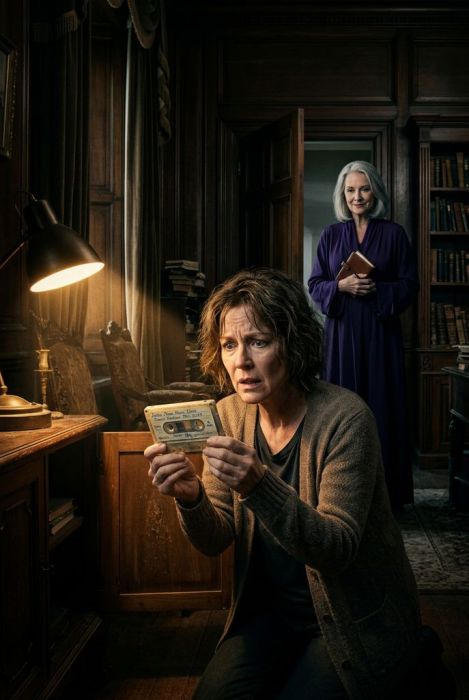
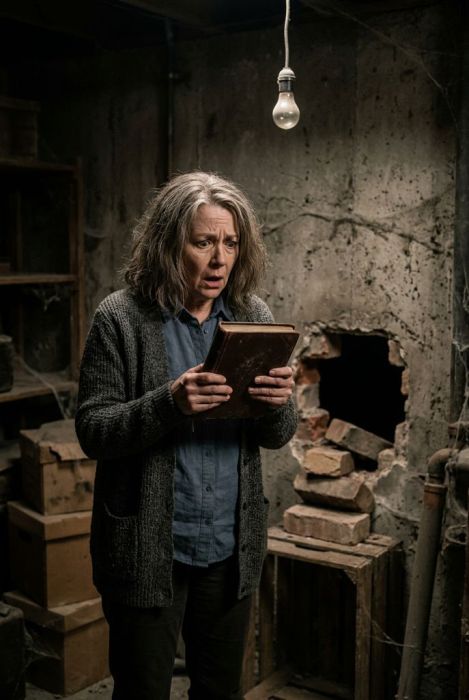
I found him standing in front of the east wall, where he'd torn away the old paneling. A section of the brick was loose, and behind it, wrapped in a plastic garbage bag, was a small leather-bound diary.
"That's been there a long time," Ray said, wiping dust from his face. "Look at that bag. That's early 2000s vintage."
I pulled the diary out and unwrapped it carefully. The leather was cracked and dry. The first page had a name written in neat cursive: Carol Anne Benson. And a date: March 14, 2001.
"Who's Carol Anne Benson?" I asked.
Ray's face went pale. He set down his hammer. "You don't know?" he said quietly.
I shook my head.
"Carol Benson lived in this house," Ray said. "She disappeared in the summer of 2001. Right before 9/11. Everyone knew about it back then. But nobody talks about it anymore."
That night, I sat in my empty living room with the diary in my lap. The first few entries were mundane — grocery lists, complaints about her mother-in-law, a note about a azalea bush she wanted to plant. But around the tenth page, the tone shifted.
April 2, 2001 — Something is wrong with the HOA budget. I was elected treasurer this year, and I've been going through the books. The numbers don't add up. There's nearly $200,000 unaccounted for over the past three years. When I brought it up at the board meeting, Harold told me to mind my own business. He said the board handles finances, not the treasurer. Since when does the treasurer not handle finances?
I stopped reading and looked toward the window. Harold Finch's house was three doors down. I could see a light on in his upstairs window.
I kept reading.
April 10, 2001 — I went to the county records office today. I wanted to see who owned the vacant lot at the end of the street. The one that's been for sale for five years. According to the deed, it's owned by a shell company called Westbrook Holdings. I did some digging. Westbrook Holdings is registered to Harold Finch's brother-in-law. Why would the HOA president's family own a lot that the HOA has been trying to buy for development?
My hands were trembling now. I turned the page.
April 22, 2001 — Mary Patterson from three houses down stopped me in my driveway today. She looked terrified. She told me to stop asking questions about the HOA. She said Harold was a dangerous man. I asked her what she meant. She just shook her head and walked away. I watched her from my window. She went inside and pulled all her curtains closed.
May 3, 2001 — I found out about the insurance policies. Every home on Maple Street has a supplemental fire insurance policy through a company called Apex Surety. I checked the registry. Apex Surety is another shell company. The registered agent is Harold Finch's son, Derek. I think they've been buying policies on every house. And I think I know why.
May 15, 2001 — The Gibson house burned down last night. The Gibsons were on vacation in Florida. Nobody was hurt, thank God. But the house is a total loss. I drove past this morning. Harold was already there, standing in the street, watching the smoke. He looked satisfied. I went home and checked the records. The Gibsons had an Apex Surety policy. I called the police. I told them I had information about a possible insurance fraud scheme. They said they'd send someone out.
May 16, 2001 — The police never came. I called again. They said an officer would be dispatched. Nobody showed up. I called Harold's office at the real estate company he owns. I told him I knew about the policies. I told him I was going to the county prosecutor. He was quiet for a long time. Then he said, "Carol, I think you should be very careful. Accidents happen on Maple Street."
The diary ended there. The last entry was May 17, 2001.
Carol Benson was reported missing on June 3, 2001, when she failed to show up for her sister's wedding in Boise. Her car was found at the Portland airport, but her name never appeared on any flight manifest. The police investigated for six months. They found nothing. The case went cold.
I closed the diary and sat in the dark for a long time.
The next morning, I went to the county records office myself. I pulled the deed for the vacant lot at the end of Maple Street. Westbrook Holdings, just like Carol had written. I pulled the building permits for the new house that had been built on that lot two years ago. The contractor was a company called Finch Development. Harold Finch was listed as the president.
I went to the library and found old newspaper articles about the Gibson fire. The official report said faulty wiring. The insurance company paid out $340,000. Apex Surety.
I started making phone calls. Mary Patterson, the neighbor who had warned Carol, had moved to a nursing home in Arizona. I called her there. She was eighty-seven now and her memory was foggy, but when I mentioned Carol Benson's name, she started crying.
"I told her to stop," Mary whispered. "I told her Harold wasn't the kind of man you cross. But she was stubborn. She said somebody had to do the right thing."
"What happened to her?" I asked.
"I don't know," Mary said. "But the night she disappeared, I saw a car in her driveway. A black sedan. I wrote down the license plate. I still have it somewhere."
"Where?" I asked.
"In a shoebox in my closet. Under my winter sweaters."
I flew to Arizona the next day. Mary's daughter met me at the nursing home and let me go through her mother's things. The shoebox was right where Mary said it would be. Inside, along with old photographs and birthday cards, was a yellowed piece of paper with a license plate number written in shaky handwriting.
I ran the plate through a public records search. The car was registered to a company called Northwest Security Services. I looked them up. They were a private investigation firm that had gone out of business in 2005. But their listed owner was a man named Gerald Vance.
I found Gerald Vance living in a trailer park outside of Spokane, Washington. He was seventy-two, divorced, and drinking his lunch from a coffee mug when I knocked on his door.
"I wondered when someone would come asking about Carol Benson," he said, without me even telling him why I was there.
He invited me inside. His trailer was cluttered with newspapers and empty beer cans. He sat down at his kitchen table and lit a cigarette.
"I was a PI back then," he said. "Harold Finch hired me to follow Carol. Said she was having an affair with his wife. That was a lie. He wanted me to find out what she knew about his business."
"Did you tell him?" I asked.
Gerald nodded slowly. "I told him she was getting too close. I told him she had documents. I didn't know he was going to —" He stopped. "I didn't know."
"What happened to her?" I asked again.
Gerald took a long drag from his cigarette. "The night she disappeared, Harold called me. He said he needed to talk to her, to reason with her. He asked me to drive her to a meeting. I picked her up at her house. She trusted me because I'd been pretending to be a reporter working on a story about corrupt HOAs. I drove her to a warehouse on the outskirts of town. Harold was waiting. I left. That's the last time I saw her."
"You left her with him?" I said, my voice shaking.
"I didn't know what was going to happen," he said. "I swear to God, I didn't. I was just supposed to drive her there. When I heard she was missing, I knew. I knew what Harold had done. But I was scared. I had a wife and kids. Harold made it clear what would happen if I talked."
"Where is she?" I asked.
"I don't know," he said. "But I know where Harold keeps his records. He's got a safe in his office at the real estate company. Everything is in there. The policies, the payouts, the deeds. And probably the address of that warehouse."
I flew back to Portland and went straight to the police. I brought the diary, Gerald's statement, and the shoebox with the license plate number. The detective I spoke to was a young woman named Elena Vasquez. She listened to everything without interrupting. When I finished, she leaned back in her chair.
"I've heard rumors about Harold Finch for years," she said. "But nobody ever brought me evidence. This is evidence."
Two days later, Detective Vasquez obtained a warrant for Harold Finch's office and safe. Inside, they found exactly what Gerald had described. Bank records showing $2.3 million in fraudulent insurance claims. Property deeds transferred through shell companies. And a key to a storage unit registered under a false name.
The storage unit was in a facility twenty miles outside of town. Inside, they found furniture, personal papers, and a suitcase that belonged to Carol Benson. Her DNA was on the suitcase. And in the concrete floor of the warehouse where Gerald had driven her, forensic teams found traces of blood that matched Carol's DNA.
The warehouse had been demolished in 2008. A new apartment complex stood in its place. But the district attorney charged Harold Finch with first-degree murder based on the evidence. The blood, the diary, Gerald's testimony, and the financial records painted a picture that even the best defense lawyer couldn't explain away.
Harold Finch was arrested at his home on Maple Street. I watched from my window as they led him out in handcuffs. His wife stood on the porch, sobbing. The neighbors came out to watch. For the first time since I'd moved in, they weren't looking at me like a stranger. They were looking at Harold with the same fear and suspicion they'd been carrying for twenty-five years.
At the trial, eight former Maple Street residents testified about Harold's intimidation tactics. Mary Patterson testified via video link from her nursing home. Gerald Vance testified about the night he drove Carol to her death. He was granted immunity in exchange for his testimony.
The jury deliberated for four hours. They found Harold Finch guilty of first-degree murder, insurance fraud, and racketeering. He was sentenced to life in prison without the possibility of parole.
I still live at 47 Maple Street. The basement is now a beautiful woodworking shop, just like I planned. But on my workbench, in a place of honor, I keep Carol's diary. It's a reminder that even in the quietest neighborhoods, the darkest secrets can hide for decades. And that sometimes, all it takes is one person willing to ask the questions nobody else will.
The neighbors wave now when I walk past. Some of them even stop to talk. But I never forget that they knew. They all knew. And for twenty-five years, nobody said a word.
That's the part of the story that keeps me up at night.